

Game: Alchemy: Origins
Genre: Alchemy, Combination
System: Steam (Windows, macOS, Linux)
Developer|Publisher: Error 300 | Error 300, Gamersky Games
Controller Support: No
Price: US $3.99 | UK £3.39 | EU € 3,99
Release Date: March 8th, 2024
A review code was provided, with many thanks to Error 300.
Alchemy: Origins is an object-blending game. Like many that have come before it, Alchemy: Origins has you putting together a large list of items into new items also to combine together.
The Gameplay of Alchemy: Origins
I was there, back in the day, when Little Alchemy and other item-blending games began in the early 2010s or so. When smart phones began to be commonplace around 2012 or so, I ended up with a smart phone that could actually play games. One of the first game downloads I ever got was an Alchemy-like title. I can’t remember the name of it, but it was similar to Little Alchemy and other similar titles. So Alchemy: Origins is familiar territory to me.
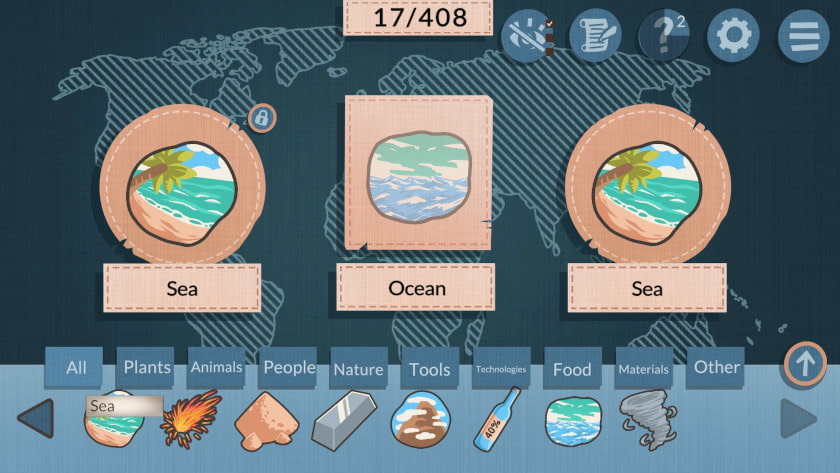
Much like the other Alchemy-like games, you start with four items: earth, fire, wind, and water. You can, for example, blend earth and water to get mud, or you combine fire and wind to make energy. But then you can take the new items you have made and put them together to see if you can make another new thing that can be blended with something else. There is a total of 408 things to blend and find in Alchemy: Origins.
Hard to Find Something New
This game genre has been tread pretty much to the dirt, however, Alchemy: Origins does manage to do a couple of slightly different things than the originals. For instance, you can lock an item to the first slot, which means you can easily try it against everything else to see what you can make when you blend them together. There is also a hint system, which is much different from other games like this I have played.
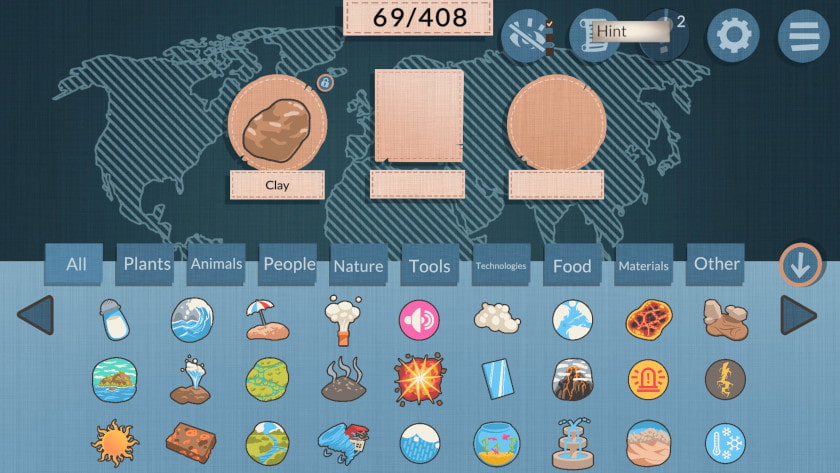
There is an eyeball button that you can turn on to show which items are the end of a line, meaning you can’t mix them with anything else to make something new. You can either have them grayed out or choose to have them hidden completely. When you hide them completely, though, the spaces they exist in are still counted when going to a new page, which means you’ll have a large overlap of items between pages. It’s a weird choice.

A Big Bug in Alchemy: Origins
Sometimes, Alchemy: Origins has a game-breaking bug that means I have to shut the whole thing up and restart it. If you have had the game open for too long or if you restart from the beginning, you will most likely also come across this bug; it removes the interactability of the items at the bottom of the screen, so you can’t merge new items together.

It’s not ruinous since it is easy to fix, but it certainly was annoying. I spend a lot more time fiddling with buttons and sitting with the game open than most players, however, so this might never be a problem for most.
Overall Look and Feel of Alchemy: Origins
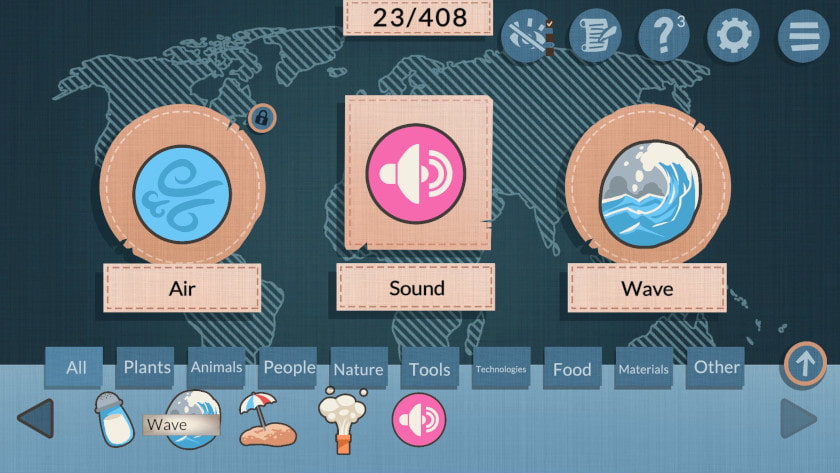
Other than this glitch, everything seemed to work well. The wiggle of the buttons when you click them, the sound design and the music were all fine. Interaction with the items in the game is well done; it’s a nice game to play. The action of the items blending together is really satisfying. And for the most part, the items you mix together make sense. Some of them are a little bit silly, like mixing water with a volcano to make a fountain, which sort of makes sense, but it’s a little silly.

It seems to be missing a lot of the joke items, at least that I could find so far. For example, in Little Alchemy 1, I think you could mix a Werewolf and a Vampire together to make Twilight, the book and movie series about a girl who falls in love with a vampire that was popular at the time. I think without those little joke mixes, it does feel a little bit like something is missing.
Conclusion
Overall, Alchemy: Origins is fine. It’s not new or unique, even with the upgrades to the original. It works mostly pretty well. However, it feels a little boring to play. I miss the joke combos, and I liked the tactile feel of clicking and dragging the items together on the screen.
There just isn’t much that would make me want to purchase this one over playing some of the free-to-play versions available outside of Steam. However, it’s a cute game of blending items and getting new ones, and I don’t dislike the look, feel, and play style of Alchemy: Origins.
Final Verdict: I Like it
