


Game: Akatori
Genre: Action, Adventure, Indie.
System: Steam (Windows) (Also on Xbox, PlayStation and Nintendo Switch 2)
Developer|Publisher: Contrast Games | Games Harbor, Esprit Games
Controller Support: yes
Steam Deck: Unplayable
Price: US $14.99 | UK £13.00 | EU €14,99
Release Date: August 5th, 2026
Review code provided with many thanks to Games Harbor
Akatori – A Simple Adventure
Akatori is a game that immediately feels familiar. The cool kids might call it a Metroidvania, and yes, it certainly has many of the ingredients: a connected world, abilities that open up previously inaccessible areas, platforming, combat and reasons to poke around in corners.
For me, though, Akatori feels more like a straightforward retro adventure game wearing a modern coat of paint. It doesn’t reinvent the genre or bury you under endless systems and mechanics. Instead, it picks a path and sticks to it. And, for the most part, I liked that (guess that’s the review over, OK, I’ll continue).
Please Stop Making Everything a Joke
You play as Mako, a young martial artist from the Firebird Temple, who finds herself caught up in a rather nasty problem involving the mysterious Amber Storms. These storms are corrupting everything they touch, from people to animals and the wider environment. Alongside a rather mysterious red bird, Akatori, sealed inside a staff, Mako sets off to put things right. It’s a perfectly serviceable setup, although I did have one fairly significant problem with the presentation of it.
The world itself is one of my favourite things about Akatori. The mystical settings, martial arts influence and strange corrupted creatures immediately grabbed my attention. Then everyone started talking. The dialogue really didn’t work for me. Akatori leans heavily into jokey, constantly quipping dialogue, with Mako and her companions seemingly unable to go for very long without making another joke or silly comment. I’m sure this will work for some players. There is absolutely nothing wrong with a game having a lighter personality, and I can see the appeal of its humour. Unfortunately, it kept pulling me out of the world. I wanted to take the Amber Storms and the strange world around Mako a little more seriously. Instead, it often felt as though somebody had wandered into the script shouting, “Don’t forget to make this funny!” Eventually, I found myself paying less attention to the story altogether, which is a shame because the underlying world is actually quite interesting.
1, 2 Punch
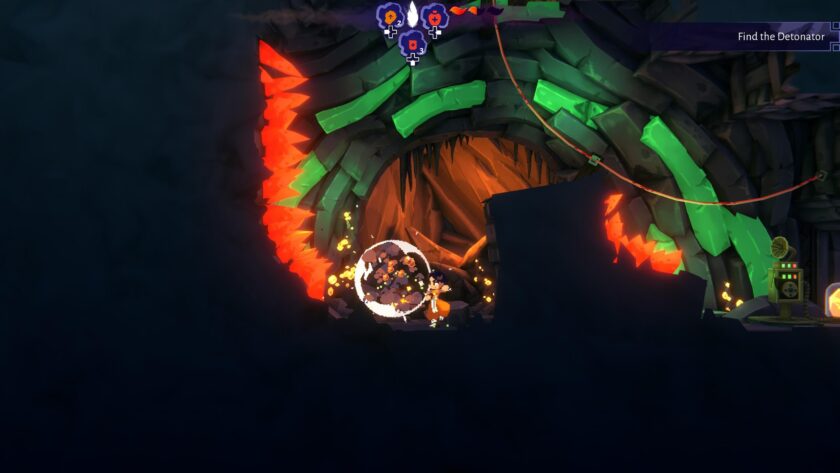
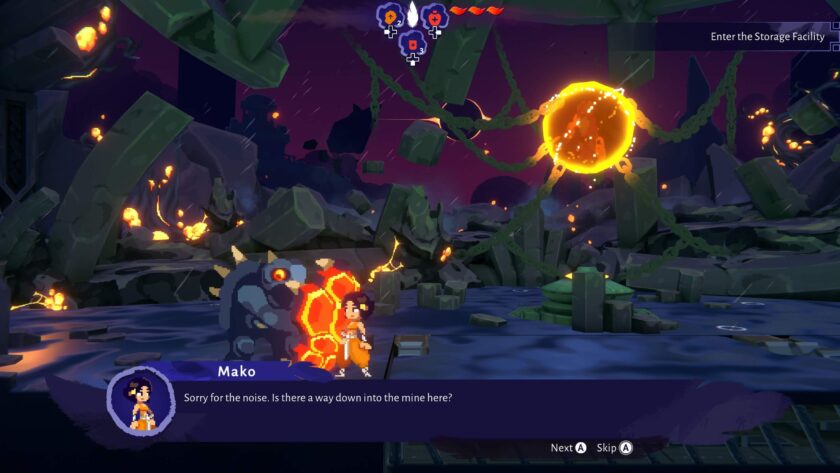
Thankfully, the gameplay is much more successful. Mako starts out using her martial arts abilities, punching and dodging her way through enemies. You can launch enemies into the air and juggle them a little, giving the combat a surprisingly satisfying physical feel. Eventually, that mysterious staff becomes the real star of the show. The staff gives you additional ways to attack enemies and, as you progress, unlocks new abilities that also help with exploration. It gives the game that familiar sense of gradually becoming more capable without throwing a dozen different systems at you.
Combat remains relatively straightforward throughout. There are melee enemies, ranged enemies and larger creatures that require a little more thought, but I never found myself drowning in complicated mechanics. It’s easy to pick up for most players.
A Little Platforming, A Little Exploring
Exploration follows the familiar formula. You move through different areas, discover new abilities and eventually find yourself able to reach places that were previously out of bounds. There are some nice platforming sections, including wall jumping and double jumps, although the latter requires you to hold the jump for a certain amount of time before activating it. That adds a little more precision than you might initially expect. It also contributes to one of my bigger grumbles with the game: the difficulty can be inconsistent.
Most of Akatori is fairly manageable, but then you’ll suddenly hit a platforming section or a chase sequence that feels considerably more demanding. Falling into hazards can mean returning to an earlier checkpoint and repeating part of what you’ve already done. It’s not game-breaking, but there were certainly moments where I thought, “Right, apparently we’re doing this again”. The boss encounters worked better for me. They’re generally readable, don’t overstay their welcome and give you patterns that can be learned without requiring you to throw the controller through a window.
The Chaos Meter
One unique mechanic is the Chaos meter. As you defeat enemies, you build up a purple meter. Once it’s full, you can find a special bell that transports you to another area where you can unlock a new staff ability. The catch is that visiting a safe point and meditating resets the meter. It’s a small mechanic, but it gives you an interesting decision to make. Do you play it safe and reset, or keep pushing your luck while your Chaos meter is full? It’s nothing revolutionary, but it’s a fairly interesting addition to the otherwise straightforward structure.
Captivating Presentation
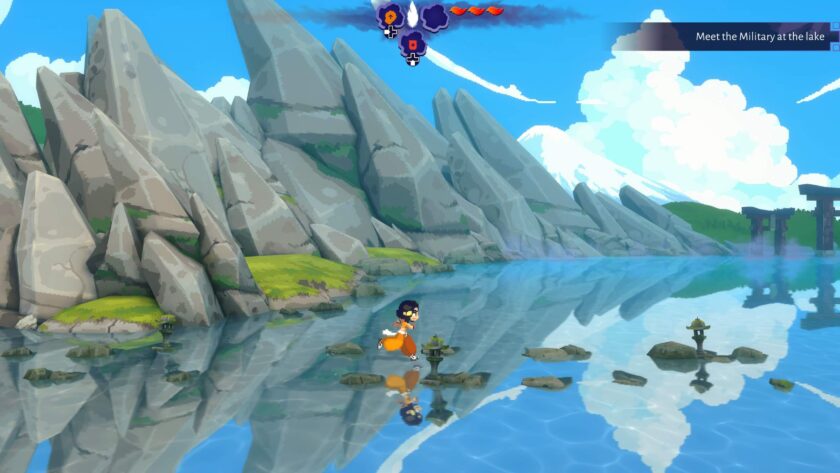
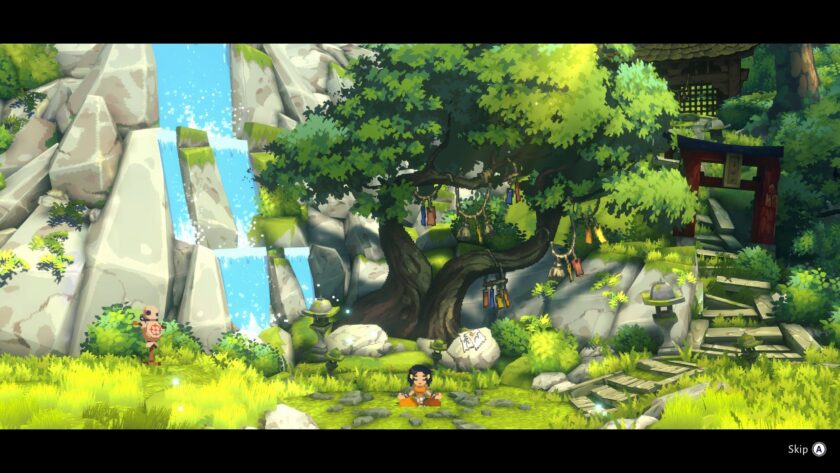
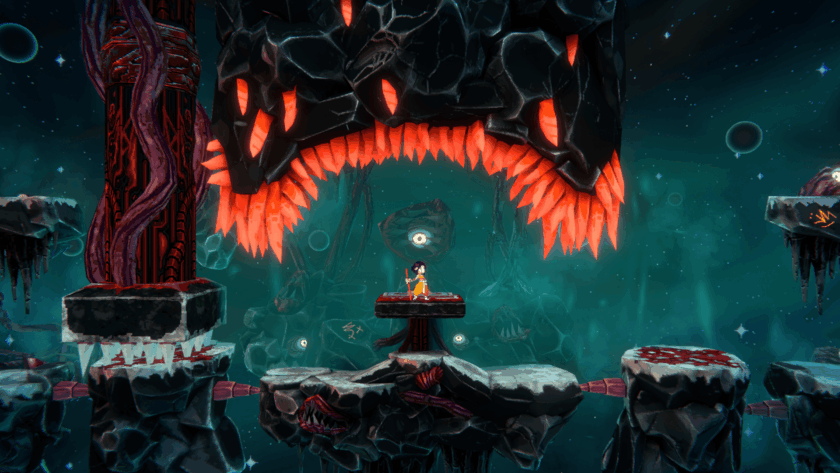
If there’s one thing about Akatori that I think is genuinely excellent, it’s the presentation. The combination of crisp 2D pixel art characters with 3D environments works wonderfully. It gives the game an almost retro PlayStation-era feel, where 2D characters inhabit these spacious 3D worlds. And it looks really good. The environments are colourful, varied and full of strange little details. There are vibrant landscapes, corrupted creatures and some wonderfully grotesque enemy designs. The Amber Storms have also given the world a suitably twisted appearance without turning everything into an endless sea of grey. I found myself wanting to stop occasionally just to look at the scenery. It’s not something I normally make a huge deal about in reviews, but Akatori genuinely left a visual impression on me.
Small and Happy
One thing I like about Akatori is its restraint. We’ve had an awful lot of Metroidvania-style games over the years, and many of them seem determined to throw every possible feature into the pot. Akatori doesn’t really do that. It gives you a world to explore, enemies to fight, abilities to unlock, some platforming and a handful of secrets like collectable cats to discover. Then it gets on with it. There’s something refreshing about that.
It does mean that players looking for a huge, complex adventure with layers upon layers of systems might find it a little basic. But viewed through a more traditional retro-adventure lens, I think it works.
The Steam Deck Problem
There is one issue I absolutely need to mention. The game currently doesn’t work easily on Steam Deck. I tried multiple times, and the game crashed each time for me. I know there are reports of some people getting it running, so this may not affect everyone, but my experience was unfortunately a complete failure. That’s particularly disappointing because this feels like exactly the sort of game I’d want to play on a handheld. It’s compact, colourful and relatively easy to pick up for a short session. Hopefully this is something that can be addressed in an update.
Conclusion: Time to Meditate
Akatori isn’t going to reinvent the action-adventure genre, but that’s ok. What I got was a colourful, straightforward adventure with enjoyable combat, some decent exploration and absolutely gorgeous presentation. The platforming occasionally tested my patience, the difficulty spikes could have been smoother, and the constant humour in the story really didn’t work for me.
But underneath those problems is a relatively simple adventure that doesn’t demand that you learn seventeen different systems before you’re allowed to have fun. You can pick it up, explore, punch some strange creatures, unlock increasingly useful staff abilities and enjoy the scenery. For me, the biggest missed opportunity is the writing. I genuinely think the world would have had more impact if the game had allowed itself to be a little more serious.
Still, I enjoyed my time with Akatori. It’s a pretty little adventure with plenty to like, even if it occasionally trips over its own feet.
Final verdict: I Like it

Do you like our content?
Subscribe to our daily news and never miss a review!