



As always, when we enjoy a game, we like putting together a guide to help new players get started. So here’s our beginner’s guide for Village in the Shade.
If you’re not sure Village in the Shade is for you, you can read my review here first.
Before You Start
At first glance, Village in the Shade looks like a traditional farming simulation. You arrive in a secluded mountain village, inherit a run-down farmhouse, grow crops, raise animals, fish, gather resources, and slowly become part of the local community.
However, Kagatsu is unlike any village you’ve visited before. Ancient traditions, mysterious rules, strange nighttime encounters, and a lingering feeling that something is deeply wrong all combine to create a unique blend of farming simulation and folk horror.

Rather than treating farming and horror as separate gameplay systems, Village in the Shade weaves them together in an excellent way. The farmwork you do, the villagers you befriend, and the traditions that you are obliged to follow all help uncover the truth behind Kagatsu.
Village in the Shade is not a farming game that expects you to optimise every day or chase maximum profits from the start. While farming, fishing, mining, and animal care are important, much of the experience revolves around paying attention to villagers, exploring Kagatsu, and following your curiosity. If something seems unusual, it is usually worth investigating.
Whether you’ve chosen Village in the Shade or the more relaxed Village in the Sunshine Mode, this guide will help you settle into your new life.
Choosing Between Shade and Sunshine
Before starting your adventure, you’ll need to choose between two game modes.
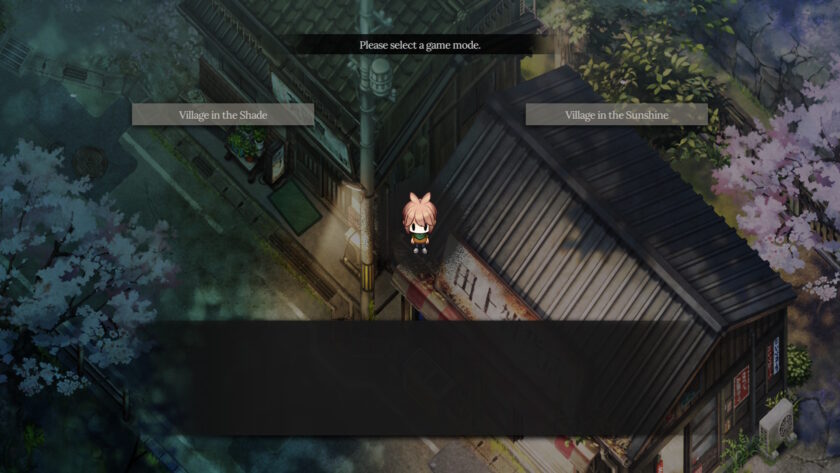
Village in the Shade offers the complete experience, including the village’s mysteries, supernatural encounters, nighttime exploration, and rule-breaking mechanics. This is the mode that delivers the full story of Kagatsu.
Village in the Sunshine removes the horror elements entirely, though at the start, Rin is still set on using you for cheap labour. You can focus on farming, fishing, hunting, crafting, decorating your home, and building friendships without worrying about supernatural consequences.
If you’re interested in discovering what makes the game unique, Shade mode is definitely the recommended choice.
Your First Days in Kagatsu
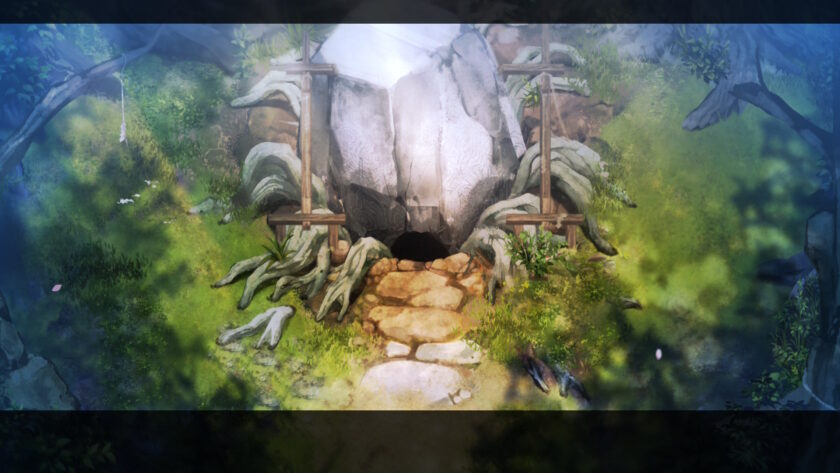
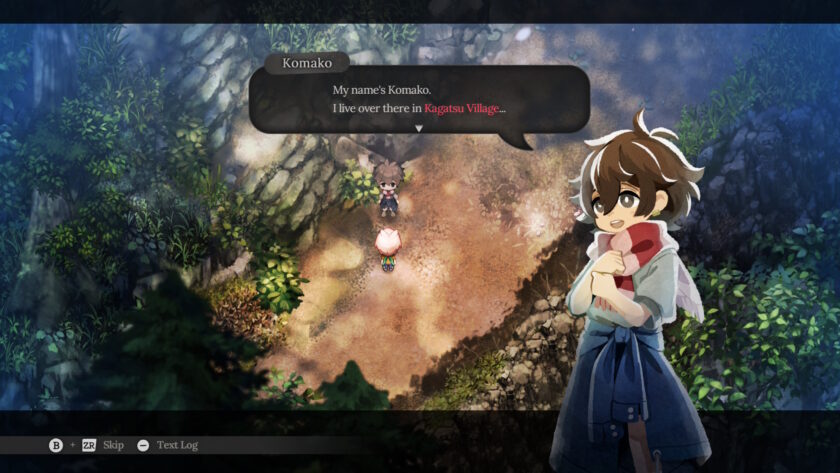
You see a cutscene when starting Village in the Shade, no matter which mode you choose. Your little character is chasing after a chicken and plunges into a deep hole. The game starts when you crawl out of the hole and wander out of the woods. A kind girl called Komako finds you and brings you to the secluded mountain village of Kagatsu. It seems it’s now 10 years later, and the villagers are wondering why you have such an uncanny resemblance to a child that went missing so long ago.
The people in Kagatsu seem a little weird and distant at the start, especially Rin, who is a sort of mayor of the town. She does bring you to a farm where you can stay, but don’t expect any charity here. She, with the help of her finance guy Konno, totals the amount of money you owe the village just for staying there, even for the rickety cardboard bed Rin provides for you to sleep in. Rin makes it clear that you’ll have to work the land and earn your keep. Best get going!
The first few days in Village in the Shade, most villagers don’t want to talk to you. Fortunately, you have most of the tools you need to clear the land, and Rin gave you some turnip seeds to sow. You can spend these opening days clearing your field, planting turnips, learning the controls, and becoming familiar with the village layout. Once the turnips are grown, Rin shows up together with Komako.
Understanding the God of Kagatsu
One of the first major story moments revolves around a mysterious hole outside the village. According to village tradition, a god resides at the bottom of this seemingly endless pit. The villagers believe that when an offering is made to the god of Kagatsu Village, a request of equal value will be granted in return.
Your first turnip harvest becomes part of this ceremony, officially welcoming you into village life. What I felt was disconcerting, and the first inkling of the horror elements to come was that Rin decides to sacrifice something dear to her as well. A bit like an afterthought for her, but not for me: she throws in the baby goat with the cute yellow ribbon that I had seen earlier exploring the village. Kisuke rightly wonders if this is a good event for a ten-year-old to witness, but Rin doesn’t listen. Kisuke tells you to close your eyes, which means the screen goes black. But you still hear the awful screech.
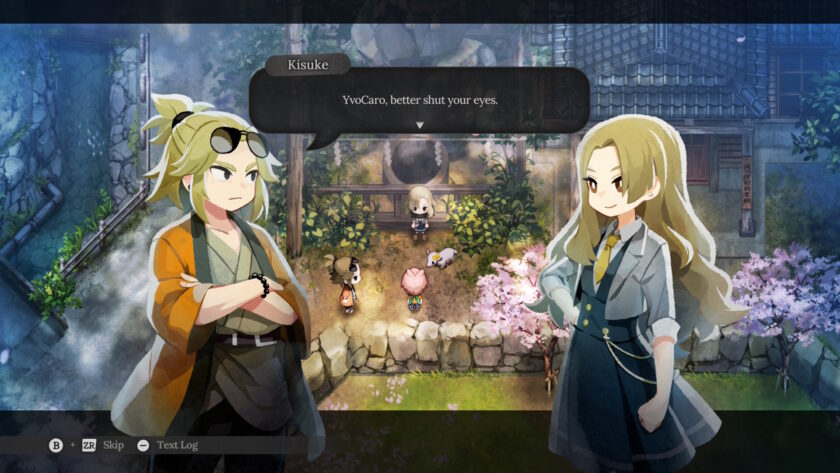
This is the moment when Village in the Shade begins revealing that life in Kagatsu operates by very different rules than a typical farming sim.
The Rules Aren’t Just Background Story
The village code is central to everything that happens in Kagatsu.
You’ll learn the 8 rules, which you can check back to in your menu:
- Do not be outside past 11 PM.
- Cooperate for the sake of the village
- Keep your distance from strangers
- Do not expose other people’s secrets
- Do not leave the village
- Do not respond to voices from the mountains
- Do not search for what has been lost
- Every request requires appropriate compensation
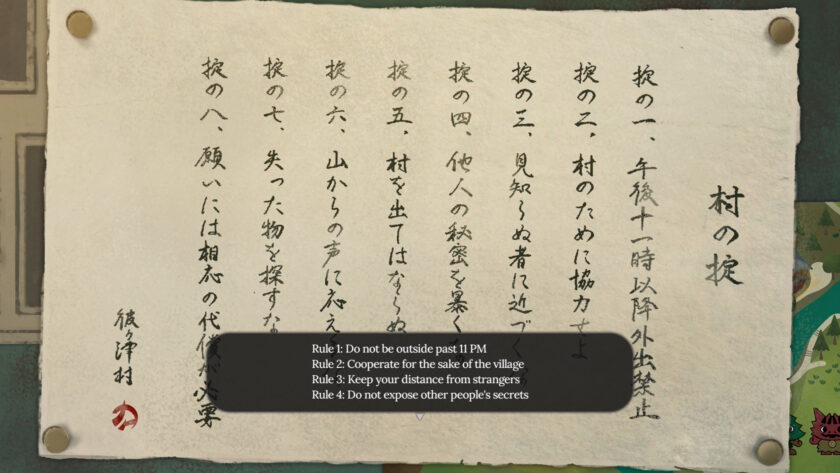
Being the basically rule-abiding person that I am, I was pleased to see that the game prompts you when it’s time to break a rule. Much of the narrative revolves around understanding them, testing them, and dealing with the consequences when they are broken. Whenever villagers mention traditions, customs, or warnings, it’s worth paying attention.
Some Quality of Life Points
The Notebook Is Your Best Friend
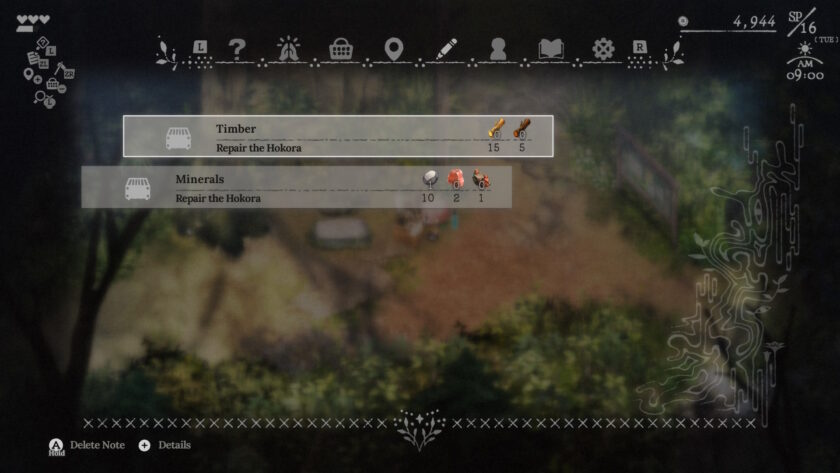
On Day 5 of Spring, while visiting Sazanka’s grocery store, Yuta, who happens to be there too, gives you a pencil and notebook. This notebook quickly becomes one of the handiest tools in the game.
Whenever useful information appears, such as recipes, requests, crafting requirements, or tutorials, you can press ZL (on the Switch) to copy it directly into the notebook for reference later. Make a habit of using it early!
Learning the Interface
One easy-to-overlook feature is the collection of shortcuts displayed in the upper-left corner of the screen. These shortcuts, set to the D-Pad and the shoulder buttons, provide quick access to commonly used actions.
Another useful thing to remember is that tutorials, instructional sequences, and many early morning story events do not consume in-game time. You can safely read through explanations and conversations without worrying about losing valuable farming hours. Once the story sequence is over, you are back at the farm, and it’s still 7 am.
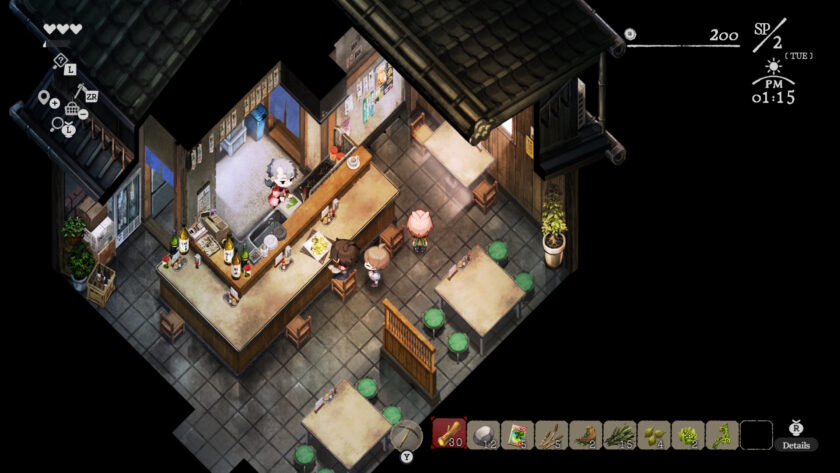
Building Your Farm
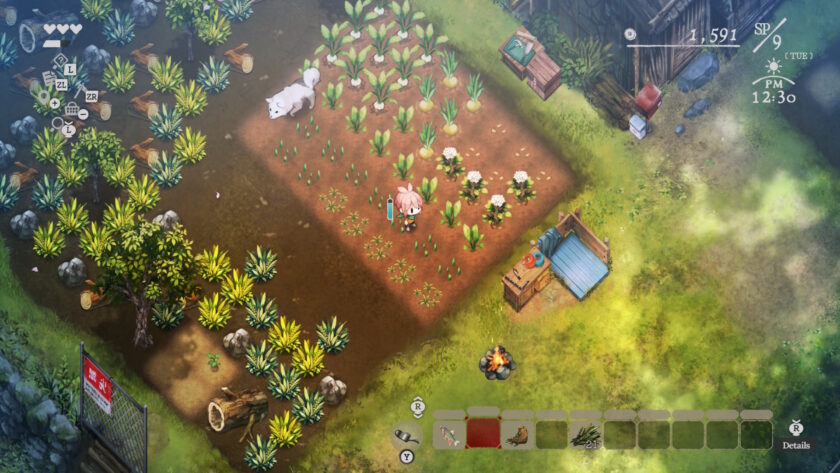
The farming system in Village in the Shade is approachable and easy to learn. Crops grow fairly quickly, stamina costs are forgiving, and you’ll soon have multiple plots producing vegetables and resources. The aim for sowing and working the land is a bit imprecise, but you get used to it. What I particularly liked is how watering the crops is a breeze while holding ZL and Y for the action, moving along the row.
There’s already a chicken coop on your land and an anvil for some forging, and once you have a barn, you can purchase sheep, cows and other animals too when Chinana, the travelling merchant, sets up shop next to the grocery store.
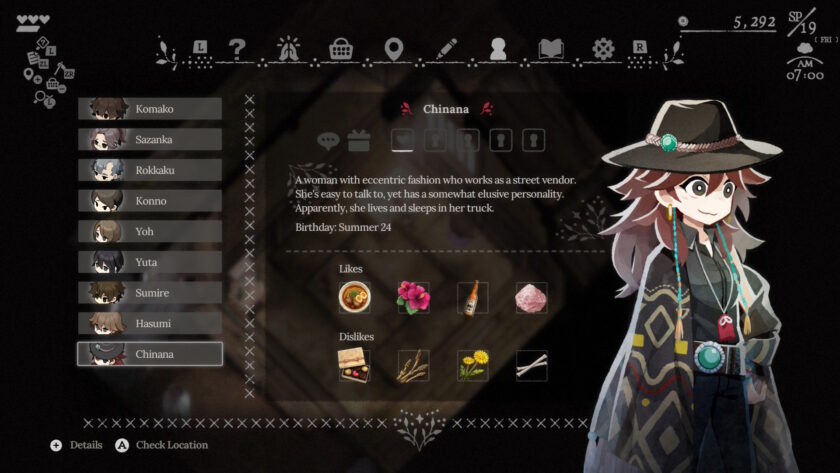
When a new season begins, it can be worthwhile focusing on one or two crop varieties. Growing larger quantities of the same crop increases its rank, leading to higher profits and stronger performance during monthly evaluations. But if you’re like me, you’ll just enjoy seeing many coloured crops dotting the field as I do.
Keep a close eye on the calendar. Most seasonal crops wither when the season changes, so planting a crop that takes eleven days to mature when only six days remain can be a costly mistake. As the story progresses, additional areas beyond the village gradually become accessible. These locations provide new resources, forageables, and opportunities for exploration, ensuring that your world steadily expands alongside your farm.
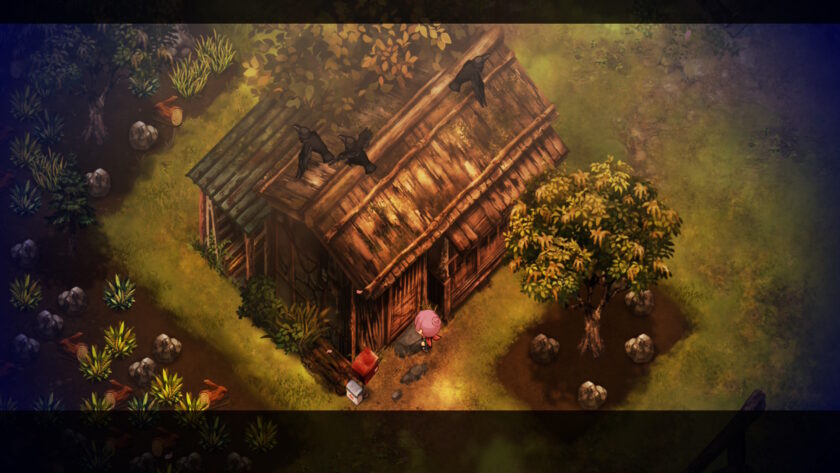
Your farmhouse also becomes increasingly important over time. Beyond simply serving as a place to sleep in your rickety cardboard bed, you’ll unlock more furniture, decorations, and improvements that help transform the abandoned building into a proper home. Maker machines are available in rapid succession, starting with the workbench and followed by machines like a smelter, a cooker and a mayonnaise maker.
Animal husbandry
Taking care of animals starts with your very own dog and the tale of chick Piro.
On Spring 6 you learn how to whistle, which is very important in the game. Little Yoh brings you over to Kamako to learn how to do it. The whistle pops up when you open the tool wheel with ZL (on the Switch), and then responds to L. When the whistle is selected, press L and R shoulder buttons simultaneously to bring up the guide to the tunes. Whistling the first tune summons your dog for the first time.
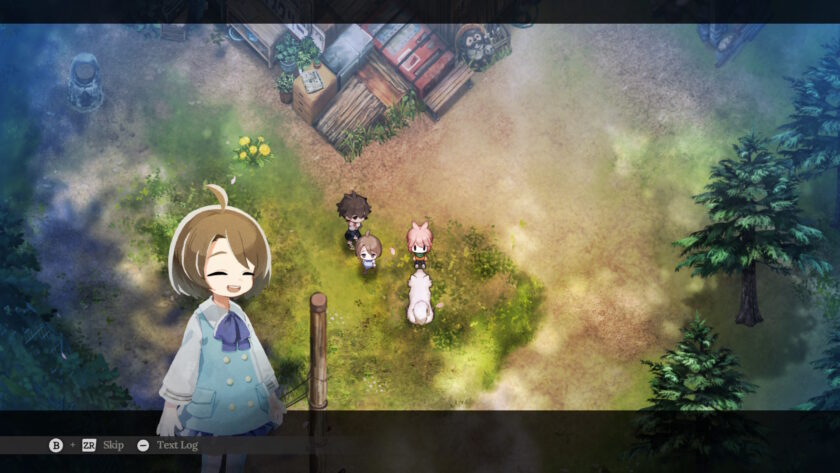
The next day, little Yoh comes over to play with your dog and tells you she has a secret spot in the mountains. Overhearing Yuma and Suzire talking about a treasure in the mountains, she fears they found it, and she runs off.
That night she is missing in the mountains. With the help of your dog, you go search for her and find her in the quarry where she had hidden chick Piro, whom she fears her uncle Rokkaku (who runs the cafe) wants to slaughter. When the boulder in front of the entrance is busted by the dog after you whistle to him, it opens up mining for you. Both of you and Piro are rescued.
The next day Chinana asks you to take care of Piro in the empty chicken coop on your property. This doesn’t end well, by the way. On Spring 12, Piro has developed into an adult chicken, and later that night someone knocks on your door saying it’s Yoh who wants to come look at Piro. You don’t open the door (remember, Rule # 1), and the following day you discover Piro is gone, leaving the hay in the chicken coop covered in blood.
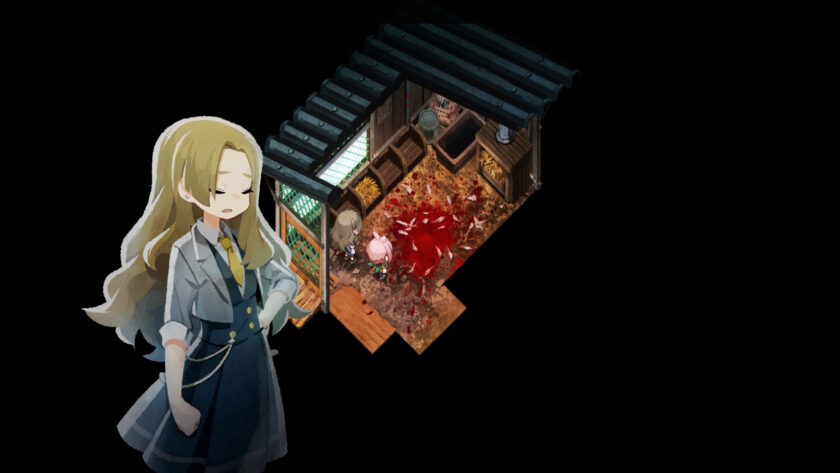
Piro acts as an introduction to animal care. Later on, you’ll unlock additional livestock such as chickens, cows, sheep, and more, allowing your farm to expand considerably. And your dog eventually becomes a convenient fast-travel tool, allowing you to quickly return home whenever necessary.
Managing Your Stamina
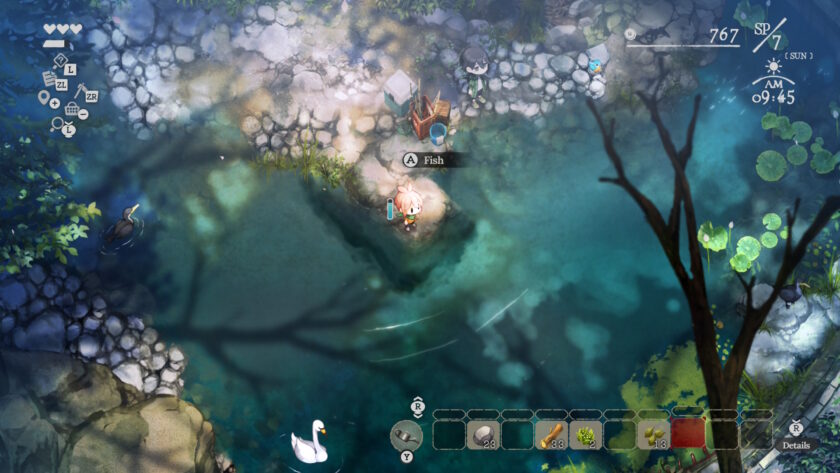
As if farming isn’t enough to deplete your stamina, you can spend your time foraging, mining, and fishing too, and later on you can even go hunting.
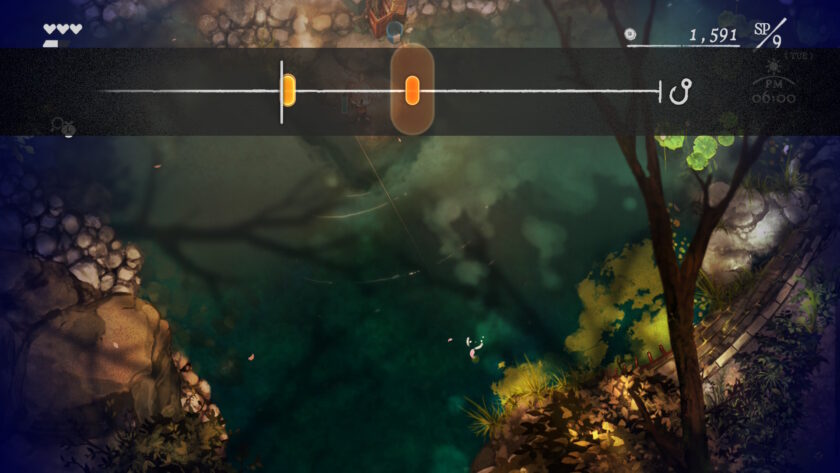
Fishing comes with a little mini-game of pushing the button at the right time. And mining in the quarry has several floors, for which you have to find the entrance hidden under rocks for every new floor. There are monsters to slay too in the quarry, and at the bottom floor, which is a long, long way down, there’s an actual boss to slay.
Once the game tells you to actually go out at night, effectively breaking the first village rule of not going out after 11 pm, you will also notice that nighttime exploration comes with a downside. Sure, you find some goodies that you won’t find during the day, like Magatama to offer at the village shrine near your farm to unlock new gameplay elements and blueprints. But spending time investigating mysteries after dark often means your energy isn’t replenished for farming the following day.
Cooking becomes increasingly important as your responsibilities grow. While forageables and basic ingredients can help in a pinch, prepared meals are often a much more effective way to restore stamina. Learning to make good use of cooking can make longer farming, mining, and exploration sessions much easier to manage.
As you progress, food, upgrades, blessings, and rewards can help improve your stamina and make daily life easier.
Becoming Part of the Community
On Spring 13, Rin forces errand coupons on you as punishment for breaking rule number 1. You have to complete requests for villagers, but rest assured: it’s all part of the storyline. These errands help build friendships while also rewarding useful items and resources.
An important one is having to repair the little shrine near the farm. It’ll make it possible to use the Magatame that you find at night to expand the gameplay and get blueprints. To unlock it, you need the sword you will pick up on the first night that you break the rule.
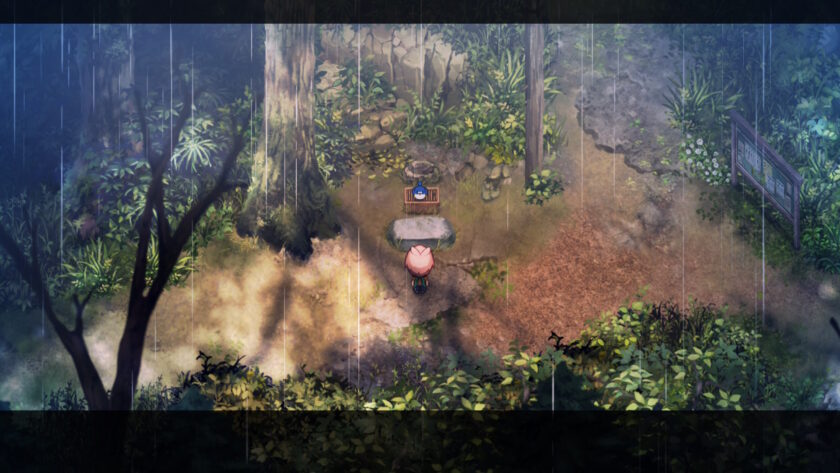
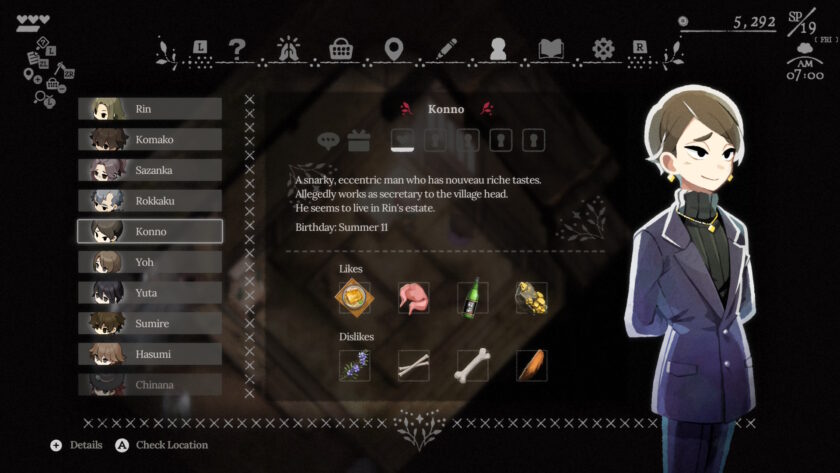
Though there is, of course, no romance in the game (you are about 10 years old!), relationships are a major part of life in Kagatsu. Every resident has their own likes and dislikes, which can be viewed through the menu. You will eventually find that many have personal struggles, regrets, ambitions, fears, and secrets that slowly reveal themselves over time. So make it a habit to speak with everyone regularly. Much of the game’s storytelling unfolds through these interactions.
Exploring the Mines
In the quarry, you’ll find ore, stone, crafting materials, hidden passageways, and enemy encounters. Upgrading your pickaxe early is highly recommended, as it dramatically improves efficiency. The first upgrade to a copper pickaxe happens when you do an errand (from the 12 coupons Rin gave you) for Kisuke.
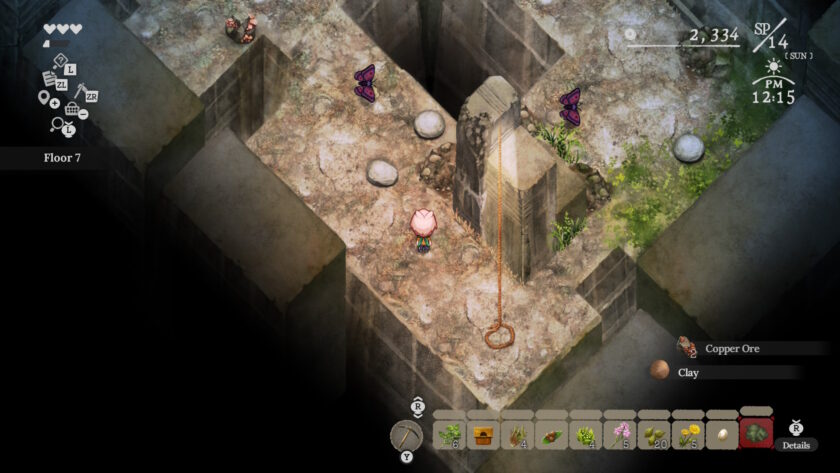
As you progress further underground, minecart shortcuts become available, allowing travel directly to every tenth floor once you’ve reached that. Until then, the boulder under which the stairs to the next floor pop up, is always a different one.
Also, keep an eye out for lost books throughout the Village in the Shade. These often contain information about spirits and can provide useful clues about handling supernatural encounters later.
Understanding Spirits and Night Exploration
Nighttime is where Village in the Shade truly distinguishes itself most from other farming sims. After dark, the village changes, as you’ll see once the game lets you break Rule #1. Familiar paths become unsettling or obstructed, strange sounds fill the air, and ghouls and horrors, drawn straight from folklore, begin to appear and chase you.

The horror is more unsettling than outright terrifying. Rather than relying heavily on jump scares, the game focuses on atmosphere, uncertainty, and the feeling that you’re venturing where you shouldn’t.
Defeating hostile spirits can also reward exclusive furniture and accessories. But fortunately, not every spirit is hostile. Some supernatural beings will exchange resources for blessings, unique rewards, special items, or stamina improvements. Keeping a variety of crops and materials in storage can prove useful when these opportunities arise. You will also find special items on the ground, marked by a blinking pinprick on the ground. On my first night out, I found the sword I needed to unlock the shrine near the farm. But you will also find Magatama.

Playing Village in the Sunshine
While Village in the Shade is the full intended experience, not everyone enjoys horror elements in their cozy games. That’s where the game mode for Village in the Sunshine comes in.
This mode doesn’t simply remove scary moments. Instead, it significantly changes the way the story unfolds.
Because the village rules can no longer be broken, many of the mysteries at the heart of Kagatsu never develop in the same way. Rather than investigating strange events and uncovering hidden truths, you’ll spend more time focusing on farming, fishing, mining, animal care, house customisation, errands, and relationships with the villagers.
Several story scenes are altered as well. During the sacrifice ceremony, Rin leaves to collect something she wants to sacrifice to the god of Kagatsu. Before you can see what happens, Kisuke tells you to close your eyes. The scene ends there, removing one of the more unsettling moments found in Shade mode.
Other events are also rewritten. Piro, the chick you help raise during your first Spring, continues living happily on your farm.
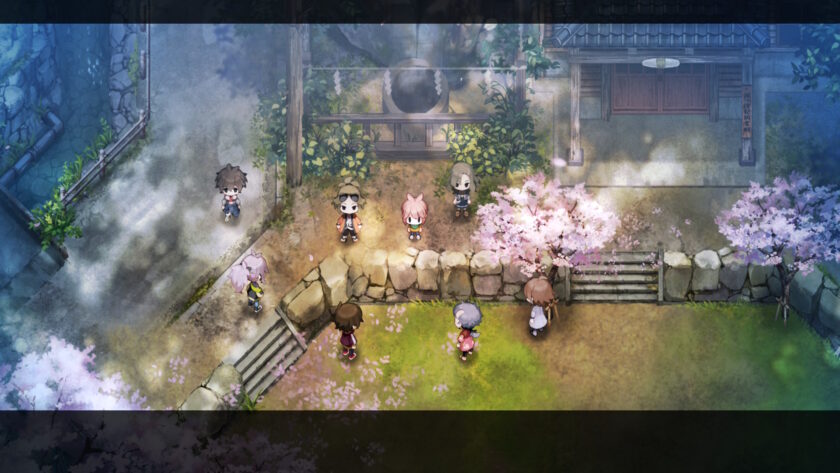
Because you never violate the village code in this game mode, Rin eventually worries that you’re becoming too isolated. Instead of being drawn into investigations and mysteries, you’re encouraged to become more involved in village life to make the story progress. To help with this, she gives you twelve errand coupons that can be used to socialise and assist residents around Kagatsu.
The shrine is another area that changes significantly. In Shade mode, important scenes and overheard conversations occur there, gradually revealing information about the village and its secrets. These sequences are absent in Sunshine mode, meaning much of Kagatsu’s hidden history remains undiscovered.
As a result, the main storyline is partially rewritten. The focus shifts away from mystery, supernatural events, and horror, placing greater emphasis on everyday life in the village. Farming, fishing, mining, friendships, festivals, crafting, and home decoration take centre stage.
For players who simply want a traditional farming simulation set in a beautiful Japanese mountain village, Village in the Sunshine is a surprisingly substantial alternative mode. However, if you’re curious about the secrets of Kagatsu, the village rules, and the supernatural forces lurking beneath the surface, Village in the Shade remains the version I would recommend for a first playthrough.
Do you like our content?
Support LadiesGamers as a member on Patreon!
 Or buy us a cup of coffee or tea on Ko-Fi!
