

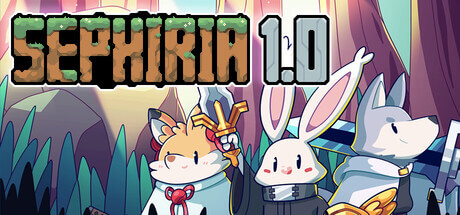
Game: Sephiria
Genre: Action, Adventure, RPG, Indie.
System: Steam (Windows)
Developer|Publisher: TEAM HORAY
Controller Support: yes
Steam Deck: Verified
Price: US $14.99 | UK £12.79 | EU €14,99
Release Date: July 31th, 2026
Review code provided with many thanks to Press Engine.
Sephiria – Cute Bunnies, Terrible Circumstances
There are few things more amusing in games than an adorable little creature being given an absolutely enormous problem to deal with. In Sephiria, you play as a brave bunny trying to save Bunnyville from a rather unpleasant fate involving hordes of demons. It’s not exactly sunshine and carrot cake, but the game wraps its rather grim premise in an incredibly cute package.
Sephiria has recently left Early Access and arrived at its full 1.0 release, although I came to it completely fresh, having not played the earlier versions. What I found was a polished little action roguelite that takes a familiar formula and adds one particularly clever ingredient: how you arrange your inventory actually matters. And that turned out to be one of my favourite parts.
Into the Depths
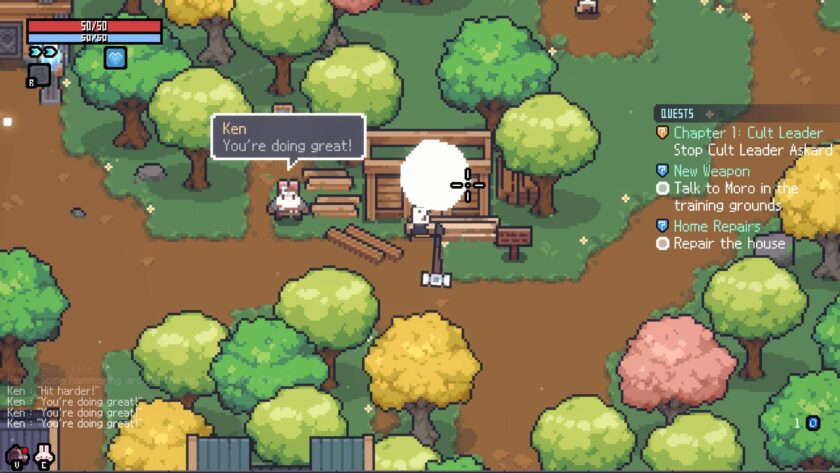
At its core, Sephiria is a top-down action RPG roguelite. You head into the depths, move from room to room, defeat enemies, collect loot and upgrades, choose your route and try to get further than you did on the previous run. It’s a formula we’ve seen plenty of times, but Sephiria understands that you don’t necessarily need to reinvent the wheel. Sometimes you just need to put an interesting wheel on it.
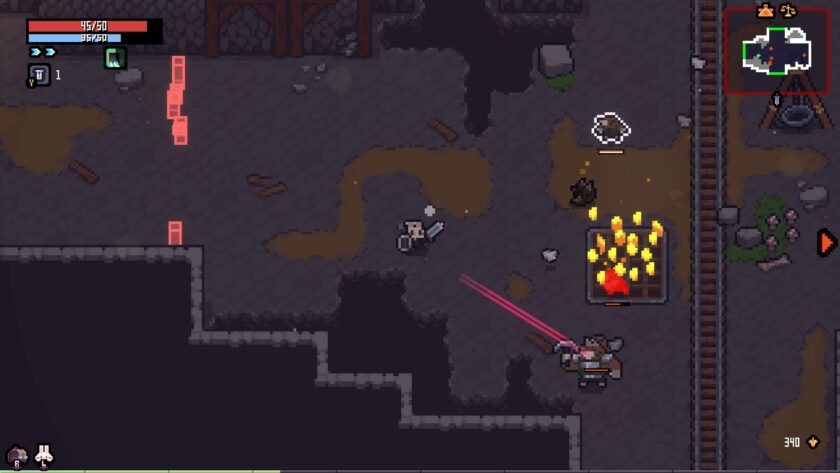
Combat starts fairly simply. Your first weapon gives you a sword and shield, allowing you to attack and block incoming attacks. There’s also a dodge, which I found myself relying on more than blocking. And here’s something that made me smile: the parry is optional. Regular readers will know that I have a slightly complicated relationship with parry systems. They seem to be everywhere these days, and apparently every enemy in gaming now expects me to perfectly time a button press while simultaneously dodging three other things. Sephiria doesn’t force me into that lifestyle. As you unlock additional weapons, combat becomes more varied. Different weapons have different movesets and approaches, meaning you can start experimenting with what suits you rather than simply upgrading the same attack over and over.
The Inventory System
This is the mechanic that really makes Sephiria stand apart. As you level up during a run, you’re presented with a selection of items. You don’t simply equip them and forget about them, though. You place them into an inventory grid, and where you put them can affect the other items around them. Some items provide buffs. Others modify neighbouring items. Certain combinations can create considerably more powerful builds. Suddenly, Sephiria stops being purely about how quickly you can smash through a room and starts asking you to think about what you’re carrying.
You can absolutely play it casually, grab things that look useful and throw them into your inventory wherever there’s space. But if you start reading the descriptions and paying attention to how everything interacts, there’s a much deeper system waiting underneath. I particularly enjoyed those moments when a slightly strange collection of items suddenly started working together. “That shouldn’t really work.” Oh. “It absolutely works.” Those are some of the best moments in a roguelite.
Stop to Think
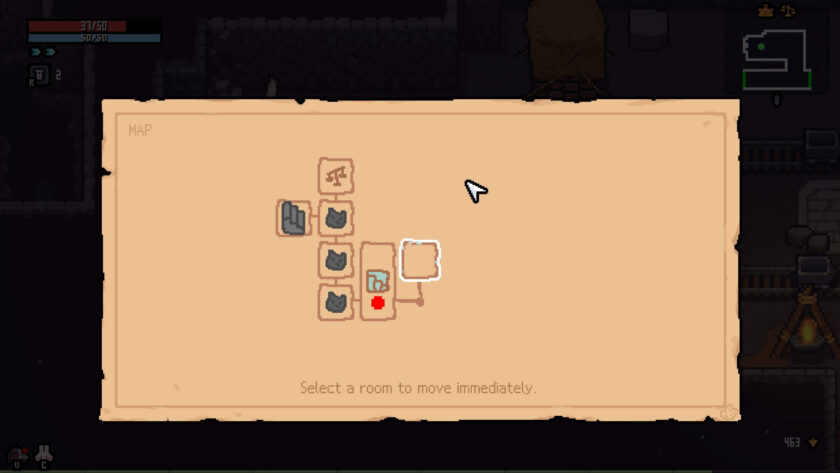
The structure is nicely paced, too. As you complete an area, you choose where to go next, with the game giving you a preview of what awaits along each route. That means you can make decisions based on what you actually need. Want more loot? There’s a route for that. Need something specific for your build? Perhaps there’s another option. Want to walk directly towards danger because apparently you’ve learnt nothing from your previous run? That’s available too, and often how I play. I loved how you can also pull up your map and fast travel to any room you previously visited for super speedy navigation. Back in Bunnyville, you can spend your accumulated rewards on various upgrades and unlocks. There’s a skill tree that gradually expands your options; new weapons and features become available, and there’s even a costume shop for changing your bunny’s appearance. That steady drip-feed of progression makes losing a run feel less painful because you’re usually working towards something.
Bosses, however…
I did run into one sizeable irritation: the boss fights. It’s not necessarily that they’re too difficult. In fact, I thought the general difficulty of the regular runs was pretty reasonable. The problem is the health bars. Some bosses have multiple phases, and after finally wearing down a sizeable health bar, they’ll happily replenish themselves and effectively ask you to do it all over again. I don’t mind a multi-phase boss when the phases introduce genuinely interesting new mechanics. But when it mostly translates into “Congratulations, now empty this enormous health bar again”, my enthusiasm starts to wander off for a cup of coffee. The fights themselves are generally manageable once you’ve figured out the patterns. I just wish they were a little more economical with the player’s time. Perhaps I’m getting older, but my tolerance for enormous boss health bars seems to be declining faster than my reflexes. Ok, rant over, moving on.
Cute on the Outside, Atmospheric Underneath
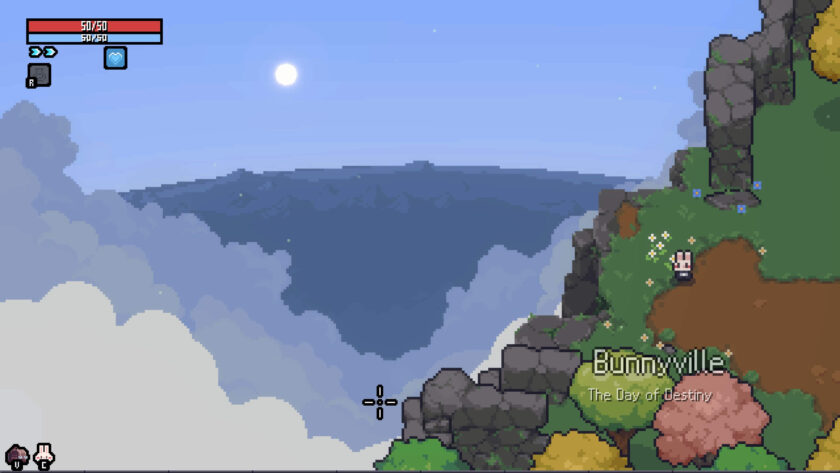
Sephiria’s visual style is deliberately simple, using pixel art to create its world. You’ve got cute little bunny villagers contrasted against dark mines and increasingly threatening environments. It shouldn’t really work as well as it does, but there’s something rather lovely about the contrast. The music deserves a mention, too. It’s atmospheric and surprisingly memorable, with darker, more mysterious tracks accompanying your dungeon expeditions while the hub areas offer something much calmer. It creates a nice sense of place without constantly shouting for attention.
Bring a Friend
Sephiria also supports online co-op for up to four players. I only had a brief opportunity to try this, but the system is straightforward and works nicely. Players can join each other’s games and revive fallen companions (thanks, chaps), which adds another layer to the usual roguelite formula. There’s also some sensible progression awareness, so you have a better idea of where another player is within their journey. For a game that already encourages experimentation with builds, having three other bunnies running around with you sounds like the sort of chaos that could become rather entertaining, and it is. The only niggle is if you go with randos, be prepared for them to hop off, leaving you little time to focus on your upgrade management.
It’s also Steam Deck Verified, and it played particularly nicely in handheld mode. That suits the game extremely well. Sephiria is the sort of game you can play for a quick run, put down and return to later without needing to remember the plot of an eight-hour fantasy epic.
Conclusion: Hop Little Bunnies, Hop Hop Hop
Sephiria is a lovely little surprise. It takes the familiar action roguelite structure and gives it a clever inventory system that genuinely affects how you approach each run. The combat is simple but satisfying, the weapon variety gives you room to experiment, and the progression keeps giving you reasons to return to Bunnyville and have another go. The boss fights are my biggest complaint, mainly because some of them feel unnecessarily padded, but that didn’t stop me from enjoying the overall experience. There’s also something wonderfully ridiculous about watching a tiny bunny battle its way through a dungeon with a gigantic sword.
It’s cute without being completely fluffy, strategic without becoming overwhelming, and straightforward enough to dip into whenever you fancy another run. If you’re looking for a new roguelite to disappear into for a while, Sephiria is well worth hopping into.
Final verdict: Two Thumbs Up

Do you like our content?
Subscribe to our daily news and never miss a review!
Loved this review — especially the point about the inventory grid. Placement being meaningful is what turned the game around for me too: once I started building around item neighbours instead of just grabbing stat sticks, whole runs played differently. And I’m with you 100% on the boss health bars — the phase refills are the one place the game disrespects your time, and it’s even rougher in co-op when a random hops off mid-fight. The weapon side of that experimentation is what I keep notes on — which setups actually hold up patch to patch — since the rebalances keep shuffling the tier list.
Thank you for the comment, glad you enjoyed the game too