



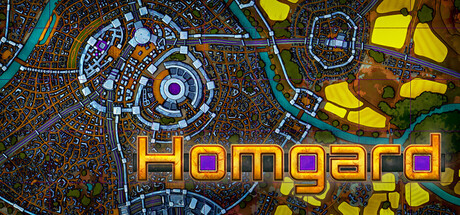
Game: Homgard
Genre: Puzzle, Casual, Indie, Adventure
System: Steam (Windows)
Developer | Publisher: Manapunk Studio
Controller Support: Unknown
Price: US $14.99 | UK £12.99 | EU € 14,99
Release Date: April 29th 2026
Review code used, with many thanks to Manapunk Studio.
Homgard is a fun nonogram or Picross game that delivers new puzzle mechanics and rich, immersive worldbuilding as players explore the now broken world of Homgard.
Homgard is Dead
The story of Homgard begins at its end with the world now deleted and all system agents unavailable. Your job as the only available auxiliary agent is to complete nonogram puzzles in each region in order to slowly unveil the map hidden underneath each tile. Even though the world has ended, you are still accompanied by a computer program who speaks to you through a terminal with hints and pep talks.
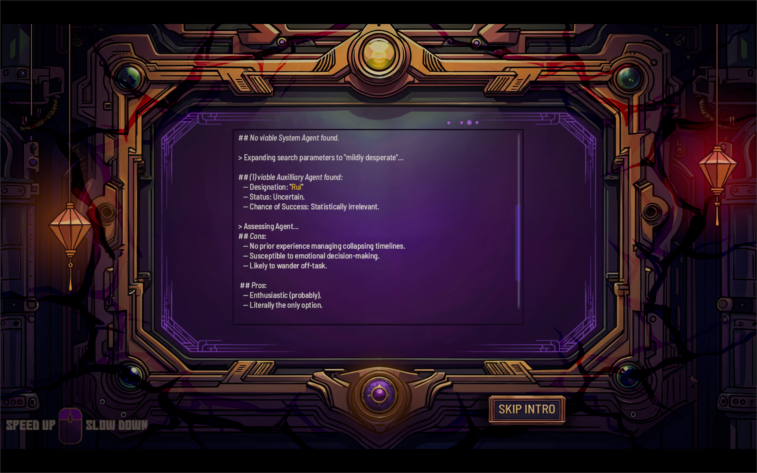
Most of Homgard’s narrative is revealed through memory archives, which are unlocked as you complete the nonogram or Picross puzzles. These memories range from academic textbook excerpts to intercepted government letters to mundane complaints about units of measurement. The futuristic, magical visuals and the Homgard radio stations work well in bringing the world to life. My favorite was the Imperial Network station, which mostly broadcasts classical music.
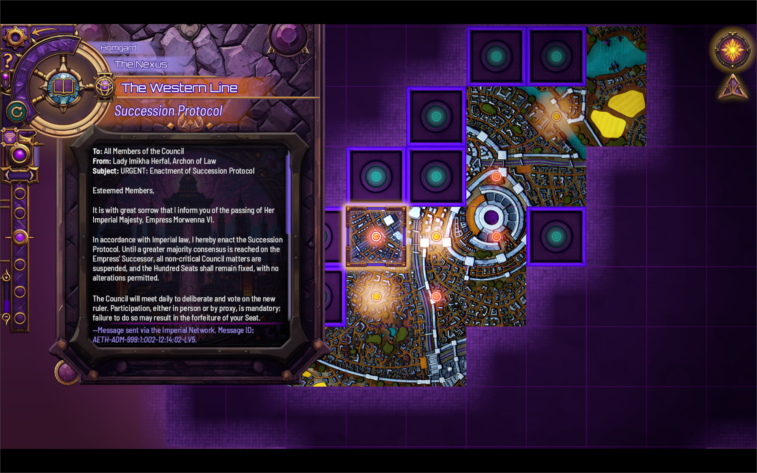
Navigating a Broken World
Initially, most of the Homgard map is hidden, but solving the puzzles around you unlocks nearby tiles, and it’s not long before you’re exploring areas outside of the starting region. The purple tiles indicate areas that can only be unlocked by completing their puzzles, while the orange and green tiles indicate areas that can be unlocked just by moving onto them using either your mouse or WASD. There are also paired teleportation tiles that help you instantly travel long distances.
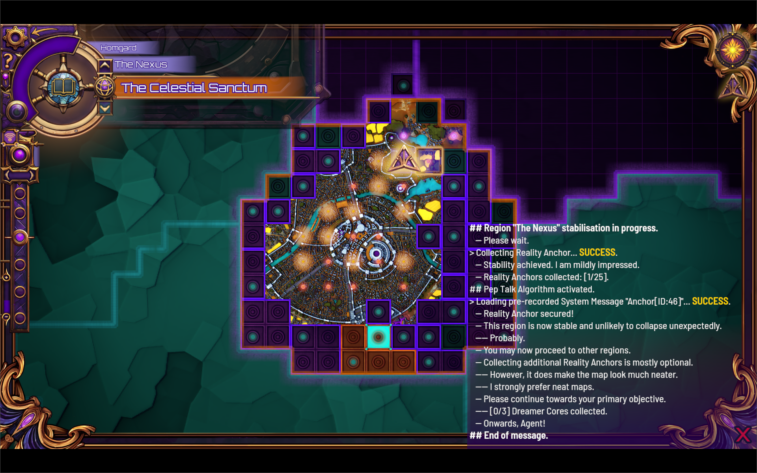
Your ultimate goal is to collect the three dreamer cores scattered across Homgard and return to the Origin. As you explore each of the 25 different regions, certain tiles are unavailable unless you collect the reality anchor in order to unlock the region’s full map. Fortunately, if you’re stuck on a particular puzzle, you can always take a different route to your destination, as not all reality anchors are mandatory to collect.
Not Your Typical Nonogram
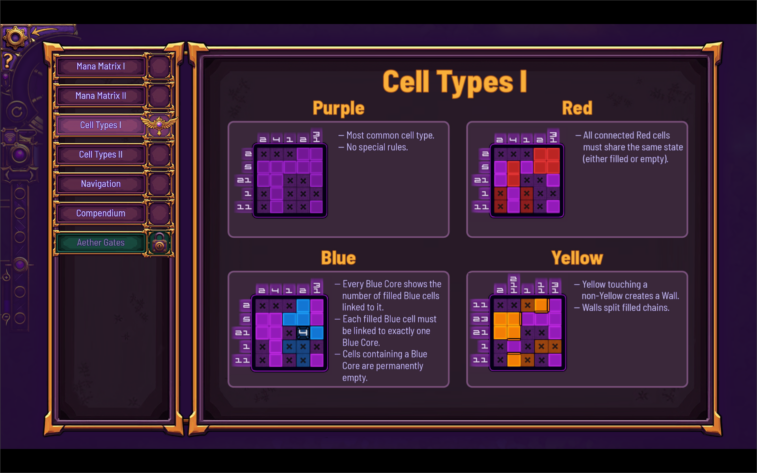
The first Homgard region you explore mostly consists of simple, smaller 5-by-5 puzzles that follow the standard nonogram rules. The puzzles progressively increase in size and complexity, so newer players aren’t overwhelmed. As you venture out into different regions, you’ll encounter different colored cells that put a twist on the original Picross rules. For example, grouped red cells must be either all filled in or all crossed out, while filled-in blue cells must be connected to a blue core. Homgard’s compendium keeps track of all this information for you to peruse should you forget the rules of a particular cell type.
Modern Picross Conveniences
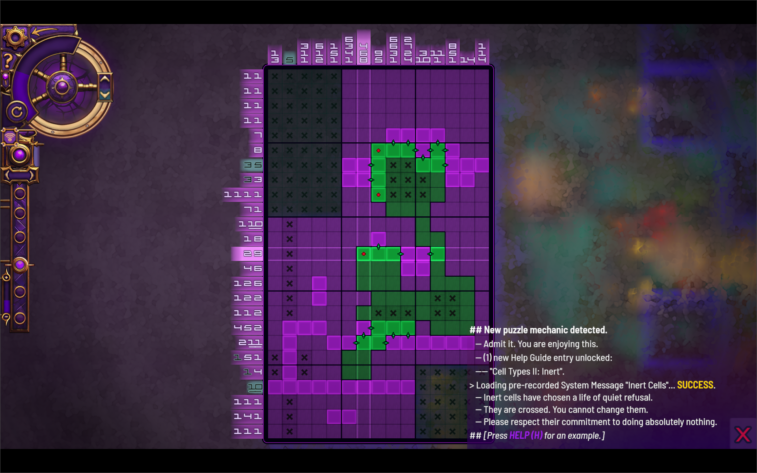
I was pleased to see that Homgard comes with all the modern conveniences I’ve come to love in my nonogram and Picross games. There are options to automatically fade completed hint numbers and highlight rows for correct and incorrect groupings. Cells can be set to automatically cross out when a row or column is complete as well. I also highly recommend turning on the drag assist option, which helped me stay in the correct row or column while filling in a long group. My favorite ability is the cell counter, which has saved me from having to manually count squares, a frustrating task, especially on larger nonograms.
Conclusion
Overall, Homgard stands out in my Picross game collection not only with its interesting new nonogram rules but also with its immersive worldbuilding. I’m looking forward to experiencing the next three volumes in this story.
Final Verdict: Two Thumbs Up
Do you like our content?
Subscribe to our daily news and never miss a review!