


Game: Lost in Night
Genre: Casual
System: Steam (Windows)
Developer|Publisher: Rumbic Studio | HH- Games
Controller Support: No
Steam Deck: Playable
Price: US $7.99 | UK £6.99 | EU €7,99
Release Date: April 28th, 2026
Review code provided with many thanks to Rumbic Studio.
Lost in Night: A Familiar Puzzle Formula
There are certain games that immediately tell you exactly what they are within the first few minutes, and Lost in Night definitely falls into that category. This is a straightforward match-3 puzzle game, the sort of thing many players will instantly associate with mobile gaming. You know the drill already: match coloured tiles, clear the board, rack up points, move onto the next level, repeat for several hours while your brain quietly switches into autopilot mode. And honestly? That is completely fine.
While Lost in Night doesn’t reinvent puzzle games or introduce some groundbreaking mechanic that changes the genre forever, it does provide a fairly relaxing and easy-going experience if this style of game already appeals to you. I had some decent fun with it during my time playing, even if it never really pushed itself beyond being “solid comfort food” for puzzle fans.
Matching Tiles and Clearing Boards
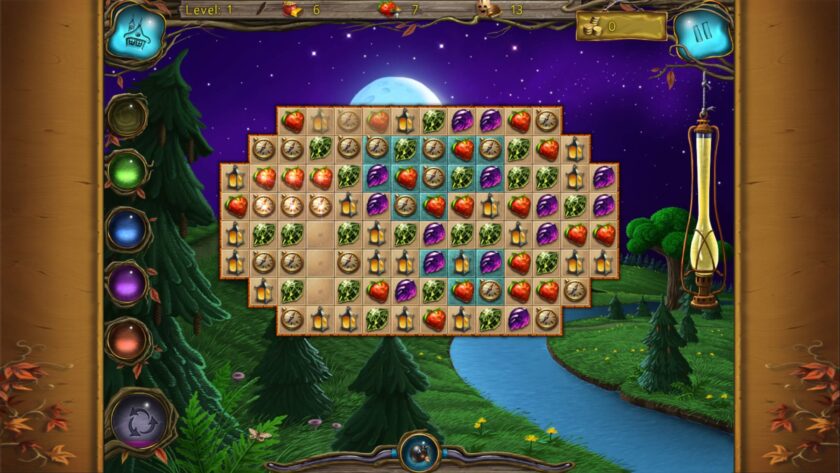
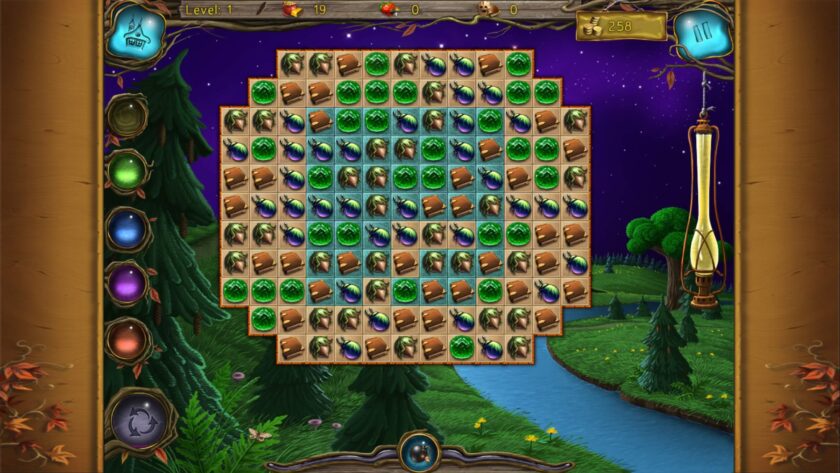
The core gameplay is exactly what you would expect from a traditional match-3 setup. You swap coloured pieces around the board in order to line up matching sets and remove them from play. The main objective in most stages is to clear all the marble plaques scattered around the board before moving on to the next level. It is simple, approachable, and easy to understand within seconds.
The game keeps things moving at a nice pace, too. Levels are fairly short, meaning it has that “just one more go” energy where you can easily burn through several stages without really noticing the time disappearing. There is also a decent sense of progression as new layouts and board styles begin appearing later on. Yes, there are power-ups, and yes, there are those satisfying cascade effects when you blast away loads of pieces at once.
One thing I did appreciate is that the game gives players a choice in how stressful they want the experience to be. You can play with the standard timed mode, where you need to clear objectives before the clock runs out, or you can switch over to a more relaxed untimed mode, where you simply play at your own pace.
I actually thought the timed mode was fairly generous for most of the game. It only starts becoming a little tighter during later levels, but even then, it never felt brutally punishing. Meanwhile, the relaxed mode feels ideal for players who simply want something calming to unwind with after work.
The Other Puzzle Modes
As you continue progressing, Lost in Night unlocks additional gameplay variants, and this is honestly where I had the most fun with the game.
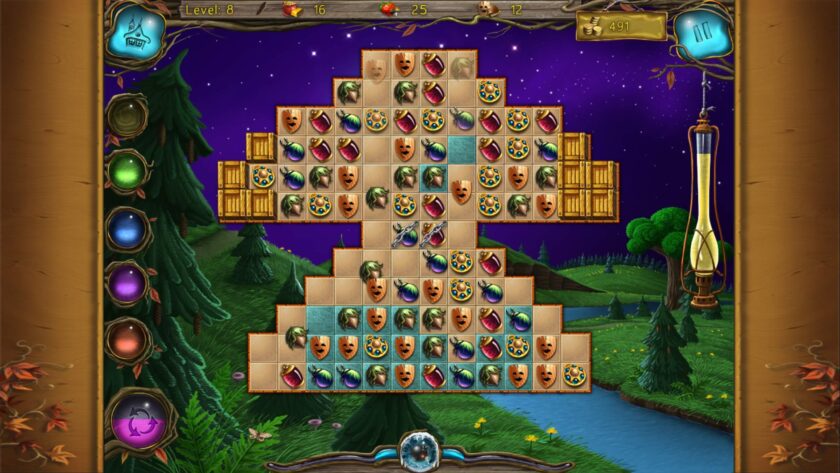
One particular mode changes the gameplay so instead of swapping pieces around, you simply click large connected groups of matching tiles to instantly clear them. It becomes much faster and far more satisfying in motion. There is something oddly enjoyable about rapidly clearing huge clusters off the screen and watching the board collapse into itself. I found myself enjoying this mode considerably more than the standard puzzle setup. It felt snappier, more arcade-like, and much easier to casually dip into for a few quick rounds.
The game also introduces different board layouts, including hexagonal grids, which helps break up the visual repetition slightly. It is not transformative, but it does at least stop things from becoming too stale too quickly.
Building the Town
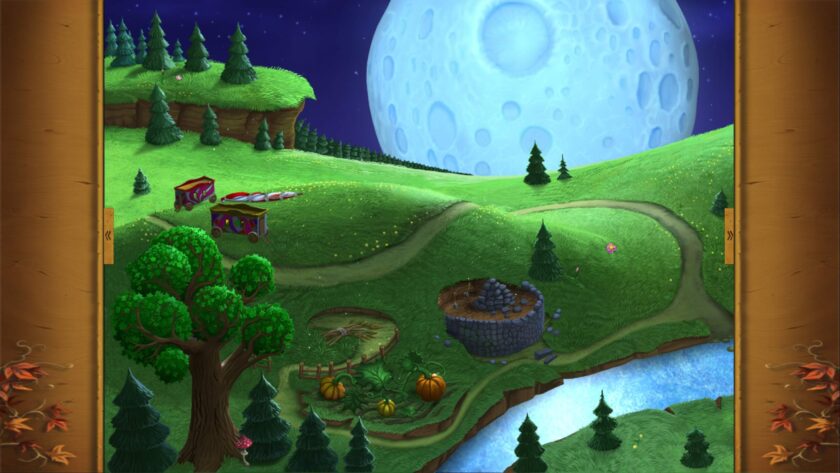
Outside of the puzzles themselves, there is also a small town-building element where you spend earned gold on decorative structures and upgrades. You can place buildings like pumpkin houses, circuses, and various fantasy-themed additions around your little settlement.
To be honest, this side of the game felt fairly light and mostly cosmetic. I never really became heavily invested in the town itself because it does not seem to deeply affect gameplay progression. It mostly acts as a visual reward system between levels. Still, some players will probably enjoy slowly building up their little village over time, especially if they like having extra objectives beyond pure puzzle-solving.
Presentation and Atmosphere
Graphically, Lost in Night is quite plain overall. It has that very familiar mobile-style fantasy presentation where everything is colourful and readable but not especially memorable. The menus, artwork, effects, and environments all do their jobs adequately, though there is not much artistic identity standing out from the crowd.
The soundtrack follows a similar route. It is soft, light fantasy background music that quietly sits in the background while you play. Nothing offensive, nothing spectacular either. That probably sounds harsher than intended because the game itself is not bad-looking. It simply feels very safe visually. There is no strong personality or standout aesthetic that immediately separates it from the enormous pile of other match-3 titles already available.
A Relaxed Evening Game
I think the biggest strength of Lost in Night is understanding exactly who it is aimed at. This is not really a game for players chasing deep mechanics, cinematic storytelling, or highly strategic systems. It feels much more designed for someone who simply wants a relaxing puzzle game they can casually play in the evening while winding down.
Honestly, it reminded me of the sort of game my own family members would happily sit and play for hours. Sometimes people are not looking for massive adventures or emotionally intense experiences. Sometimes they just want to click colourful tiles, clear boards, and slowly work through hundreds of levels at their own pace. And for that audience, Lost in Night does a decent job.
Conclusion: Sleep Tight
Lost in Night is a straightforward match-3 puzzle game that sticks closely to familiar ideas, but it still manages to be reasonably enjoyable thanks to its relaxing pace and easy pick-up-and-play structure. The extra gameplay modes help keep things fresh enough, and the optional untimed mode makes it approachable for players wanting a calmer experience.
It does not really stand out visually or mechanically from the crowd, and there are certainly bigger and more inventive puzzle games available. Still, there is something comforting about its simplicity. If you already enjoy this style of puzzle game, there is a good chance you will get some pleasant downtime out of it. If you are burnt out on match-3 games entirely, this probably will not change your mind.
Final Verdict: I Like it

Do you like our content?
Subscribe to our daily news and never miss a review!