


Game: 33 Immortals
Genre: Action, Indie, MMO.
System: Steam (Windows) (also on Xbox)
Developer|Publisher: Thunder Lotus | Kepler Ghost
Controller Support: Yes
Steam Deck: Playable
Price: US $14.99 | UK £13.99 | EU € 14,99
Release Date: June 10th, 2026
Review code provided with many thanks to Keymailer.
33 Immortals – A Roguelike With 33 Players? Surely That Can’t Work…
When I first heard about 33 Immortals, I’ll admit I was sceptical. We’ve seen countless top-down action roguelikes over the years, but a roguelike built around 33 players all sharing the same run? That felt incredibly ambitious. The biggest question wasn’t whether the gameplay would be fun. The biggest question was whether the concept itself could actually work.
After spending time with the full release, I’m happy to report that not only does it work, but it works far better than I expected. Thunder Lotus has taken a familiar roguelike structure and built something genuinely different around it. That’s not an easy thing to do in a genre that’s become increasingly crowded, but 33 Immortals manages to carve out its own identity.
Fighting Back Against the Afterlife
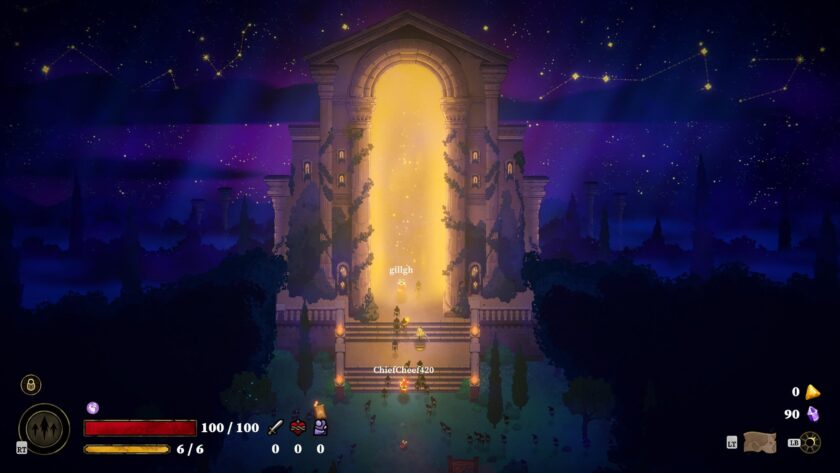
The story is fairly light, but it provides enough context to get the adventure moving. You play as a damned soul joining a rebellion against divine judgement. Alongside dozens of other lost souls, you’re fighting your way through the afterlife in an attempt to reclaim your freedom and challenge the powers that have condemned you.
There are plenty of religious themes woven throughout the game, from the environments and enemies to the bosses themselves. I won’t pretend I followed every piece of lore perfectly, but the overall setup is easy enough to understand: you’re part of a massive uprising against the forces controlling the afterlife. More importantly, it provides a fantastic backdrop for the action.
Beautifully Grim
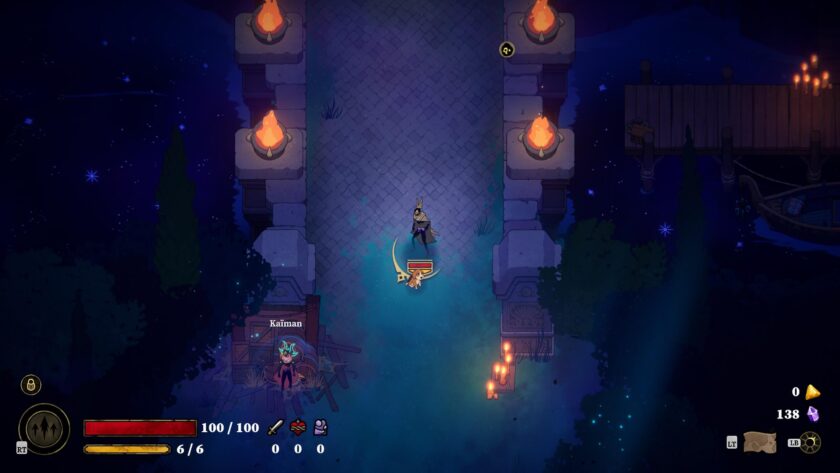
Before even talking about the gameplay, I have to praise the presentation. 33 Immortals looks fantastic. The art style immediately stands out with its bold colours, striking character designs and beautifully animated environments. While the setting leans heavily into infernal landscapes and demonic imagery, there’s still a surprising amount of beauty to it all. The main area, Inferno, genuinely feels like a hostile underworld, yet it’s also packed with vibrant visual details that make exploring enjoyable.
The soundtrack deserves praise as well. The orchestral score, mixed with church-like organs and dramatic arrangements, fits the religious themes well. It gives the entire experience an epic feel, especially during boss encounters where the music really comes alive.
Controlled Chaos
At its core, 33 Immortals is a top-down action roguelike. You begin by selecting a weapon archetype. There are plenty to choose from, including swords, bows, magical staffs, dual blades and more. Each weapon has its own distinct playstyle and special ability.
I found myself gravitating towards the bow, which seems to be my new weapon of choice in these games recently. Its unique mechanic allows you to fire arrows and then recall them, damaging enemies both on the way out and on the way back. It’s simple but incredibly satisfying to use.
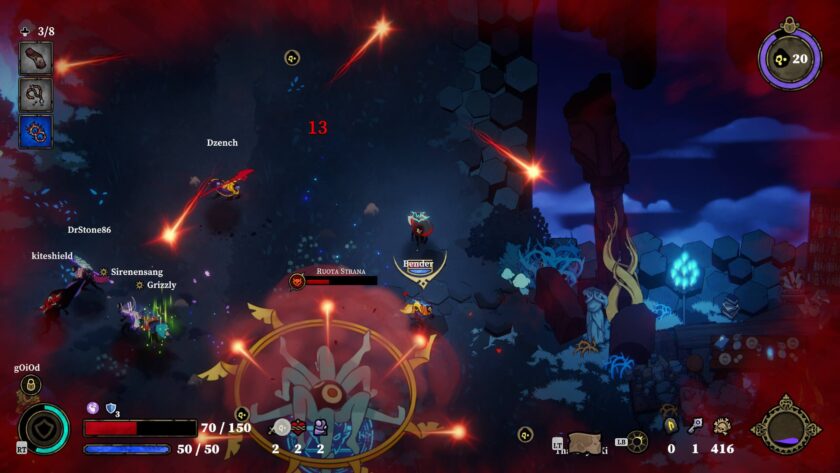
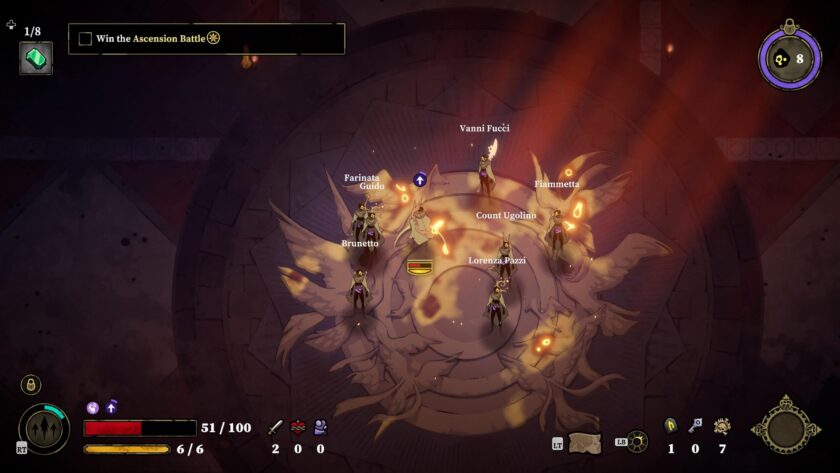
Combat itself feels responsive and easy to understand. Every weapon features light and heavy attacks, with heavier strikes helping to break enemy armour and deal larger bursts of damage. Each weapon also comes with a cooperative ability. Activating it places special markers on the ground that require other players to interact with. Once triggered, these abilities provide powerful buffs or attacks that benefit the group. It’s a clever system that encourages teamwork without forcing players into voice chat or complex coordination.
The 33-Player Experiment
Of course, the real selling point here is the multiplayer. The idea of 33 players sharing a roguelike run sounds chaotic, but the developers have done a pretty good job of making it feel natural.
When a run begins, you’re dropped into a massive map filled with enemies, loot, events and objectives. Other players are already scattered throughout the world, exploring and fighting alongside you. What impressed me most is how little friction exists between players. Nobody can steal your loot. Nobody can take your resources. Nobody can ruin your progression.
Every player receives their own rewards, meaning cooperation feels genuinely beneficial rather than competitive. You can stick closely with large groups if you want safety in numbers, or wander off and tackle objectives on your own. Both approaches are viable, although travelling with allies is generally the safer and sensible option. Players can revive one another, activate cooperative abilities together and naturally drift between groups as objectives appear across the map. It creates a surprisingly organic multiplayer experience.
Massive Bosses and Meaningful Progression
As you explore, you’ll gather resources used to improve your character during the run. Health, damage and various other bonuses can be upgraded, while treasure chests provide additional relics and powerful effects. Eventually, players are funnelled towards large-scale encounters and enormous boss fights.
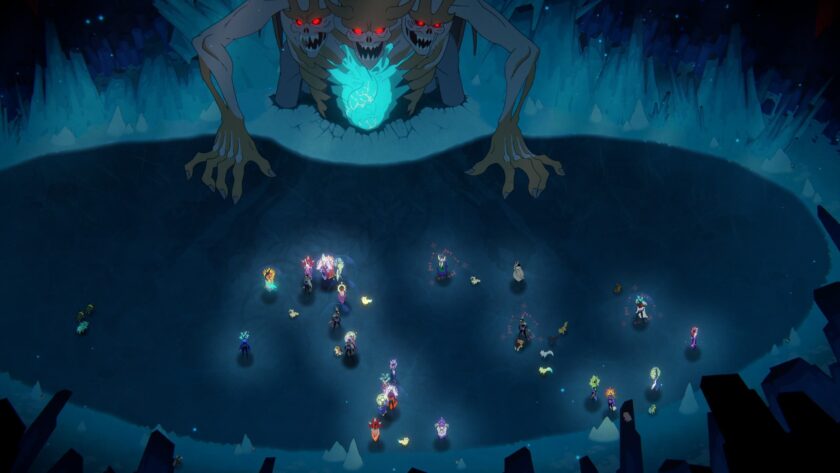
And when I say enormous, I mean enormous. The bosses have gigantic, meaty health pools, but that makes sense once you remember there could be over thirty players attacking them simultaneously. These encounters feel appropriately epic. Many feature additional mechanics such as destroying crystals, managing enemy waves or completing objectives while gradually whittling down the boss’s health.
Outside of individual runs, there’s a satisfying progression system waiting back at base. Completing challenges, mastering weapons and finishing objectives unlocks permanent upgrades and new perks that strengthen future attempts. And of course you can dress up your character with cosmetics. Just make sure you grab a cute doggo pet while you’re there. It’s a familiar roguelike formula, but it’s implemented well and gives every run a sense of purpose.
A Few Small Concerns
My biggest concern isn’t necessarily with the gameplay itself. It’s with the long-term health of the player base.
The entire concept relies on having enough players online to keep matchmaking healthy. During my review period, finding games was never a problem, and runs were consistently populated. As long as the community remains active, the system works brilliantly.
There were also occasional moments where highly experienced players seemed to steamroll content while newer players struggled to keep up. It’s not a huge issue, but it’s noticeable from time to time.
Conclusion: Hells Bells
33 Immortals could easily have been a gimmick. Instead, Thunder Lotus has created something that feels genuinely fresh within the roguelike genre. The 33-player structure isn’t just a marketing hook; it’s woven directly into the gameplay and creates memorable moments that simply wouldn’t exist in a traditional roguelike.
The combat is enjoyable, the progression system is rewarding, the presentation is excellent and the cooperative focus works far better than I expected. Most importantly, it captures something that many online games struggle with: the feeling that everyone is working together without getting in each other’s way.
For a concept that sounded almost impossible on paper, 33 Immortals ends up being a surprisingly successful rebellion.
Final Verdict: I Like it a Lot
Do you like our content?
Subscribe to our daily news and never miss a review!