




Code provided thanks to JOZU Games.
M.A.Y.A – An Interesting Project With Plenty of Growing Left to Do
Every now and then a demo comes along that leaves me feeling a little conflicted. That’s probably the best way to describe my time with M.A.Y.A.
This is a sci-fi action adventure created by a solo developer. There are ideas here that I genuinely liked, and there are moments where you can see what the developer is aiming for. At the same time, this is also a demo that feels very much like a work in progress.
The good news is that there is still plenty of time for improvement. The game isn’t currently planned for release until 2027, which gives the developer a decent amount of breathing room to refine systems, improve presentation and tighten up the overall experience. As it stands, though, M.A.Y.A feels more like a glimpse of a future game rather than a polished demonstration of one.
Crash Landing Into Adventure
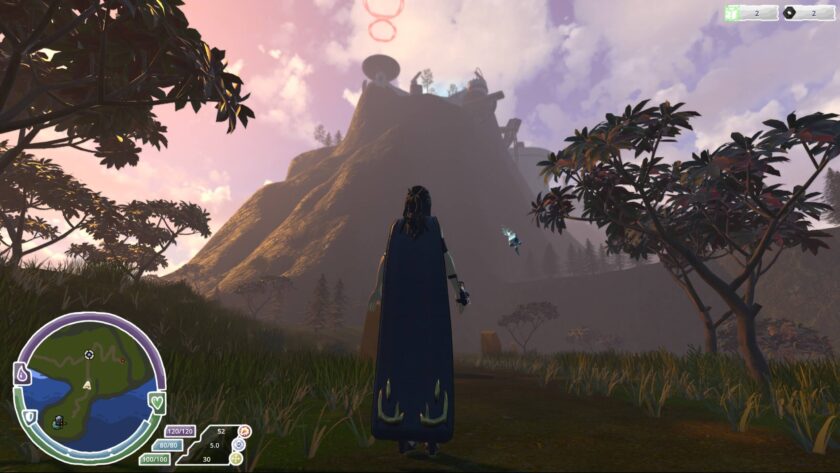
The story setup is straightforward enough. You play as Maya, a futuristic warrior tasked with helping her people find a new home after the destruction of their world. Things quickly go wrong when an ambush forces Maya to crash-land on a hostile planet. From there, your objective is to locate and activate uplink stations, reconnect with your fleet and push back against the hostile forces occupying the world. At least in the demo, the structure remains fairly simple. You arrive on a planet, search for objectives, activate stations and move on to the next area.
I played through two distinct locations during my time with the demo: a forest-themed world and a frozen planet. While visually different, both followed a very similar gameplay loop.
A Curious Mix of Art Styles
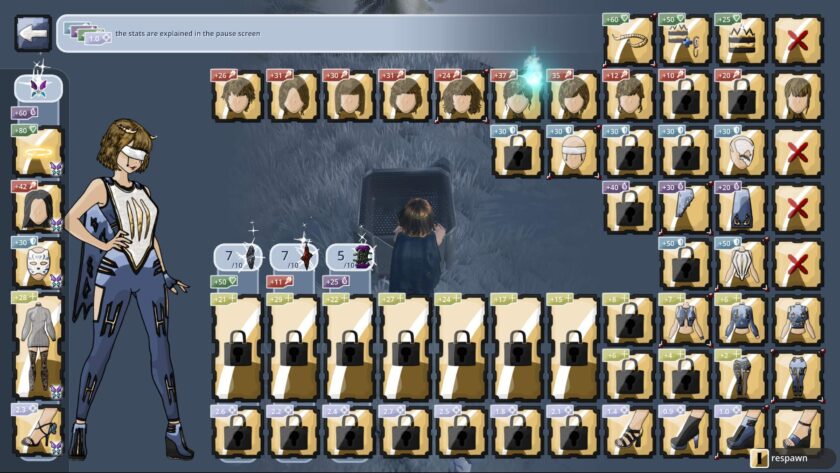
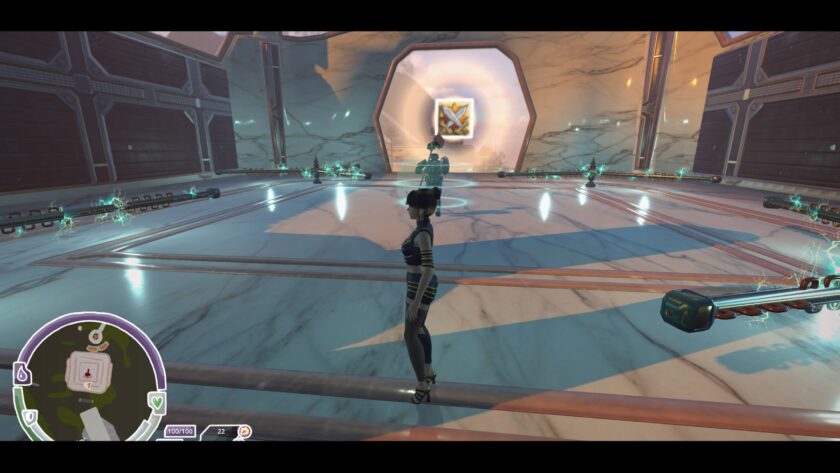
One of the first things that stood out to me was the game’s presentation. The menus feature hand-drawn sketches and illustrations, giving the game a personal touch. There’s a cosmetic system where you can unlock outfit pieces and customise Maya’s appearance, all presented through these rough, sketchbook-like menus. The problem is that this style doesn’t really carry over into the main game. Once you’re exploring the world, the visuals feel much more generic 3D. The environments and character models often resemble the sort of assets some players will recognise from smaller indie projects or engine asset packs. That’s not necessarily a bad thing on its own, but it does create a disconnect between the charming menu presentation and the in-game world.
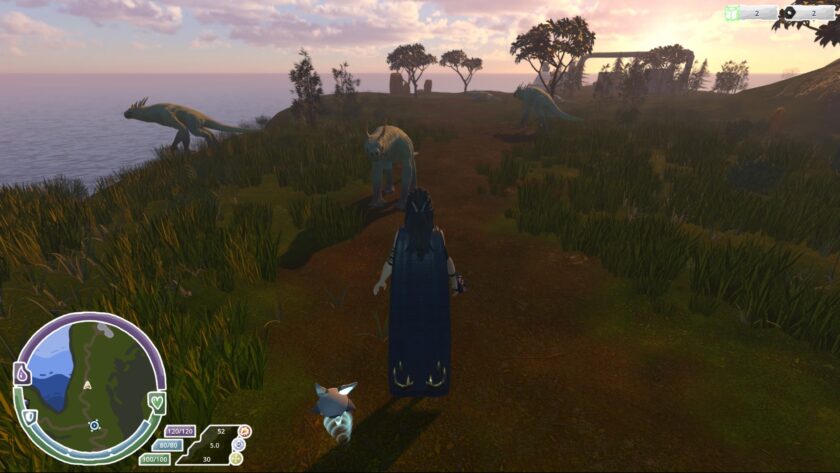
The sci-fi setting is certainly present, with robotic enemies, futuristic weapons and alien landscapes, but it lacks a strong visual identity right now. That said, there were a few touches I appreciated. The forest area featured large lizard-like creatures roaming around peacefully, while the frozen planet had deer wandering through the environment. Small details like that helped the worlds feel a little more alive.
Combat That Needs More Punch
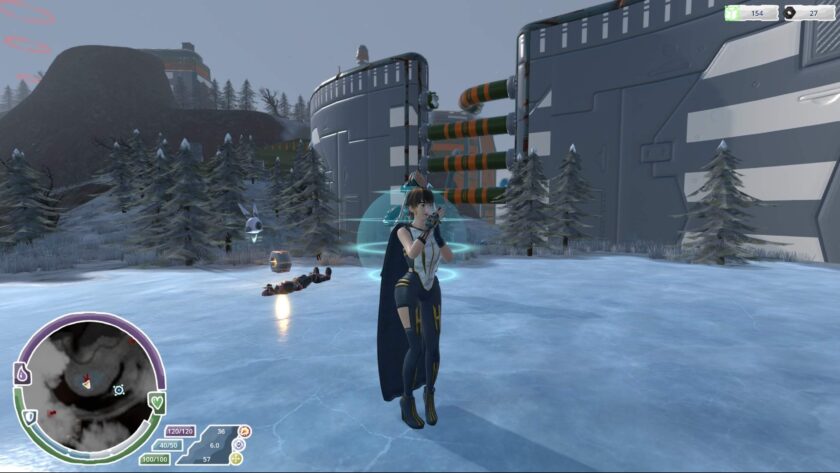
Combat is where I struggled the most with the demo. Maya has access to a ranged weapon from the start, and later I unlocked an alternative weapon that functioned more like a flame torch. Unfortunately, neither felt particularly exciting to use. The shooting mechanics are functional, but they currently lack impact. Enemies absorb damage without much feedback, and encounters rarely feel thrilling. The standard enemy soldiers were actually one of the biggest frustrations. They seem capable of spotting you from surprisingly long distances and can deal significant damage very quickly. More than once I found myself getting shredded before I had a chance to properly react.
There are some attempts at variety. One enemy uses a shield and large hammer, requiring you to wait for openings before attacking. Another enemy functions like a tank unit, launching rockets at you from range. While these ideas are solid on paper, the overall combat still feels quite rough around the edges. Movement is a little more successful. Maya can jump, double jump and perform an aerial dash, which adds some mobility when exploring the larger maps. The controls can feel a bit twitchy at times, but the extra movement options do make traversal more enjoyable than combat.
Exploration Is Encouraged
The maps themselves are surprisingly large and offer room to explore. You can gather crystals and discover cosmetic unlocks. There is definitely an attempt to reward players who venture off the main path. One small detail I actually liked was how Maya reacts to environmental conditions. On the frozen planet, for example, she visibly shivers while exploring the icy landscape. It’s a simple touch, but it helps sell the atmosphere a little.
The cosmetic system also gives players something extra to collect, even if the overall art direction still feels somewhat disconnected at this stage.
Plenty of Potential, But Not There Yet
Throughout my time with M.A.Y.A, I kept finding myself caught between two thoughts. The first was that I wasn’t particularly enjoying the demo in its current form.
The second was that I could see the foundations of something that might become much stronger in the future. The movement system has potential. The world design shows some promise. The customisation features add personality. There are clearly ideas here that could become genuinely interesting with further development.
Right now, however, almost every system feels like it needs additional work. The combat needs more impact. The animations need more polish. The visual identity needs strengthening. Enemy encounters need balancing. The world itself could benefit from feeling more alive and reactive.
Final Thoughts
M.A.Y.A is a difficult game to judge based solely on its current demo. As a playable showcase, it left me with plenty of concerns. Much of the gameplay felt rough, and I never quite reached the point where the adventure truly clicked for me. At the same time, it’s impossible not to appreciate the ambition behind the project. Solo game development is incredibly challenging, and there are enough interesting ideas here to make me curious about how the game evolves over the next couple of years.
Would I recommend the demo as it stands? Probably only to players who enjoy following indie projects early in development or who like supporting solo developers as they build their vision. For everyone else, this may be one worth keeping an eye on rather than jumping into immediately. There’s potential buried beneath the rough edges. The question now is whether that potential can be fully realised before release.
Do you like our content?
Support LadiesGamers as a member on Patreon!
 Or buy us a cup of coffee or tea on Ko-Fi!
