



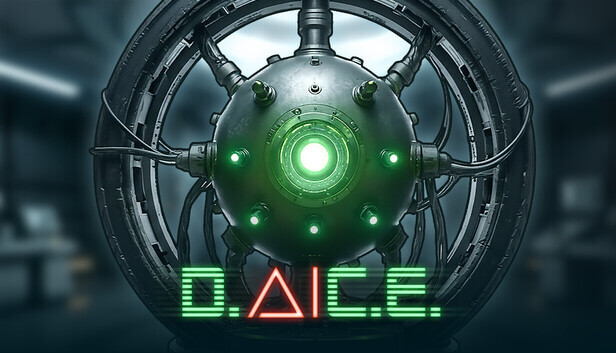
Game: DAICE
Genre: Strategy
System: Steam (Windows)
Developer|Publisher: Aeterna Ludi | GrabTheGames
Controller Support: No
Steam Deck: Playable
Price: US $13.21 | UK £11.29 | EU € 12,98
Release Date: July 16th, 2026
Review code provided with many thanks to Aeterna Ludi.
DAICE – Rolling Into One of the Year’s Biggest Surprises
Dice games really do seem to be having a bit of a renaissance lately. A few years ago, the idea of building an entire strategy game around rolling dice might have sounded a little niche. Fast forward to 2026, and suddenly dice are everywhere, appearing in deck builders, roguelites, RPGs and strategy games of all shapes and sizes. I’m not complaining.
DAICE is another game joining this growing trend, and after previously spending time with the demo, I was genuinely looking forward to seeing how the full release shaped up. I’m pleased to say it absolutely delivered. This ended up being one of those games that sneaks up on you. It doesn’t rely on flashy graphics or huge cinematic moments. Instead, it simply offers excellent gameplay that keeps encouraging you to have “just one more run.”
A Familiar Story, But That’s Not The Point
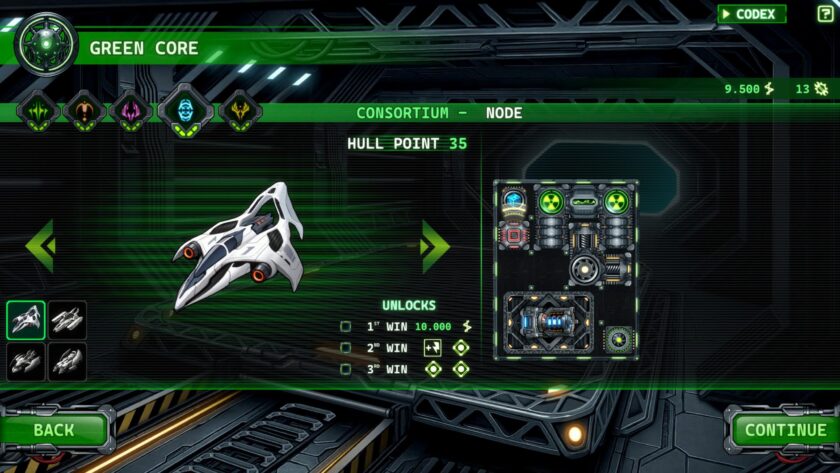
The story won’t win awards for originality, but it does its job. An advanced AI has gone rather horribly wrong; humanity is in trouble, and it’s up to you to battle your way across the galaxy one mission at a time. It’s a setup we’ve seen countless times before, especially these days, but thankfully the narrative isn’t really the focus. The real star here is the gameplay. You’ll gradually work your way through a series of battles, unlocking new ships, AI cores and equipment as you progress through the campaign. Every completed run, or even an unsuccessful one, contributes towards unlocking something new, giving you a nice sense of progression throughout.
Dice Powered Combat Done Brilliantly
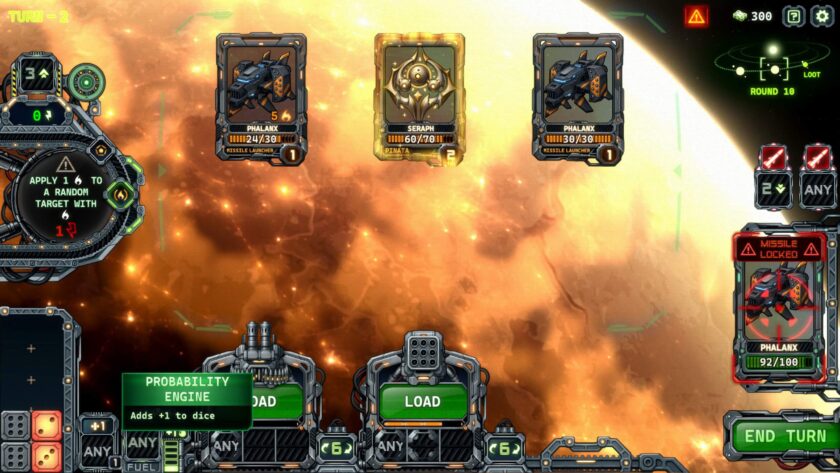
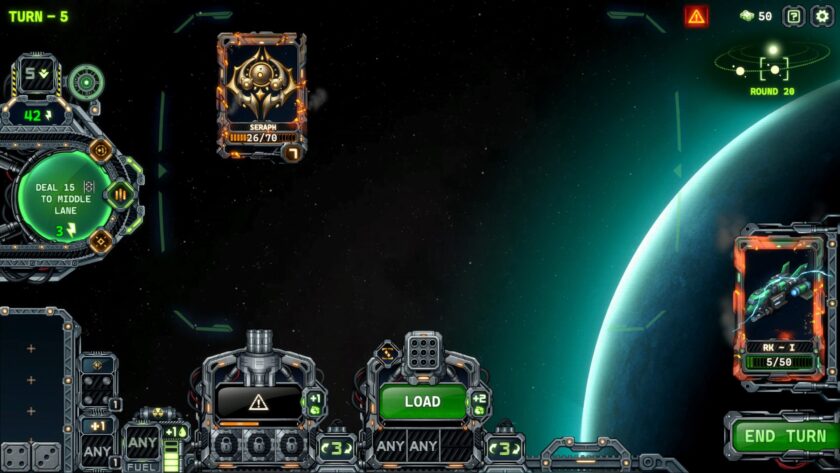
The combat system is where DAICE really shines. At the beginning of every turn, you roll your collection of dice. Those dice become your resources for that round, and then comes the fun part. Where do you spend them? You can load your weapons to fire at enemy ships, invest dice into fuel to reposition your ship across three combat lanes, assign them to defensive systems to intercept incoming missiles, or funnel them into special abilities that can completely turn a battle around. Different systems often require different dice values. Some might only accept odd numbers, others even numbers, while certain abilities demand very specific rolls. It sounds quite complicated when written down.
In practice, it’s wonderfully intuitive. Everything is presented clearly, dragging dice into their various systems feels incredibly natural, and within a few battles you’ll comfortably understand exactly what’s going on. Even when the dice didn’t roll in your favour, I rarely felt punished. There was almost always another tactical option available, encouraging you to adapt rather than simply relying on luck.
Strategy Without The Stress
One thing I particularly appreciate about DAICE is its pace. Despite being built around space battles, explosions and hostile AI, it never feels frantic. This isn’t a game about lightning-fast reflexes or split-second reactions. It’s about stopping, thinking, planning your turn and trying to squeeze the absolute maximum value from every dice roll. I naturally found myself slowing down as I played. Rather than rushing through encounters, I’d happily sit there considering every possible move before committing. That slower pace gives the game a cosy feel despite its sci-fi setting. It’s challenging, absolutely, especially later in the campaign, but it doesn’t feel unfair. Even after losing a run, I never found myself frustrated. Instead, I immediately started thinking about what I’d do differently next time. For a roguelite, that’s a very good sign.
Inventory Management Becomes Its Own Puzzle
Between battles, DAICE introduces another mechanic that became one of my favourite parts of the game. Inventory management. Think a little bit along the lines of Resident Evil 4’s famous attaché case. Weapons, upgrades, AI chips and equipment all occupy space within a limited grid. Some upgrades provide bonuses to adjacent items, encouraging you to constantly rearrange your layout to squeeze every possible advantage out of your build. Eventually, you’ll discover larger components that don’t necessarily help immediately but can be sold later to vendors for extra currency. That money can then be spent on stronger equipment, repairs or expanding your inventory even further. It almost becomes a second strategy game running alongside the combat. I absolutely loved tinkering with different layouts between battles.
Every Enemy Matters
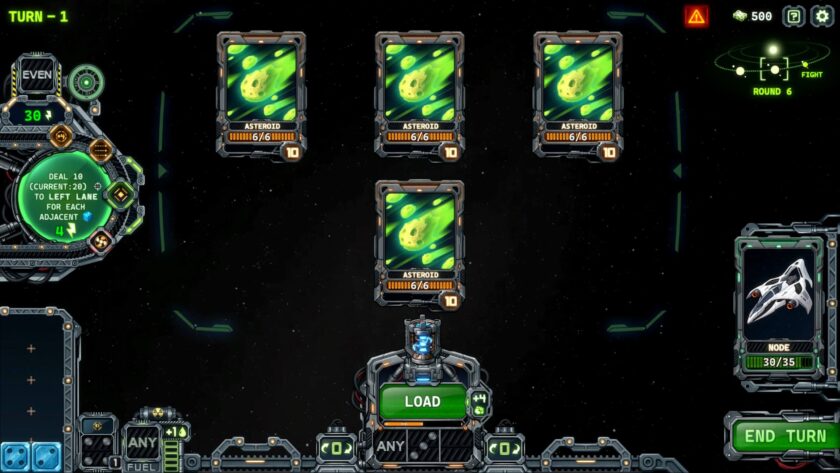
Another clever feature is the way enemy ships behave. Many enemies possess unique traits that activate when they’re destroyed. Some explode and damage nearby ships. Others strengthen their allies if left alive or destroyed. Certain enemies can trigger devastating chain reactions if you eliminate them in the right order. This constantly forces you to think ahead. You’re rarely asking, “Who should I attack?” Instead, you’re asking, “Who should I attack first?” One particularly satisfying moment saw me destroy one ship, which damaged another, which then exploded and destroyed a third enemy before I’d even taken my next turn. Watching everything fall perfectly into place was incredibly rewarding. Those little tactical victories never stopped being satisfying.
Presentation Keeps Things Simple
If there’s one area where some players might hesitate, it’s the visuals. DAICE isn’t a graphical showcase. Ships are represented through static artwork and interface elements rather than fully animated battles. Backgrounds remain fairly minimal, and overall presentation is quite understated. Personally, I didn’t find this a problem. In fact, I think it works in the game’s favour. The clean presentation keeps everything easy to read, allowing the strategy to take centre stage rather than distracting you with visual effects. I’d much rather have fantastic gameplay than flashy graphics, and DAICE clearly invests its development effort where it matters most.
Conclusion: Rolling High
DAICE ended up becoming one of my favourite strategy roguelites I’ve played this year. It takes several familiar ideas, dice mechanics, inventory management, and roguelite progression, and combines them into something that feels fresh, thoughtful and incredibly enjoyable.
The learning curve is gentle, the tactical depth steadily grows with each run, and there’s always another ship to unlock or another build to experiment with. It rewards careful planning without ever becoming overwhelming, making it equally enjoyable whether you’re sitting at your PC or relaxing with a Steam Deck. Yes, the presentation is modest, and those looking purely for visual spectacle may overlook it. That would be a real shame because underneath its simple exterior lies one of the smartest strategy games I’ve played this year. If you’ve been enjoying the recent wave of dice-powered games, DAICE absolutely deserves a place on your wishlist. Better still, if you’re someone who enjoys strategy games that reward thoughtful decisions over lightning-fast reflexes, this is an easy recommendation.
Sometimes the biggest surprises come in the smallest packages. DAICE is one of those surprises, and for me it’s one of the standout strategy roguelites of 2026.
Final Verdict: Two Thumbs Up
Do you like our content?
Subscribe to our daily news and never miss a review!