




Game: Hyperwired
Genre: Action, Indie.
System: Steam (Windows) (also on Nintendo Switch, PlayStation and Xbox)
Developer|Publisher: SIDRAL GAMES | Selecta Play, Beep Japan
Controller Support: Yes
Steam Deck: Playable
Price: US $9.99 | UK £7.19 | EU €9,99
Release Date: July 2nd, 2026
Review code provided with many thanks to JF Games PR.
Hyperwired – Get Wired
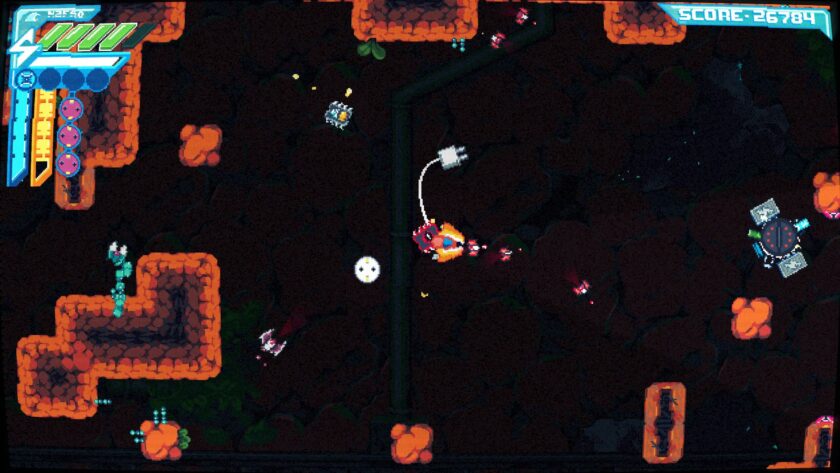
There are a lot of roguelike shooters these days. Spaceships, lasers, explosions and endless waves of enemies have become a familiar formula. Thankfully, Hyperwired isn’t content with simply copying what’s already out there. Instead, it introduces one delightfully odd idea that gives the whole experience its own identity. Your spaceship has… a plug. Yes, an actual dangling electrical cable.
It sounds wonderfully silly, but it’s also the mechanic that makes Hyperwired stand out from the crowd. Rather than simply blasting everything on screen before moving to the next level, your objective is to travel through each procedurally generated stage searching for four power sockets. Plug yourself into each one to activate it, then locate the final exit socket to continue your run. It’s a simple idea, but it’s one that quickly changes how you approach each level.
It Takes a Little to Click
I’ll admit that Hyperwired didn’t completely win me over during my first few runs. Initially, I found myself thinking, “This is alright.” Perfectly enjoyable, but nothing that immediately grabbed me. However, this is one of those games that steadily grows on you the more you play.
Each run teaches you another little trick. You begin to understand how the upgrades work, how to manage your energy more efficiently and how to make better use of the tools available. Before long, I found myself saying, “I’ll just do one more run.” Those are usually dangerous words. Hyperwired is very much designed around that “just one more go” arcade mentality, making it an easy game to dip into for twenty minutes before accidentally staying for an hour.

Plugging In Has More Uses Than You’d Think
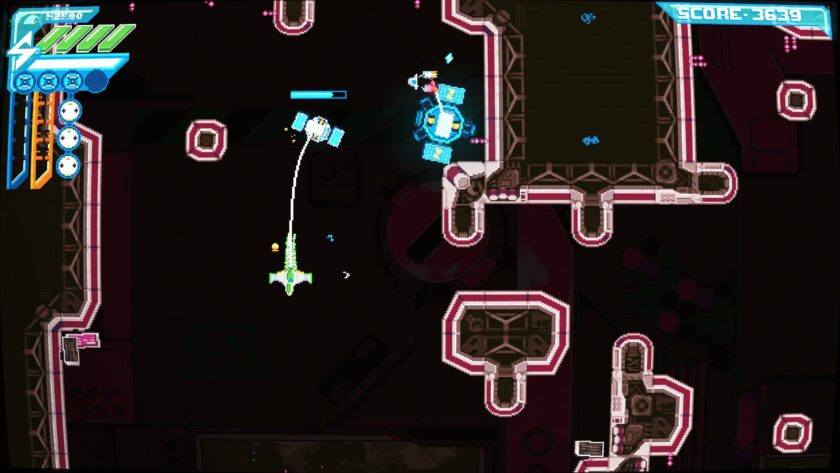
The plug isn’t simply there to open the exit. Throughout each stage, you’ll discover smaller sockets that can recharge your energy or unlock additional rewards. You’ll also encounter stranded ships floating around space. Tow them back to safety and they’ll begin following you, adding extra firepower to your growing fleet. Better still, rescuing them can unlock entirely new playable ships for future runs. There’s always something to chase besides simply reaching the exit, and it encourages a little exploration without making the levels feel overwhelming.
Energy management also becomes an important part of the experience. Almost everything your ship does relies on power, from your weapons to your various abilities. Keeping an eye on nearby sockets becomes just as important as avoiding enemy fire. It adds a small layer of strategy without slowing the pace down too much.
Plenty of Upgrades to Experiment With
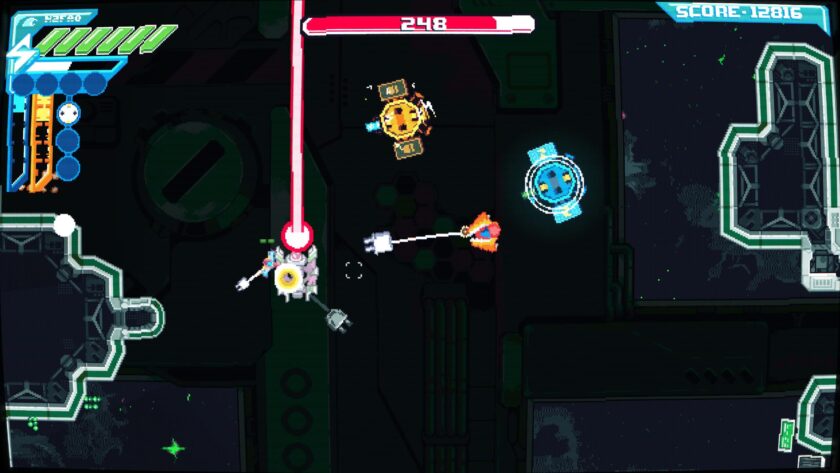
Like any good roguelike, progression comes through upgrades. After completing each stage, you’ll choose one permanent upgrade for the remainder of your run. There’s a healthy amount of variety here, with improvements ranging from increased weapon damage to support ships that fight alongside you, longer cable lengths, faster charging and plenty more besides. During gameplay, you’ll also collect temporary chips dropped by defeated enemies. These offer additional buffs that only last for your current level, encouraging you to make the most of every encounter.
With over forty permanent upgrades and hundreds of possible weapon modifier combinations, there’s plenty of room to experiment with different builds. I never felt like I was repeating exactly the same run twice.
A Learning Curve
Hyperwired does throw quite a few mechanics at you early on. Alongside your standard rapid-fire weapon, you also have bombs capable of destroying parts of the environment, a powerful chargeable laser that ricochets after firing, and even a slow-motion ability that helps you catch your breath during particularly hectic moments.
I actually played through the tutorial twice before everything properly clicked. This is well put together and explains the essentials clearly enough. The rest comes naturally through repeated runs, which feels quite fitting for a roguelike. That said, I did occasionally forget certain abilities even existed. I barely touched the slow-motion mechanic simply because I became so focused on everything else happening on screen.
Arcade Feels
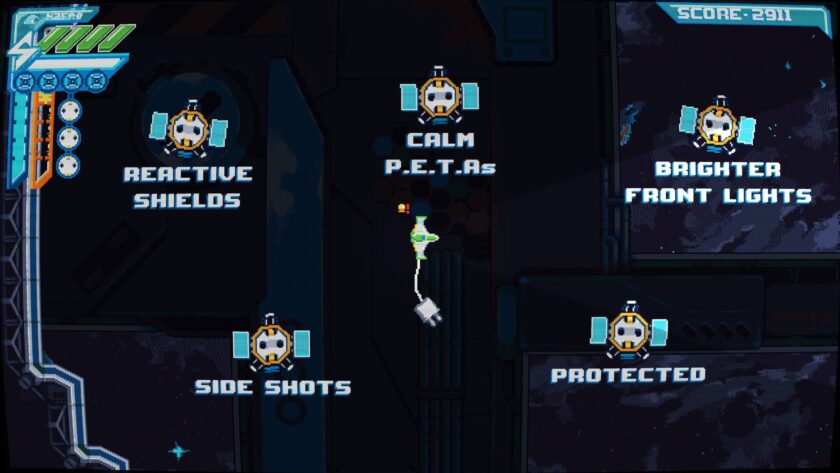
Visually, Hyperwired keeps things fairly straightforward. The pixel art isn’t especially flashy, but it’s colourful, clean and easy to read. Later areas introduce more vibrant environments and help keep things visually fresh as your adventure progresses. Enemy designs won’t necessarily surprise veteran shooter fans, but they fit the game’s retro arcade inspiration nicely.
The soundtrack follows a similar approach. It isn’t the sort of music you’ll necessarily be humming afterwards, but it complements the action well enough and keeps the pace moving. Really, Hyperwired feels like an old-school arcade game that’s been given a modern roguelike makeover, and I mean that as a compliment.
Conclusion: Plug it In
Hyperwired ended up being one of those games that quietly won me over. It doesn’t rely on a complicated story or cinematic presentation. Instead, it simply throws you into space, hands you a spaceship with an electrical plug hanging from the back and lets the gameplay do the talking.
The shooting itself can occasionally feel a little fiddly before you’ve earned some upgrades, and there is a learning curve during those opening runs. Once everything starts coming together, though, it becomes a genuinely enjoyable pick-up-and-play experience that’s easy to recommend. At under ten pounds, it’s also very reasonably priced, and with a free demo available on Steam, there’s very little reason not to give it a try first.
Hyperwired’s clever plug-and-socket mechanic gives it enough personality to stand out. Sometimes all it takes is one good idea, and in Hyperwired’s case, that idea is surprisingly… electrifying.
Final Verdict: I Like it a Lot
Do you like our content?
Subscribe to our daily news and never miss a review!