

Game: Mythmatch
Genre: Puzzle, Simulation, Arcade
System: Nintendo Switch (Also on Steam (Windows & macOS))
Developer | Publisher: Team Artichoke
Age Rating: US Teen | EU 12
Price: US $19.99 | UK £16.75 | EU € 19,50
Release Date: July 7th, 2026
Review code used, with many thanks to Team Artichoke.
Following its release on Steam back in March, Mythmatch has e-merged onto the Nintendo Switch.
Will this be a match made in heaven, Mount Olympus, or will it be ‘all Greek’ to me?!
Jobs for the Gods
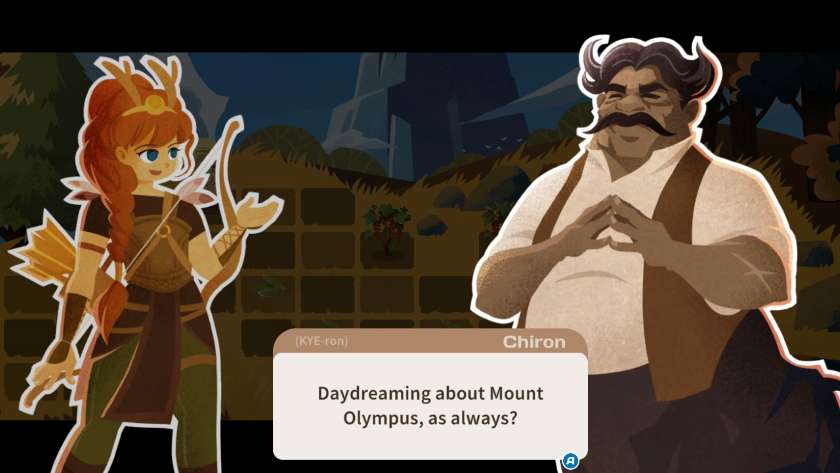
You play as Artemis, a feisty individual who is desperately trying to get to Mount Olympus, not only to be reunited with her father, Zeus, but also to take her rightful place as a goddess. However, under the watchful eye of Hermes, messenger to the gods and Zeus’s right-hand man, Artemis soon realises that Mount Olympus (or, as it’s referred to in Mythmatch, Olympus Inc.) has its own rules as to who can and cannot get access. Whilst her twin brother, Apollo, is welcomed with open arms to become the Sun God, she has to report to HR to be allocated a role.
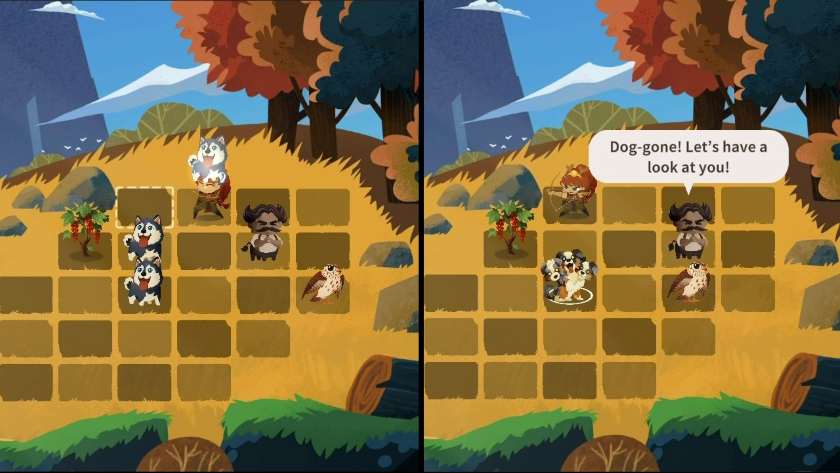
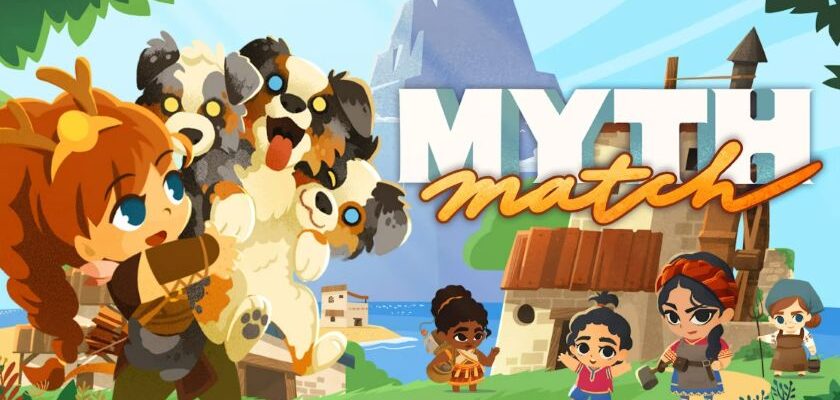
Throughout this learn-as-you-play, story-setting introduction of Mythmatch, there are multiple opportunities to practise its core game mechanic: taking three identical objects and merging them together to create something new. This could be three seeds to make a rat, three deer to make a dog, or indeed, three dogs to make Cerberus.
Demeter, head of HR at Olympus Inc., struggles to find a vacant goddess role for Artemis. The God of the Hunt position is available, perfect for our archer, Artemis, but Hermes has set aside that role for Herakles (if he ever returns from battling the Nemean Lion). When Artemis starts to get too enthusiastic about the role, Hermes banishes her to the mortal world to “calm down.”
Unceremoniously landing on Ithaca, Artemis finds that her skills of matching and merging can help the islanders thrive. With bow in hand, she sets off on the fetch-quest, match-3 adventure that is Mythmatch.
I love the way Greek mythology is reimagined in a corporate world and how Mythmatch reveals the workplace struggles many of us encounter through the eyes of Artemis.
One, Two, Three and Merge!
There are two distinct stages to Mythmatch: the daytime fetch-questing for locals, and the night-time mini-game trials held at Olympus Inc. Both involve the match-3 and merging game mechanics.
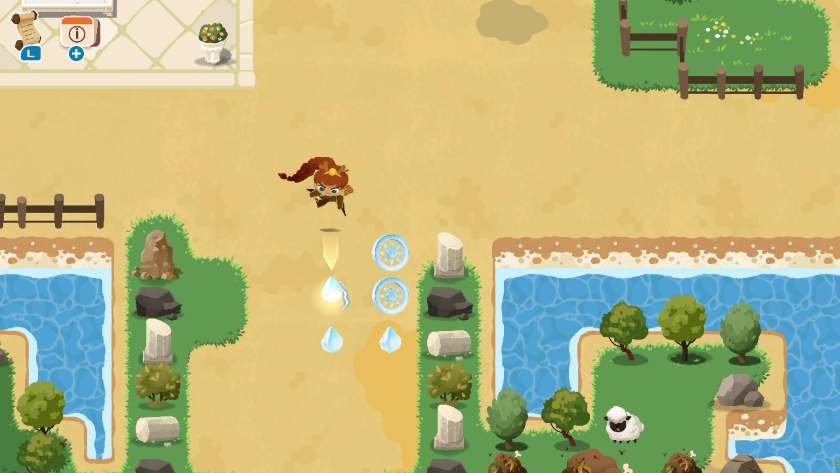
During the day, you guide Artemis around the island, grabbing items with her bow and creating the resource the locals need. Initially, Artemis has to carry each individual item to the appropriate location, and this can prove tedious. Luckily, Queen Penelope understands the predicament and offers to craft a bag for Artemis to lighten the load.
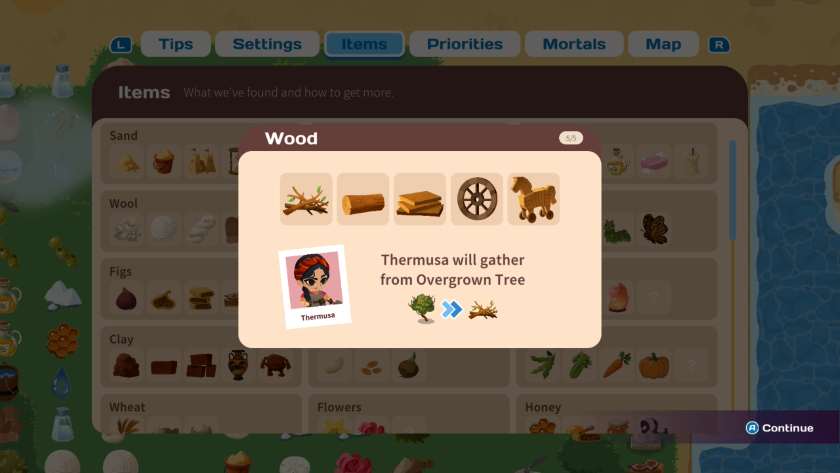
Sometimes, you’ll need to merge multiple times to get the correct item, for example, three sticks make a log, three logs make a set of planks, and three sets of planks make a wheel. Residents will collect the base materials for Artemis, and as their skills improve, they will collect higher-level items as well. It is so satisfying to see a cascade of merges if the objects are aligned properly.
Not all the resources are gathered. Cleo will trade items for bean seeds, sheep or chickens. The seeds are grown in the greenhouse. Merging three bean seeds will produce a wheat seed, but merging three actual beans will produce celery, not wheat. It can become a bit overwhelming with all the different combinations, but the items tab in the catalogue provides a clear breakdown.
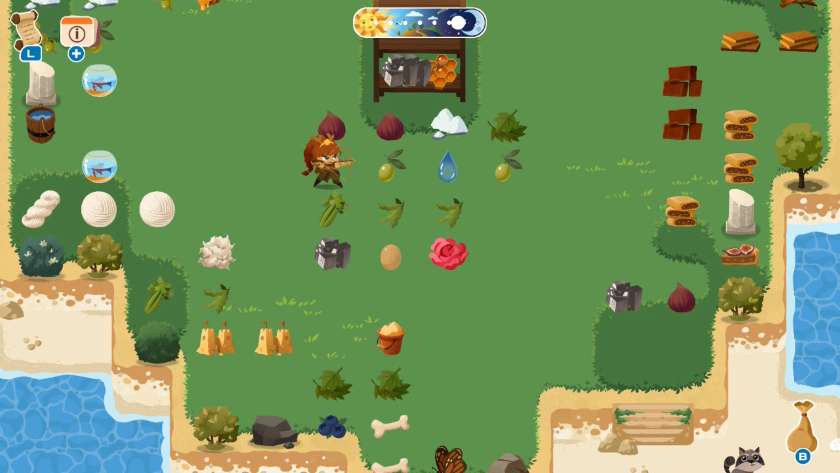
Other residents, like Thermusa the blacksmith, can craft items, and some items can even be foraged using raccoons or pigs. In all cases, the base item can be matched and merged to create new items. The locals will use the shelving unit to deposit their wares, but with no chests in Mythmatch, there is nowhere else to store the bounty other than the ground. There is no risk of despawning or being destroyed; however, the ground quickly becomes crowded.
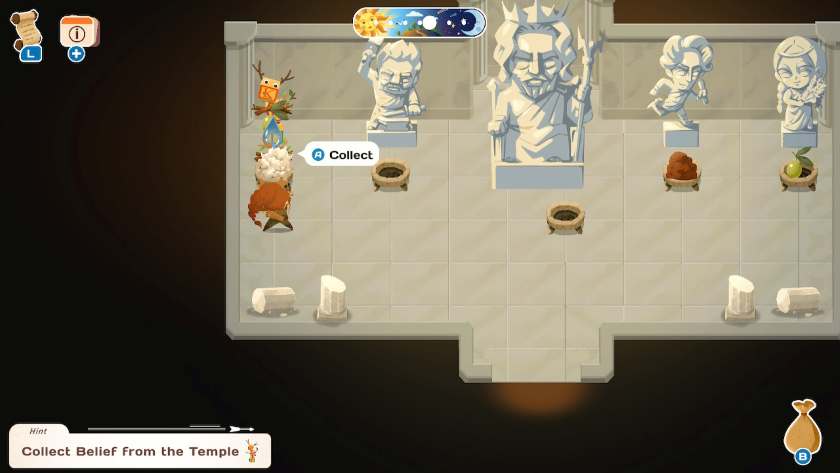
Occasionally, you might encounter a resident retrieving an item they deposited before they wander off towards the temple. The temple houses stone statues of Zeus, Demeter, Hermes and Hephaestus, and a makeshift one of Artemis. The items are left as offerings, and when Artemis collects her offerings, they are converted to Belief. Belief is also rewarded for fulfilling requests and helps Artemis increase her abilities for in the nighttime mini-games.
A Mythmatch day is about 10 real-world minutes. It’s only during this time that residents will harvest and gather, and Artemis can fulfil requests. Once night falls, collection points close and residents drop everything to head home. There is no clock at night, so you can spend as long as you like tidying up, creating resources, or gathering abandoned goods. I found this time useful for placing required items near the collection points, ready for depositing the following day. It is also an opportunity to chat with some of the residents, learn more about their stories and increase your friendship levels. As the game progresses, Artemis starts to understand the dynamic between the gods and the mortals.
When ready, you can decide whether to ascend Mount Olympus with Selene or stay in the mortal realm and start the next day.
The Trials of a Would-be Goddess
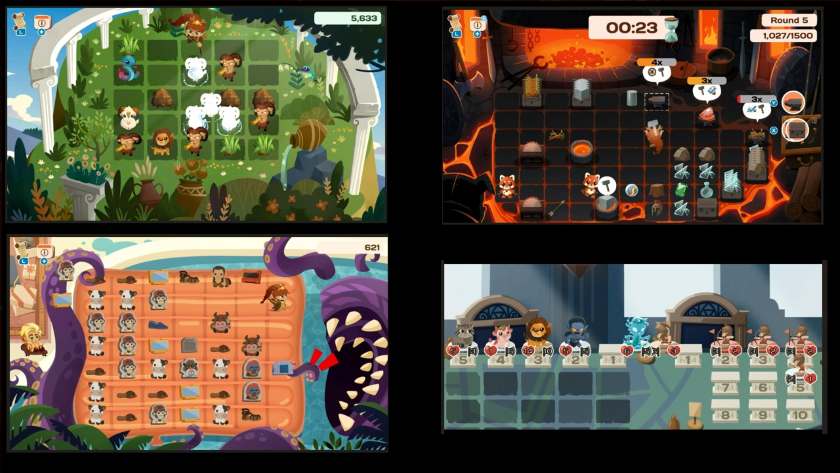
If you decide to return to Olympus Inc., you’ll have the chance to impress the other gods by playing their mini-games. Demeter will challenge you to create mythical beasts in her garden, but if there are too many beasts and nowhere to move, it’s mini-game over. As you progress through the main story, Hephaestus will open his forge to you, but you have to work quickly to craft the items he requires in his timed mini-game. Apollo wants you to protect his Lamoomoos (cuddly cows) and other non-fungible tokens from the jaws of Charybdis, and Athena challenges you to battle against the armies of Ares.
I particularly liked Athena’s battle challenge, probably because it wasn’t under the same time or space pressure as the others.
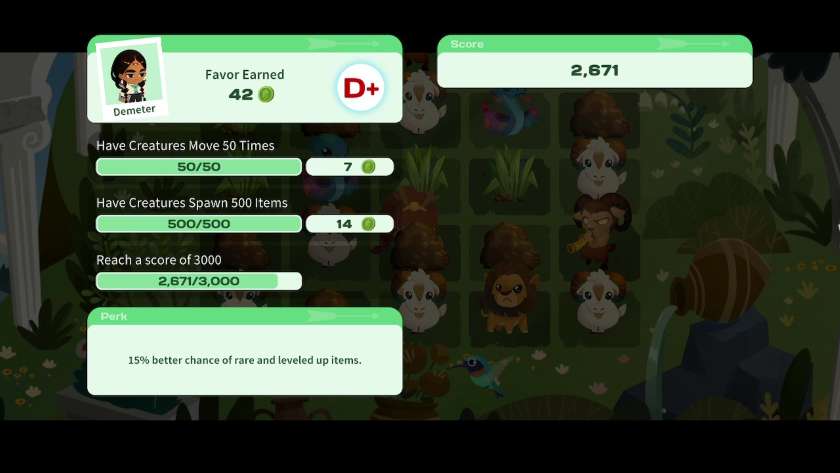
Each mini-game has three challenges to aim for, with your scores carried over to the next time you play. Completing these challenges is what gains favour with the deity, rather than just performing well in the mini-game itself. You don’t need to get top grades to progress through Mythmatch. During that nighttime session, you can play your chosen mini-game as many times as you want until you run out of Belief. You’ll then need to return to the mortal realm to gain more and continue rebuilding Ithaca.
The Controls and Options In Mythmatch
The controls are explained clearly during the initial learn-as-you-play tutorial and are very straightforward. Access to the task list and information catalogue is displayed on the screen. The text is large enough to read clearly on the Switch Lite screen, and whilst there is partial touchscreen functionality, I did not find it helpful. Mythmatch plays smoothly in both docked and handheld mode, across all Nintendo Switch variants.
It’s possible to play the Olympus Inc. trials as standalone mini-games via the main screen arcade option. These can be played solo or in local co-op. Some of the mini-games work better with two players, like Apollo’s Charybdis challenge, but your gaming buddy will have little to do when battling with Athena.
Mythmatch autosaves regularly, with an additional manual save in the settings menu.
If you focused solely on the main story, you could match and merge your way through Mythmatch in about 10 to 12 hours. I have clocked over 20 hours, and although the main story is complete, I still have a few resident quests to finish and the challenge of gaining A-grades in the mini-games.
Although the visual style and graphics might appeal to younger gamers, Mythmatch is rated Teen/12 for suggestive themes. While most of it is subtle, amusing and in keeping with the antics of the Greek gods, there are a couple of occasions when the language is more blatant.
Conclusion
Mythmatch merges Greek mythology into a colourful match-3 town-building game. Its witty, well-scripted, and satirical take on the Greek gods and corporate workplaces made me laugh. Whilst it might not appeal to everyone, I thoroughly enjoyed the narrative and fetch-questing.
Final Verdict: I Like it a Lot 
Do you like our content?
Subscribe to our daily news and never miss a review!