



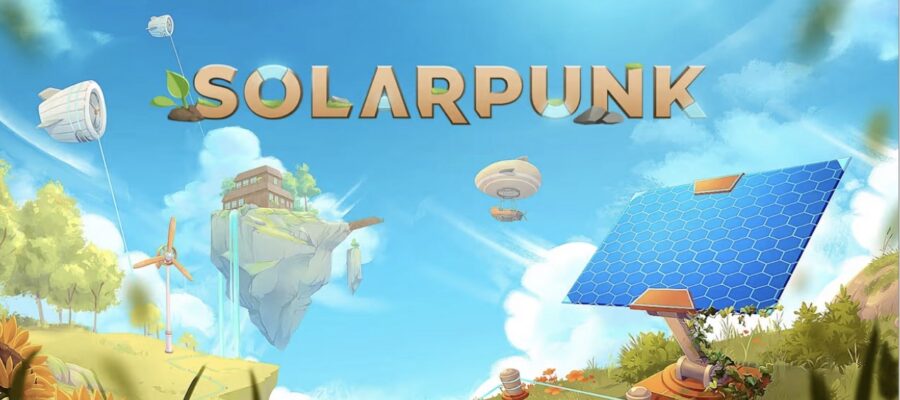
Game: Solarpunk
Genre: Adventure, Simulation
System: Nintendo Switch 2 (Also on Windows (Steam, Epic and GOG), Xbox and PlayStation)
Developer | Publisher: Cyberwave | rokaplay
Age Rating: US Everyone | EU 3+
Price: US $22.99 | UK £20.70 | EU € 22,99
Release Date: June 8th, 2026
Review code used, with many thanks to Press Engine.
Inspired by classics such as Minecraft, Stardew Valley and Worlds Adrift, Solarpunk is a cosy survival game developed by a small indie studio based in Germany. With no combat and no mystery to unearth, Solarpunk focuses on creating a personalised home base and farm, using renewable automation combined with some light exploration.
Let’s see if Solarpunk will bring sunshine or will it be troubled waters.
Humble Beginnings
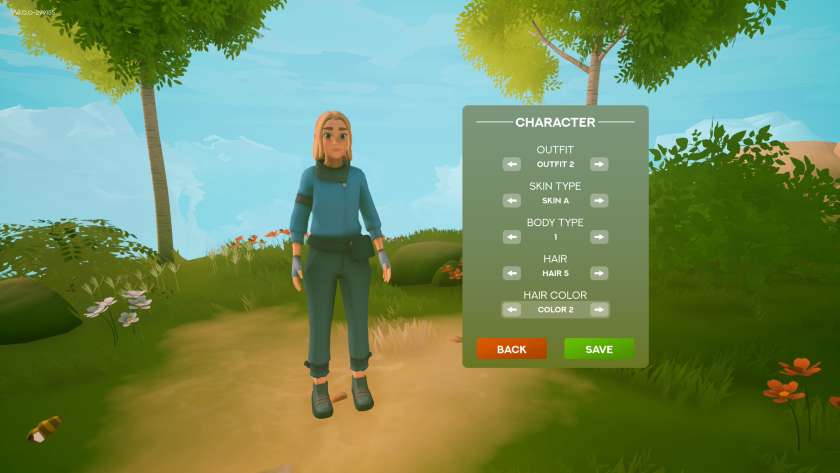
As a first-person adventure, you’re not going to see yourself; however, as an online co-op, others will. So you have the chance to customise your avatar. Not extensive, but enough to get some sort of identity. I was unable to test the co-op, but I do know there is no cross-platform play.
You also have the choice of a standard world or ‘soft’, which has the added benefit of not being hit (and thus hurt) by lightning, not losing your inventory on death and decreased hunger and thirst consumption. Once you’ve named your world and selected whether you wish to share your progress or not, you are ready to launch into your Solarpunk adventure.
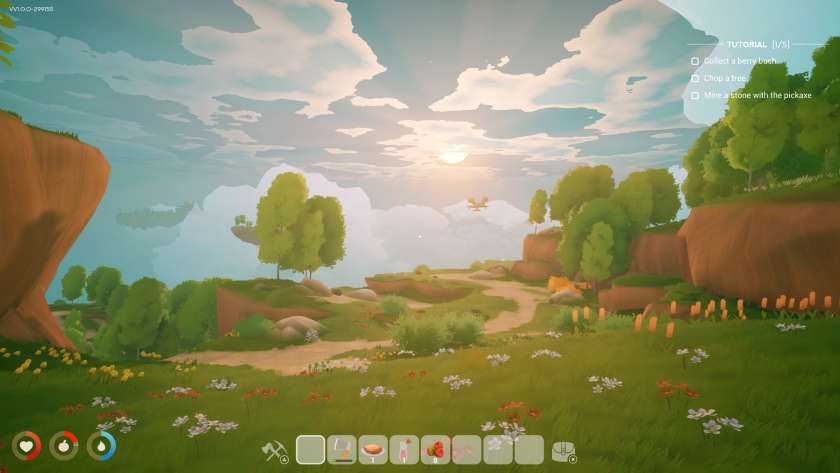
You wake on a small sky island, with a collection of items in your inventory: a near-broken axe, some honey bread, some watermelon juice, and a handful of raspberries. If you’ve chosen to show the tutorial, you have a helpful 5-stage task list in the top right. You’ll be guided to collect some berries, cut down a tree, and mine a rock once you’ve crafted a pickaxe. I adore the scenery in Solarpunk; it’s lush, vibrant and welcoming.
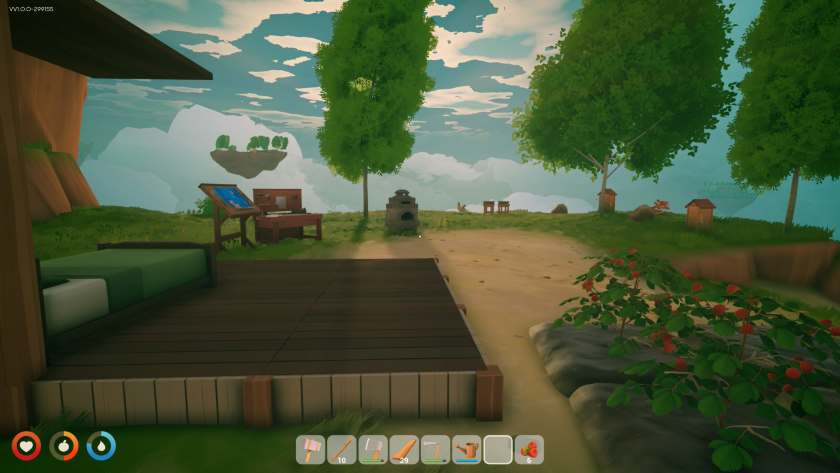
Following the tutorial guidance, you’ll soon have a little farm, crafting and research table and some semblance of a house. Running out of health is an inconvenience in standard mode, as you will need to find your inventory items from your last location, but it’s not game over. You’ll be advised to grow berries, as raspberries help with hunger and thirst, and with those sage words, you are left to work out how to survive in the beautifully handcrafted Solarpunk world.
Crafting and Building in Solarpunk
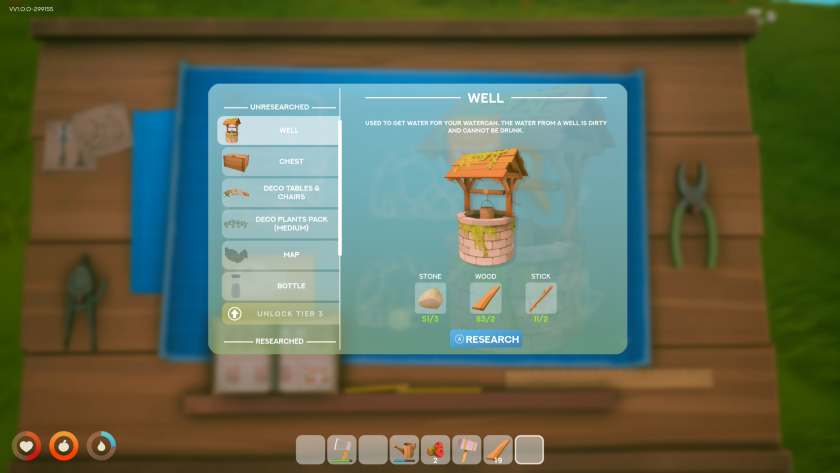
You have immediate access to a quick crafting menu; here you can create some basic tools and a crafting table. However, to make best use of that crafting table, you’ll need a research table to create blueprints. Just like the actual equipment you’ll end up crafting, creating blueprints also requires resources. The research table can be upgraded to unlock more ideas for equipment and decorations, and the requirements for unlocking that next tier act as a guide if you’re struggling to know what to do next.
Solarpunk is a resource-heavy game; you do a lot of gathering and harvesting; fortunately, the crops and trees grow quite quickly. The downside is they rarely drop more than one seed, and in the early game you can’t craft seeds. So, it’s important to make sure every collected seed or sapling is planted as soon as possible, to get a continual flow of materials.
There are various ores to mine, as well as stone, clay and sand. Most of these resources can be smelted to make building materials. The lumps of ore don’t respawn once depleted; instead, there are flat patches of ore, which can be continually mined, eventually by using a drill.
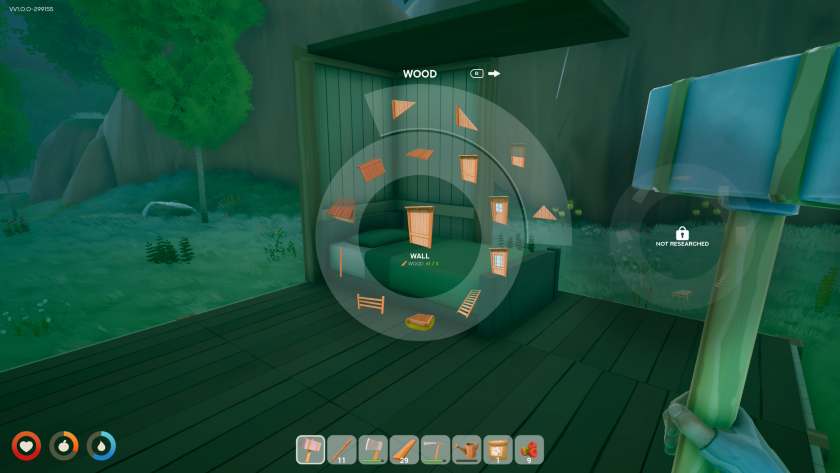
One of the tutorial tasks, and something you’ll want to do, is to craft and place a bed. Once researched, the crafting part isn’t too difficult, but unlike some other survival games, you can’t just place the bed in the open air; you need a floor and roof. This is done by using the build hammer. The components wheel is slightly awkward to use as there are multiple layers, but there is a huge range of building options, with more to unlock. Once you’ve placed a foundation block, the other components snap to the edges.
As long as you have enough wood, you can quickly create a substantial dwelling, and the best part is that any component can be demolished and all the resources are recovered.
The scope for building is only limited by your imagination. The Solarpunk community created some amazing designs during the testing phase, from cliff-top palaces to massive building site cranes.
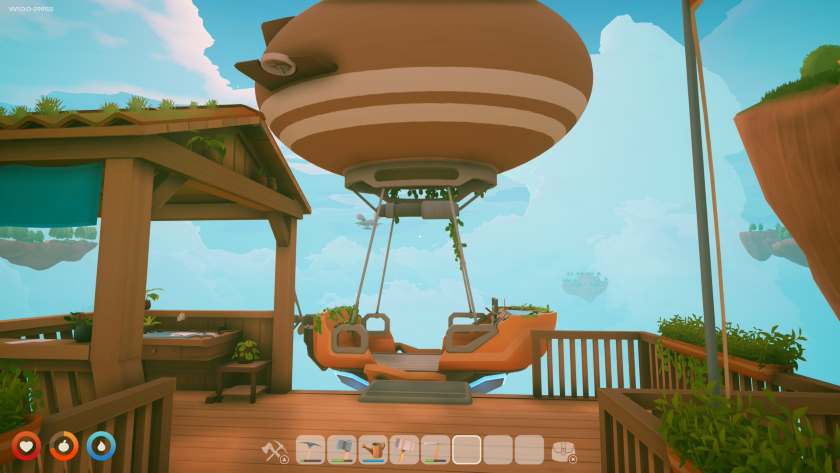
Stairs can be used within your house, or to access higher areas on the island, and this exploration is crucial to get the parts needed to build your airship. The airship, flown in first or third person, allows you to fly to other islands and discover new resources. The controls are explained via the airship manual, and are straightforward. Flying the airship is one of the highlights of Solarpunk.
Travelling Further Afield
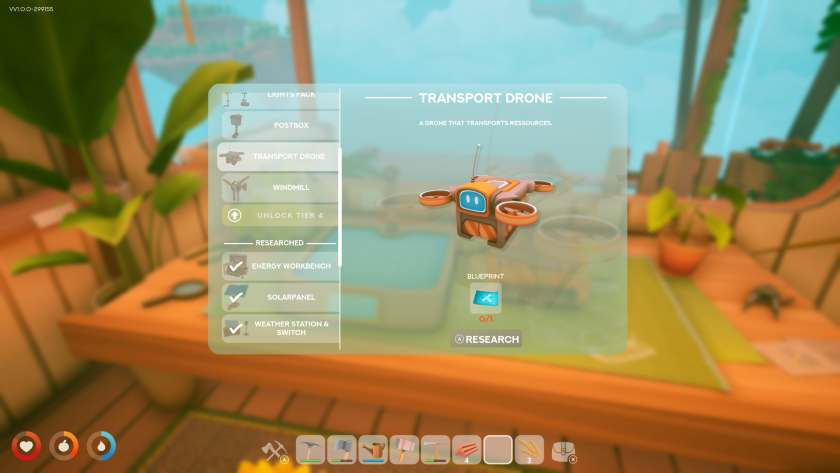
As well as the other floating islands, there is a strange hovering structure just north of your starting island. Here, you’ll meet TraderBot, a friendly robot who trades resources for special blueprints. One thing I really appreciated was that TraderBot showed what future resources and items were needed, so I could plan ahead. The received blueprints are used to unlock upgrades and items needed for automation: solar panels, generators, sprinklers, mining drills, drones, and so much more.
If you thought the research table you craft early on added an extra layer of planning, then TraderBot doubles the fun and strategy. The range of items is so exciting, and deciding which blueprint to select first and how to gather the resources needed to trade is an enjoyable aspect of Solarpunk.
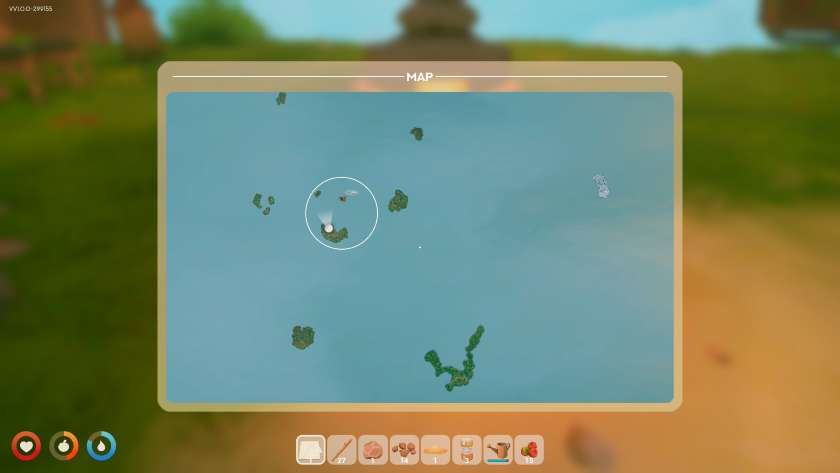
Once you make a map, you’ll see just how substantial the Solarpunk world is, and in fact, you can’t zoom out enough to see all the islands in one go. There are two biomes, the lush, green one like the starting island, and a snowy one, which is unlocked as part of the final upgrades. The circle on the map shows how far your airship can travel, with airship upgrades needed to explore further. If you try to go outside of your permitted flying zone, the strong winds will force you back – what a great way to show ‘out of bounds’!
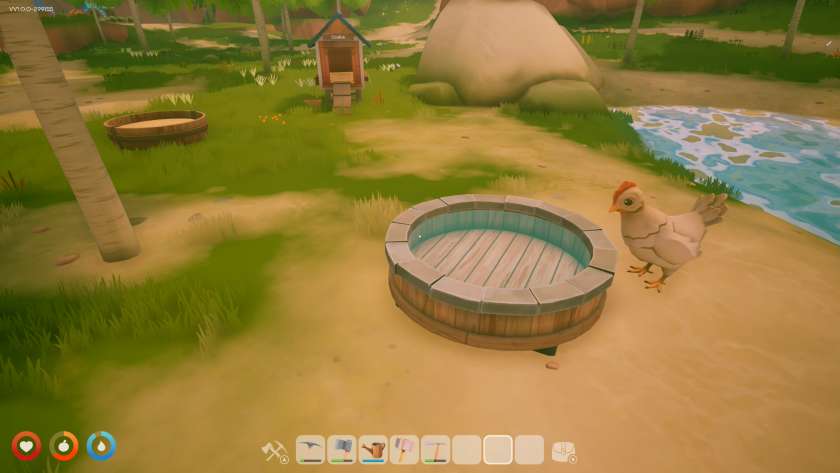
Even though you’ll have a chicken on your starting island, you will not be able to domesticate it until you unlock the animal basic pack, and as you explore, you’ll find chickens on other islands, as well as other animals.
There is a solid structure as to how to progress: you need resources from the floating islands to upgrade the research table and trade with TraderBot; you need to trade to unlock the airship upgrades to expand your exploration zone. Soon you’ll be in a routine of gathering, crafting, upgrading, exploring and trading, whilst creating a perfect home, farm and grounds in which to live. It takes around 15 to 20 hours to unlock all the available items, and then you have the sheer joy of creating amazing structures.
Options and Controls
Solarpunk is a first-person game, which will not suit all gamers. The only time I felt disoriented was during the sleep routine, which rotates the camera to give the sense of lying down on the bed, on your side. The game plays well in docked and handheld modes, although the extra notes within the inventory are a little small to read comfortably, but the rest of the text is okay. There is no touchscreen functionality.
You can alter the field of view and invert the y-axis for both character and airship, as well as being able to rebind the controls. There is no adjustment available for the camera speed, but personally, I felt it was set at a good rate.
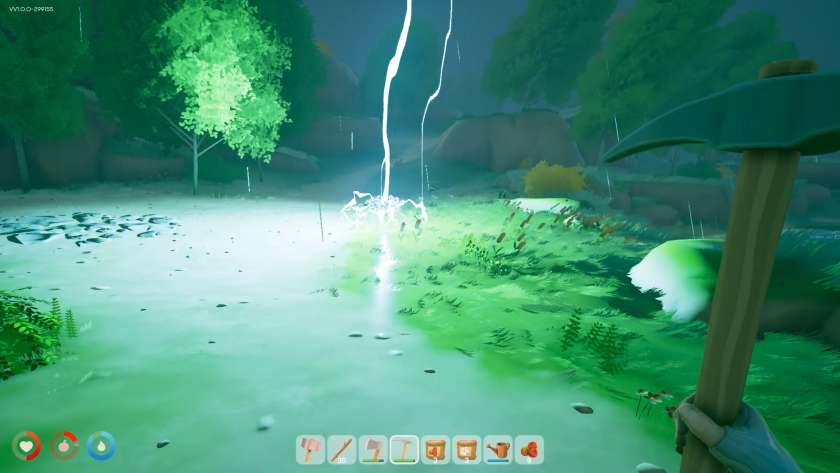
There are various controls for volume, including the time between tracks, with the music having a lo-fi, non-distracting vibe. There are some great environmental sound details, from the squelching as you walk during a rain shower, to the thunderous booms of a lightning storm (which happen quite often). However, be aware that there are bright flashes associated with the storms, which might be distressing for some.
There is a day and night cycle (taking 24 real-world minutes), with sleeping shortening the nighttime cycle. The night is very dark, and although you’ll have access to craft a candle early on, lighting doesn’t unlock until a lot later. There are no seasons and no clock as such, although you can tell the time via the crafted weather station.
Unfortunately, in the pre-release version I played, the D-pad didn’t work as expected. Firstly, it wouldn’t rotate placed items, but this wasn’t a major issue. However, more importantly, it wouldn’t allow a change in elevation. This made it exceptionally difficult to place a foundation block, and nearly rendered Solarpunk unplayable. Thankfully, I managed to find a couple of spots which weren’t too low, nor too high, and my house building could begin. Hopefully this issue shouldn’t be too difficult to resolve.
There are a few other niggles, like receiving the message about lost items even when playing in ‘soft’ mode, where you don’t lose your inventory. The tutorial only appears once, so if returning to the game in the future, you’ll miss out on that guidance. Not all the character settings were saved, so my hair colour reverted to the default and my outfit choice wasn’t correct when flying in third person. Quite often it felt like the select button needed to be pressed twice to craft or back out of menus, and it was difficult to see which option was selected, as the difference in text wasn’t substantial.
Conclusion
It’s clear to tell that Solarpunk has been created with passion, from every placed flower making the environment look natural, to the sounds of wood crackling in the furnace, from the carefully planned upgrade path, to the numerous building options.
In my eyes, Solarpunk is something truly special, containing everything I want from a game: gathering, harvesting, exploring, crafting, building and decorating. There are a few niggles, but they don’t detract from the amazing scenery, the structured gameplay and the sheer enjoyment of creating a dream home, garden and farm.
Check out the developers’ video to see if Solarpunk is for you.
Final Verdict: Two Thumbs Up 
Do you like our content?
Subscribe to our daily news and never miss a review!