


Game: The Caligula Effect 2
Genre: RPG, Strategy
System: Nintendo Switch (also on PS4)
Developer|Publisher: FuRyu | NIS America
Age Rating: EU 12+ | US Teen
Price: US $49.99 | UK £44.99 | EU € 49,99
Release Date: October 22nd, 2021
Review code provided with many thanks to NIS America
From Vita Beginnings
The Caligula Effect is a turn-based RPG originally released on the good old PS Vita. A system that is starting to feel a little retro these days. It’s always quite hard for a new RPG to garner an audience especially with so much competition on a system with such a small but very dedicated fanbase. This title received a remake on the PS4, PC and Nintendo Switch.
This second chance seemed to give the game enough attention to receive a sequel, helped by an anime that was released focusing on the plot of the game. Now I’m going to be honest, and admit I’ve never played the original game. But it was quite interesting reading up on this rather unique RPG. So let’s plug into a virtual world and see how this sequel fairs on Nintendo Switch.
The Quest to Go-Home
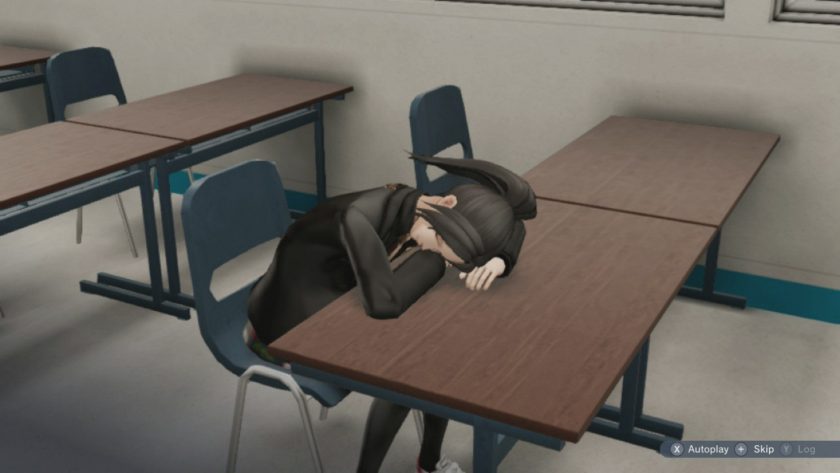
If I was going to come up with a very silly description of The Caligula Effect 2’s plot it would be ‘The Matrix with high school kids.’ Now, of course, fans of this series rightfully will tell me this is highly inaccurate. The more complex description goes something like this… the game is set in the world of Redo, a virtual world created by a character named Regret. Here, folk become imprisoned in order to escape from some past regret in the real world. You can play as a male or female character to who you can assign a first and, oddly, a second name too.
This virtual reality is shaken by a virtual idol named ‘x’ who gives a High School student the red pill, sorry, I meant they restore their memories of the real world. And so begins the quest of finding more students to awaken to the false simulation they are inhabiting, fight Regret and her minions known as Musicians and find a way out of the Matrix, I mean Redo. This group of plucky youngsters call themselves the Go-Home Club. A reference to the previous game. You don’t need to have played the previous game to enjoy this standalone plot. But, fans that took the time to play through it will appreciate the many winks and nods to it.
The Plot
The plot of the Caligula Effect 2 is as I like to call ‘anime as heck.’ There are lots of over-excited characters to meet and develop relationships with. For the most part, I actually quite liked the plot of this game when it focused on the characters and the main quest-line. I was particularly moved to discover the reasoning some of the characters decided to enter this virtual world, but of course, I will not spoil that here.
I wasn’t so fond of the overabundance of padding to the plot. It wasn’t uncommon for the plot to take up to hour-long segments of the story, many of which felt like they could be cut down. If you’re a gamer like me who doesn’t have a lot of time to commit to gaming, the focus on plot over actual gameplay may not gel well. This is also an RPG where it is not uncommon to walk down a single corridor and encounter 3 or 4 highly unnecessary cutscenes. You can skip storyline segments but of course, you run the risk of missing major plot points. You can also only save at designated points in the game so thank goodness for the Nintendo Switches standby feature.
Exploration
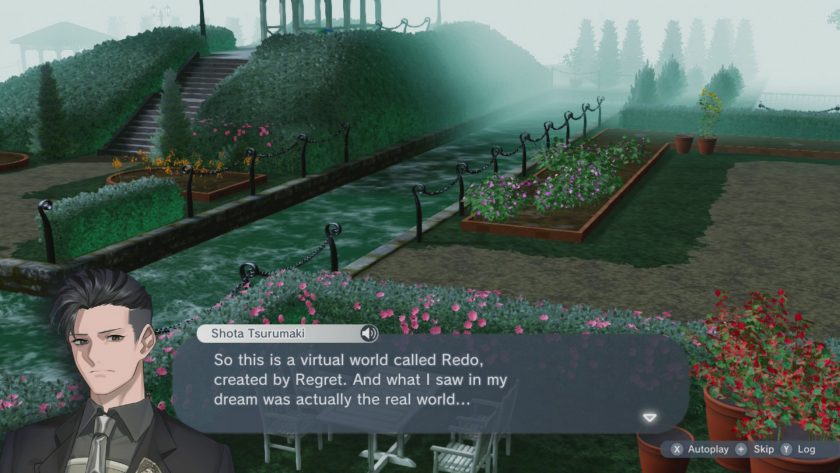
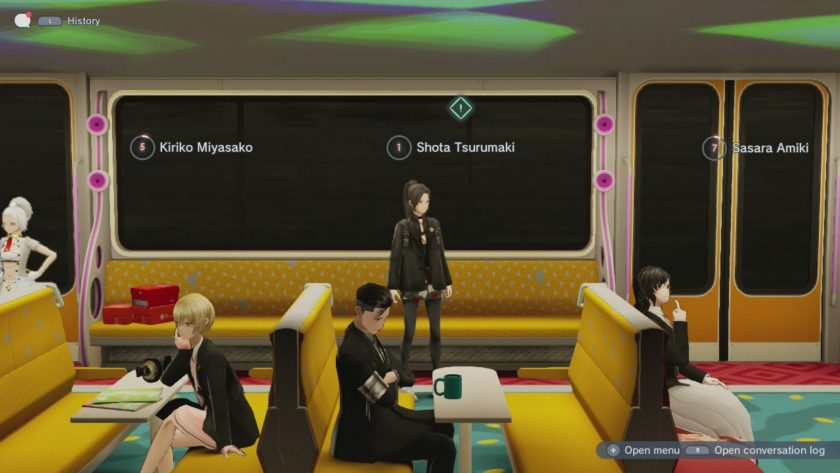
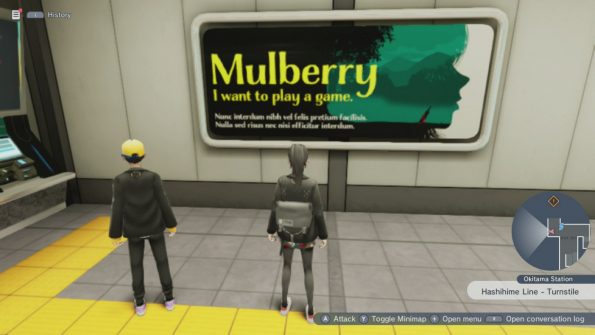
The general flow of the Caligula Effect 2 is following the main questline. It is split into segments where you explore dungeons with turn-based combat and segments, develop relationships with fellow party members and take on side quests. The main quest line is easily highlighted thanks to a handy mini-map so it’s pretty hard to get lost. Whenever a new mechanic is introduced the game pops up a handy tutorial which you can access again later if you have a short memory like I do when it comes to re-learning a new RPG.
There are loads of side quests scattered all over the place triggered by talking to one of many NPCs. But these quests are very rarely anything more than simple tedious quests; such as reaching a certain level, finding a number of items or even equipping abilities. It really just slows the game to an utter crawl which is thankfully rescued by its pretty brilliant combat system.
Preview Your Attacks
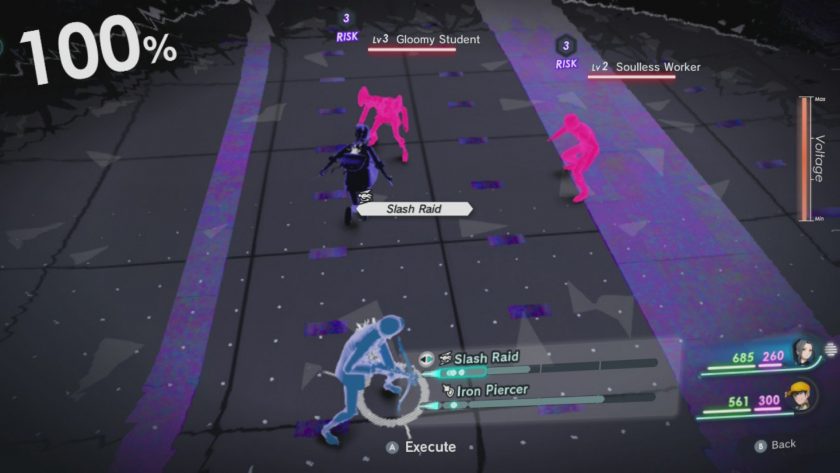
Combat in the game was easily the highlight of my experience. You are able to see enemies on the map so you can choose to engage directly. Or if you monitor their movements you can attack them from behind gaining an advantage in combat. Combat begins instantly with no load times making gameplay feel fast and fluid. When you enter into combat you have the usual RPG setup where you can select your attacks or abilities.
The difference here is you get a small preview of how your attacks play out in a sort of simulation. You are then able to manoeuvre when the specific character attacks. When attacks chain together with other members of your team, it can make for some very satisfying strategic outcomes. For example, having one character launch an enemy into the air, then have a character with a projectile shoot them, will give a damage boost. Plus you get to see the enemy spin about like a total loon.
Unlock Passive Abilities
I actually found myself actively looking for encounters in the Caligula Effect 2 and really enjoyed grinding up levels. Each character can be equipped with various attacks. Also with defence and passive perks, some of which can be mastered by engaging in more battles. Once mastered you unlock passive abilities to add further perks to each character. You can have four characters in the party at once and there are many more characters to add to your club as the story progresses. A feature some will appreciate is that even if you stick with your favourite characters the others will still level up in the background.
Multiple Difficulty Settings
If you do find combat a bit much, the game does let you select multiple difficulty settings to suit all play styles. You can also simplify the battle system with an auto-battle feature which has you only select your lead characters actions and the others are auto-selected. You can program your teammates to be more defensive or offensive. It is a pretty good feature for those that just want a more simple RPG experience. It can be switched on and off anytime throughout the game.
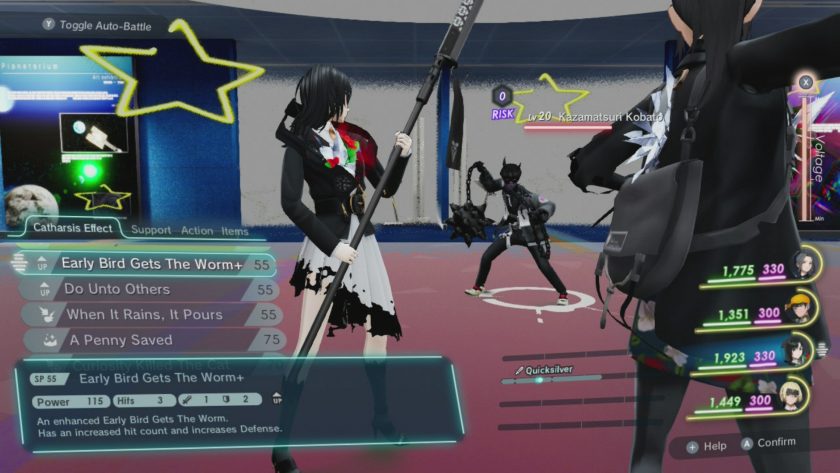
The Virtual World
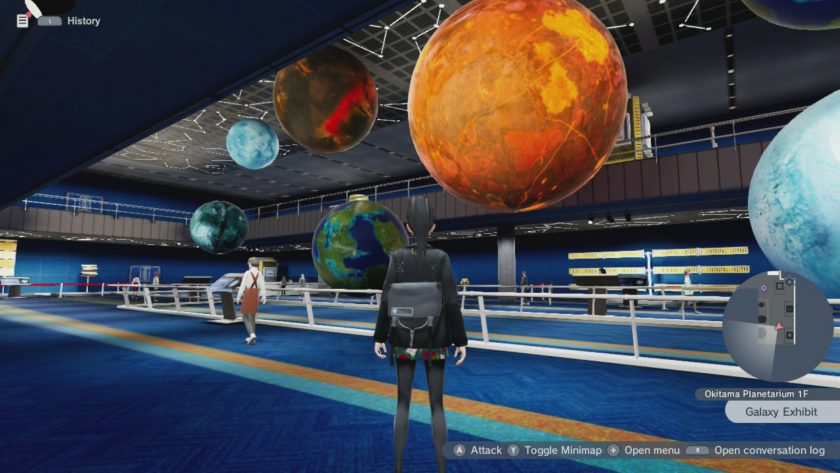
Graphically the Caligula Effect 2 is a pretty typical looking anime-inspired RPG. Environments are mostly quite plain but pretty expansive. In some of the exploration scenes, you have a massive high school to explore and a shopping area. But like the virtual world, something seems a little off at times. While there are many NPCs, many of the models are repeated over and over. That and some of them just sort of disappearing when you get close to them making you wonder if this is some glitch in the (last one I promise) Matrix… Redo.
Things do take quite the surprise hit in the handheld mode. The game appears to have a familiar foggy filter over it. However, the game still appears to run well but it is a more notable distraction when compared to playing on the TV. The game features English subtitles only so expect to do a lot of reading with this game.
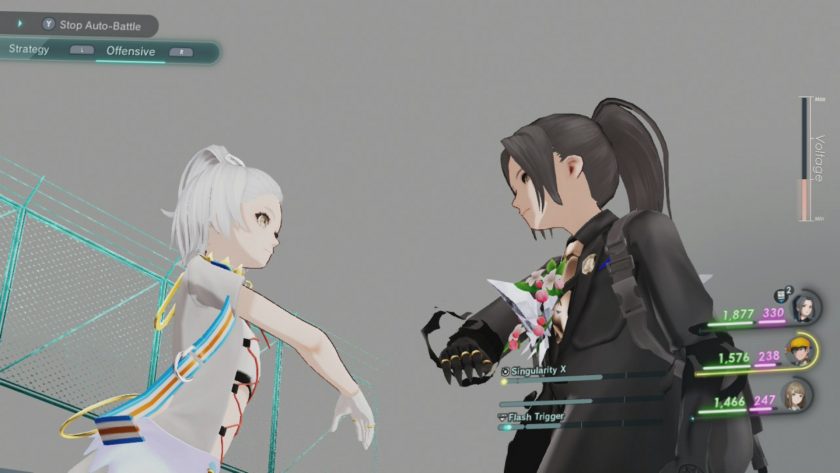
Things really come alive with the game’s soundtrack. During combat segments, you are often greeted with a hard-hitting vocal song that will continue playing on future battles rather than restarting from the beginning. It’s high intensity and exciting and felt like a good fit for the virtual world.
Conclusion – Plugin
The Caligula Effect 2 is a virtual encounter that ended up being a mixed experience for me. It has a solid combat system and a fantastic soundtrack. But this is kinda let down by an overbearing story and side quests which created a lengthy and rather dull experience. Overall, I think the game will appeal to a niche audience looking for a story rich experience as well as fans of the original game. While the concept of trying to escape a virtual world doesn’t seem like something new, this still was an experience I enjoyed plugging into and escaping reality for a few hours a day.
Final Verdict: I Like it

I’m currently playing through it, but I think it’s a lot similar to SAO a lot more than the Matrix. Also it does pad the plot a lot… Overall I’m enjoying it though. The strategy mixed with real-time/turn based battle system makes it worth it. It’s very unique.