

Game: Kabuto Park
Genre: Fighting, Strategy, Arcade, RPG
System: Nintendo Switch (Also on Steam (Windows, macOS, Linux & SteamOS), and Xbox One/X/S)
Developer | Publisher: Doot (game, art), Zakku (music), Blibloop (kids art) and Eupholie (key art) | Seaven Studio
Age Rating: US 10+ | EU 7+
Price: US $5.99 | UK £4.99 | EU € 4,99
Release Date: May 28th, 2026
Review code used, with many thanks to Popagenda PR.
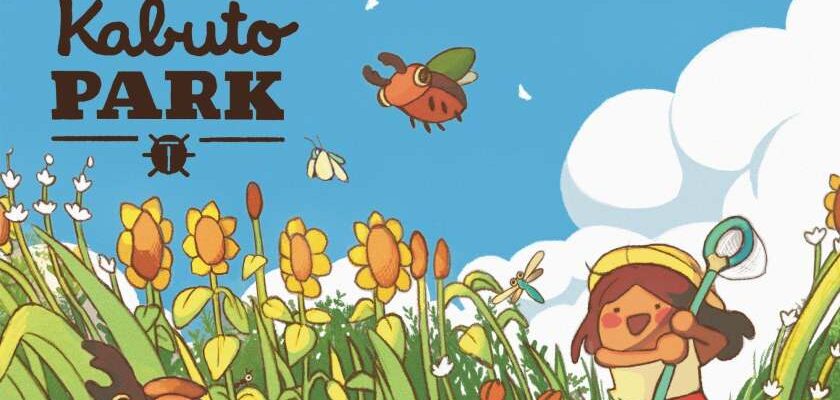
From the developers of Minami Lane, Kabuto Park is a bug-collecting and push-battle game, on a tiny scale.
Let’s see if I’ll fly to the top of the league table and beet-le the other bug collectors to bee-come the Beetle Battles Champion.
Welcome to Kabuto Park
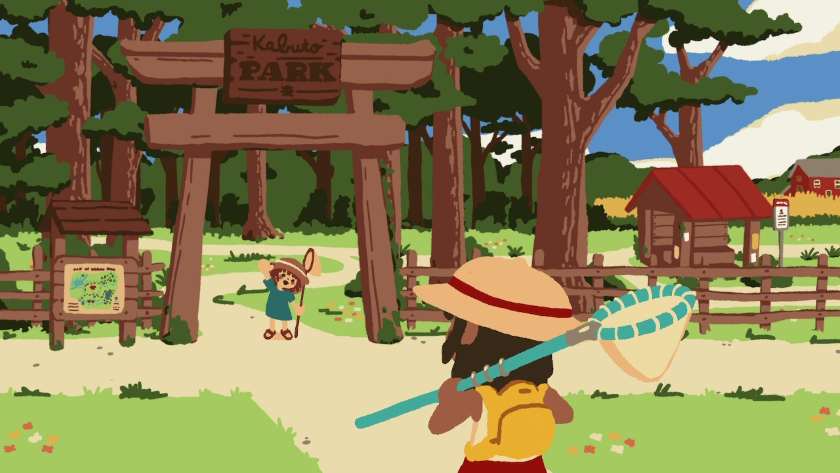
Kabuto Park starts with Midori welcoming the character you play as, Hana. You find out that Hana is spending all of August at the park, which is full of tiny creatures found all over the world, waiting to be caught. So if you love bugs, this is the place to be!
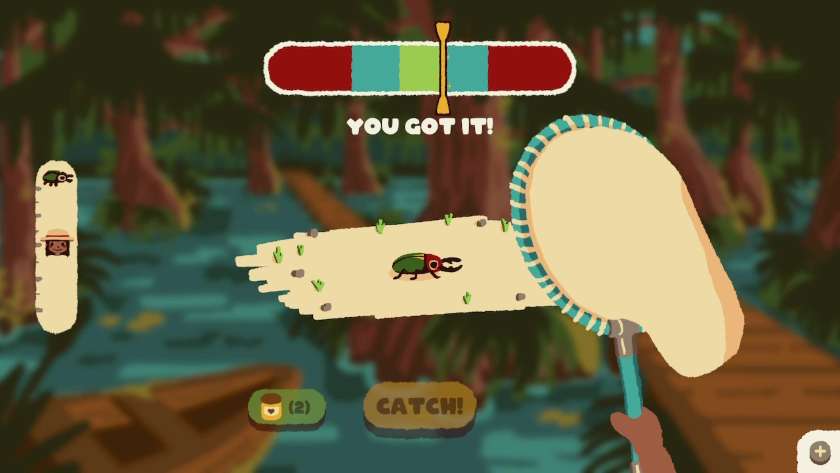
Midori explains the basic principles of bug collecting. The mini-game consists of a bar at the top of the screen, which has blue and green sections. Stopping the slider in the green causes the net to fall and you catch the bug; in the blue gives you another go, but in the red, the bug escapes.
There are three different types of bugs; common, uncommon and rare. The mini-game gets harder for uncommon and rare critters, with the blue and green sections being smaller or separate from each other, and the slider moving quicker. You can buy honey to slow down the slider, and there are options within the settings menu to make the game easier (or harder).
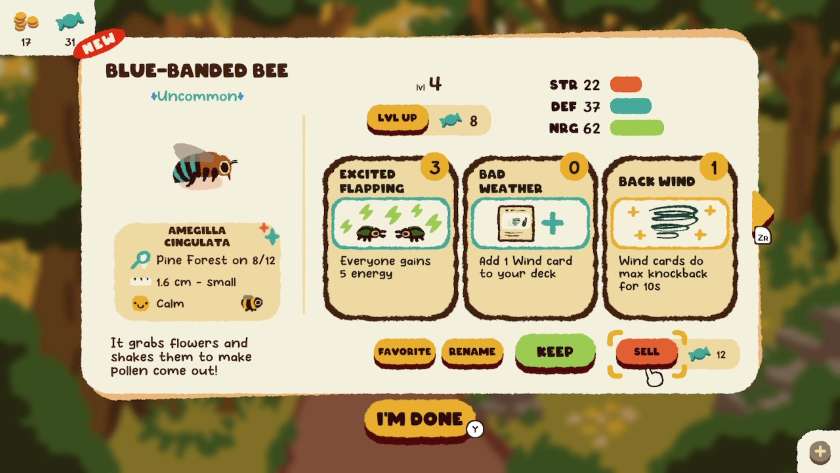
Each critter has a record card. The card notes where and when the creature was caught, as well as a little nugget of real-life information. Each critter will have a strength, defence and energy rating as well as three battle moves. You can sell a bug and receive candy, which can be used to level up your other critters to increase their stats.
Kabuto Park Beetle Battles Tournament
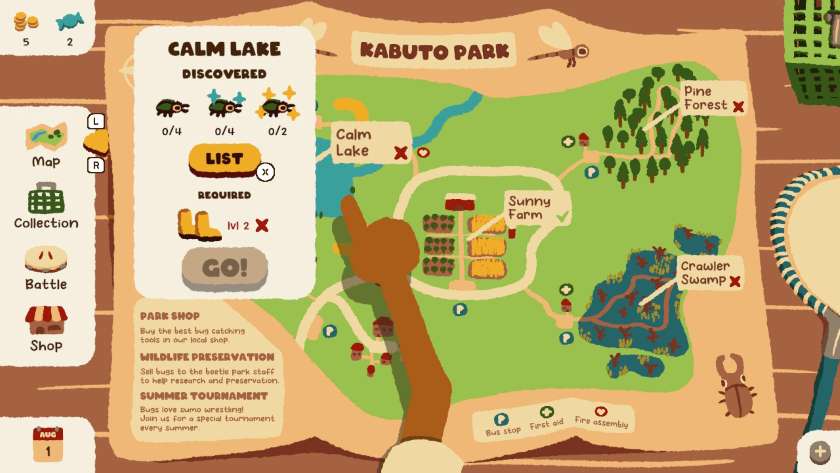
There are four areas within Kabuto Park, starting at Sunny Farm. There is no exploration within the game, you simply select the area to travel to and then select a bug-catching spot to play the mini-game. Each area has a number of bugs to collect, and although these are not necessarily unique to each area, there are over 40 to find. To progress to a new area, you need to buy better boots. To buy better boots, you need money and a bug badge. You can only get money and bug badges by completing beetle battles.
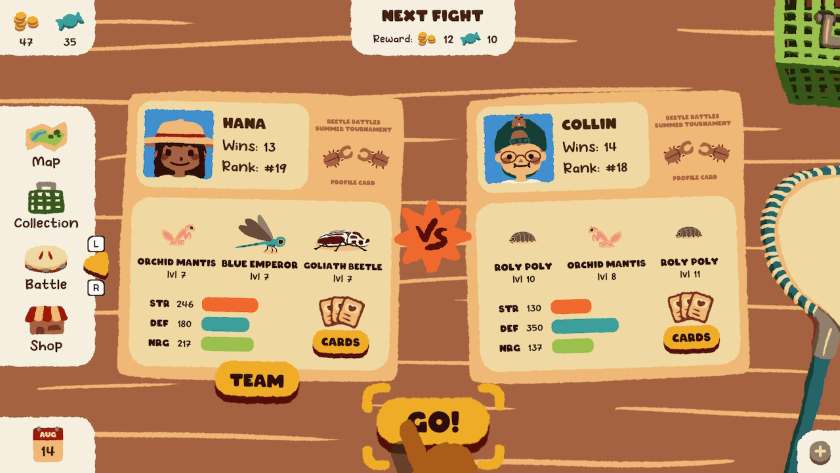
The main objective of Kabuto Park is to become the Beetle Battles Champion. You can collect as many bugs as you like, selecting the best to create your team. You can level up your team by using candy. The rarer the bug, the more candy is needed to increase its level. Winning the battle is rewarded with money and candy, with certain boss battles giving a bug badge as well. The money can be spent in the shop, buying: better nets (increasing the size of the green and blue areas in the mini-game); a bugpedia (allowing higher bug levels); better magnifying glass (increasing the number of bug capture spots to search); and better boots (allowing access to new areas).
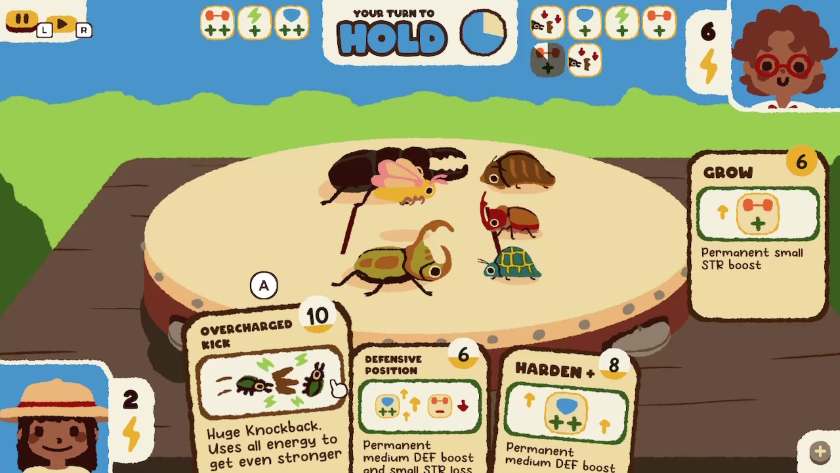
The battling is a sumo-style game, with each team taking turns at pushing or holding. The losing bugs land on their backs to the side of the arena. There is a great sense of strategy in selecting the correct bugs from your collection to create a battle-winning team.
The higher your team’s strength is, the farther you can move the opposition. The defence reflects how well your team will withstand being pushed, whilst the energy affects the speed at which the battle cards become available. Each battle card requires a set amount of energy before it can be used. Three of the nine battle cards associated with your team are displayed, being replaced randomly once activated. Some of the cards cause the opposition to be moved back, others give temporary or permanent boosts in strength, defence or energy.
Generally, the stronger your team, the greater the chance of winning, but if your defence isn’t high enough, you might get pushed off the arena straight away. If your energy value is low, then it will take a long time for the gauge to fill up before you can use the battle cards. It took me quite a while before I fully understood the battle techniques, but Kabuto Park is designed so that anyone can play and still win, with just a little bit of perseverance.
Gameplay
The controls are well explained, and it’s fantastic that you can swing the Joy-Con like a bug net. The game works well in docked or handheld mode, with the text large enough to read on the Switch Lite screen. There is full touchscreen functionality.
Within the settings menu, there are basic sound volumes and some accessibility settings, including one for creating patterns on the capture bar and increasing or decreasing the speed of the capture mini-game.
There is only one save slot in Kabuto Park, with the game saving after each battle or bug-collecting expedition. There is no night or day cycle whilst catching bugs, but after each battle, you start the next day in August.
Kabuto Park is not designed to be a long experience; my first playthrough was around 5 hours, as I collected all the possible bugs. The next playthrough was 1.5 hours, as I focused on just winning the battles.
Conclusion
Kabuto Park is a delightful bug-collecting and push battle game. There is a good balance between bug collecting and battling in order to progress through the game and become Beetle Battles Champion.
Final Verdict: I Like it a Lot 
Do you like our content?
Subscribe to our daily news and never miss a review!