


Game: Medieval Crafter: Blacksmith
Genre: Indie, RPG, Simulation.
System: Steam (Windows)
Developer|Publisher: Compact Core Games | GameDev.ist, Gamersky Games
Controller Support: No
Steam Deck: Playable
Price: US $12.99 | UK £9.99 | EU €12,99
Release Date: April 22nd, 2026
Review code provided with many thanks to Keymailer.
Medieval Crafter: Blacksmith – First Impressions at the Forge
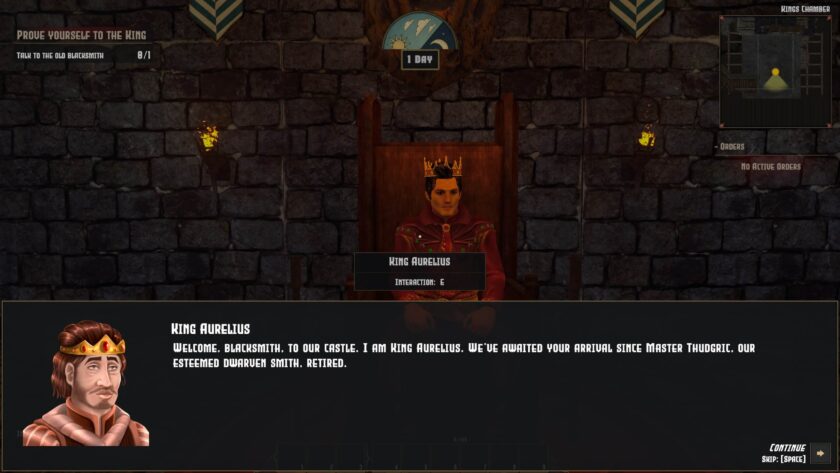
There’s something oddly appealing about stepping into the soot-covered boots of a blacksmith, and Medieval Crafter: Blacksmith leans fully into that idea. From the moment you arrive in town, greeted by a king who looks like he hasn’t had a proper night’s sleep in weeks, you’re handed control of your very own forge and gently pushed into your new role.
It’s not the most striking opening, and visually it doesn’t exactly dazzle, but once you start settling into the rhythm of the game, it begins to reveal a much more involved and thoughtful experience than you might expect at first glance.
Learning the Trade
The early hours are guided by a surprisingly solid tutorial. It uses clear checklists and highlighted objectives to point you in the right direction, while still letting you figure things out at your own pace. That’s important, because this is not a simple “click and craft” kind of game.
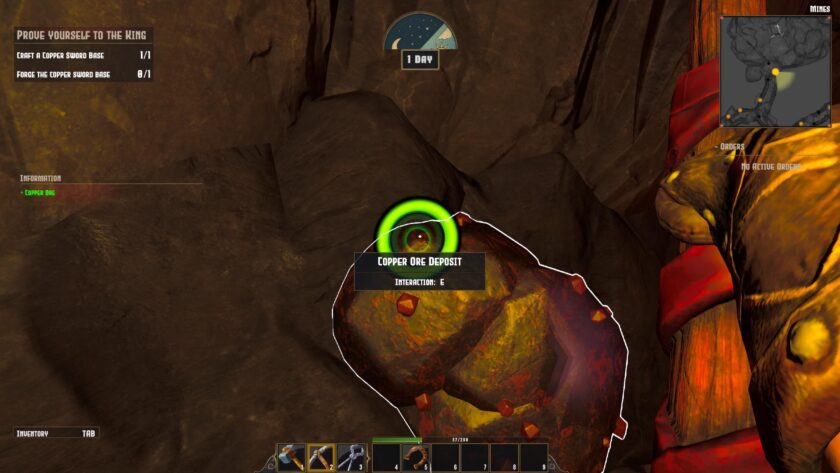
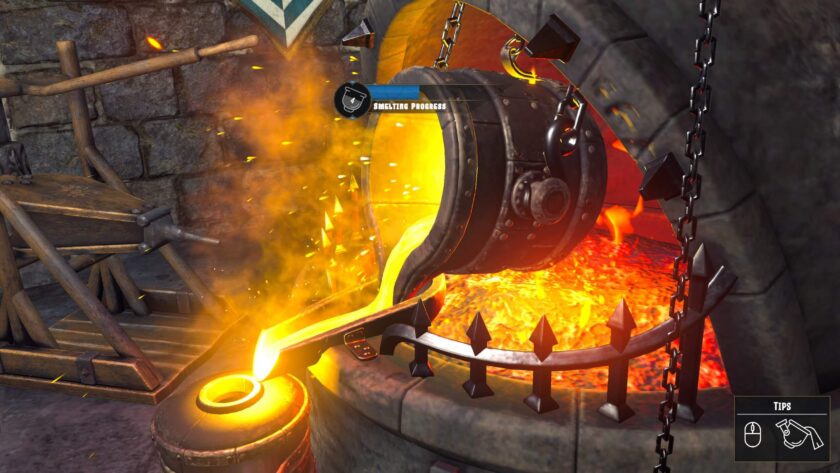
You’re responsible for the full process. That means heading into the mines yourself to gather ore, keeping your furnace stocked with coal, melting materials down, and then shaping them into usable items. Each step feels deliberate, and the game makes an effort to keep you engaged through small interactive sequences.
Mining, for instance, has you aiming your strikes carefully to be more efficient, while pouring molten metal involves a bit of timing and control. These little touches go a long way in making the act of crafting feel more involved rather than just something you do through menus.
The Joy (and Frustration) of Crafting
For the most part, the crafting process is enjoyable, especially when everything flows smoothly. There’s a genuine sense of satisfaction when you take raw materials and gradually turn them into a finished weapon or tool.
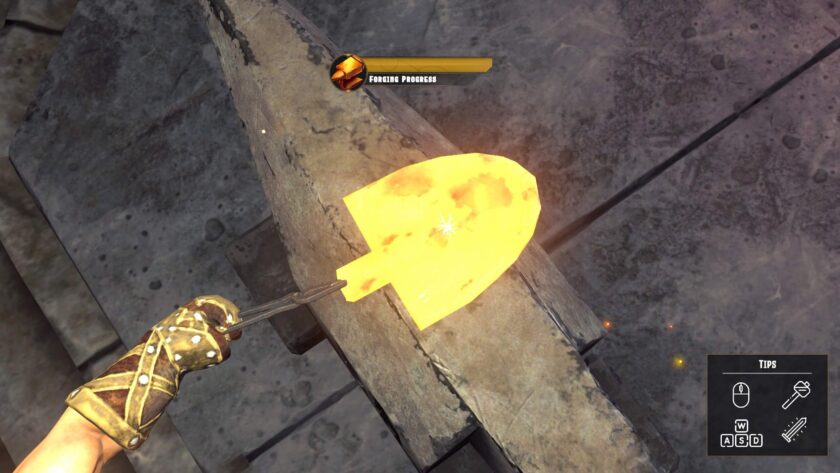
However, not every part of the process feels quite as polished. The hammering stage, which should be the centrepiece of the experience, can feel awkward. You’re asked to position your strikes precisely using a combination of controls, and it doesn’t always respond in the way you expect. Missing your target often means reheating the item and trying again, which, while realistic in theory, can become a bit tiring in practice.
Sharpening items has a similar issue, where the controls don’t quite feel as intuitive as they should. These moments don’t ruin the experience, but they do interrupt the otherwise satisfying flow of crafting. Still, when you complete a full project, assembling all the parts together and seeing the final result, it does feel rewarding. That sense of progression is one of the game’s stronger points.
Running Your Blacksmith Shop
Beyond crafting, there’s the business side of things to manage. Customers will come in with specific requests, and fulfilling these orders becomes your main source of income. What makes this more interesting is the ability to haggle, which introduces a small timing-based interaction that lets you push for a better price.
It’s a simple system, but it adds a bit of personality to each transaction. On top of that, you can place crafted items on display for general sale, trade with other vendors, and gradually expand your operation.
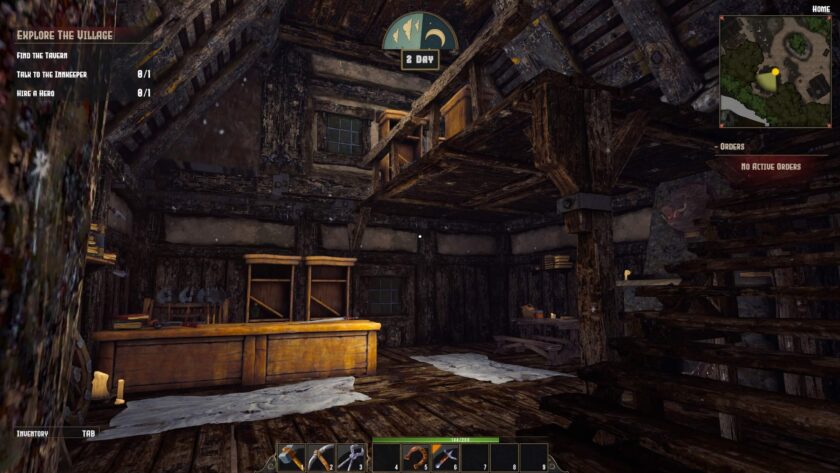
The game also runs on a day-and-night cycle, which naturally encourages you to plan your time. Some tasks take longer than others, and before long, you’ll find yourself deciding what to prioritise, whether that’s gathering materials, fulfilling orders, or preparing for the next day.
Sending Others Into Danger
One of the more enjoyable features is the ability to recruit adventurers and send them out on quests. After equipping them with your crafted gear, you can dispatch them to explore and hopefully return with useful rewards.
There’s a percentage-based success system tied to these missions, which depends on how well you’ve equipped them. Even so, success isn’t guaranteed, and it can be a little frustrating to see a well-prepared adventurer fail despite high odds. That said, it adds a bit of unpredictability and gives your crafting efforts a broader purpose. It’s a nice addition that helps break up the routine of working at the forge and adds another layer to the overall experience.
A Questionable Look
While the gameplay systems are fairly engaging, the presentation is a different story. The environments themselves are perfectly serviceable, and the forge area in particular looks decent enough. Crafted items also have a solid level of detail, which helps sell the work you’ve put into them.
The character models, however, are much harder to overlook. NPCs often appear stiff and lifeless, with expressions that can feel unintentionally unsettling. Some NPCs are literally walking about with their mouths open and bland expressions in their eyes. It’s not something that stops you from playing, but it does make interactions feel a bit off. It’s one of those situations where the game is clearly more focused on mechanics than visual polish.
A Busy, Hands-On Experience
There’s no shortage of things to do here. Between crafting, mining, trading, managing your shop, and sending adventurers out into the world, the game keeps you occupied. It’s the kind of experience where you can easily lose track of time as you tick off tasks and work towards your next goal.
A particularly welcome feature is the ability to save whenever you like. Given how involved some tasks can be, this makes it much easier to play in shorter sessions without feeling like you’re losing progress. The lack of controller support is a bit disappointing, especially for a game that could work well at a slower pace, but it doesn’t stop the core experience from being enjoyable.
Conclusion: Hammering it Home
Medieval Crafter: Blacksmith might not win the graphical beauty contest, and some of its mechanics can feel a little rough around the edges, but there’s a solid and engaging simulation underneath it all.
It offers a detailed look at the process of crafting, backed by a steady gameplay loop that keeps you busy and invested. While certain elements could benefit from refinement, particularly the more fiddly mini-games, there’s still plenty here to enjoy if you like this style of game.
It’s a slightly uneven journey, but one that manages to be satisfying in the long run.
Final Verdict: I Like it