


Game: Sugardew Island
Genre: Adventure, Simulation, Shop, Lifestyle
System: Nintendo Switch (Also on Steam (Windows) and PS4/5. Xbox coming later)
Developer | Publisher: rokaplay | rokaplay, Silver Lining
Age Rating: US Everyone | EU 3+
Price: US $16.99 | UK £15.29 | EU € 16,99
Release Date: March 7th, 2025
A review code was used, with many thanks to Press Engine.
Sugardew Island is a cosy farming and shop simulation. Designed to be accessible for all ages, it offers a stress-free experience.
Will Sugardew Island be sweet harmony or a sticky residue?
Heading to Sugardew Island
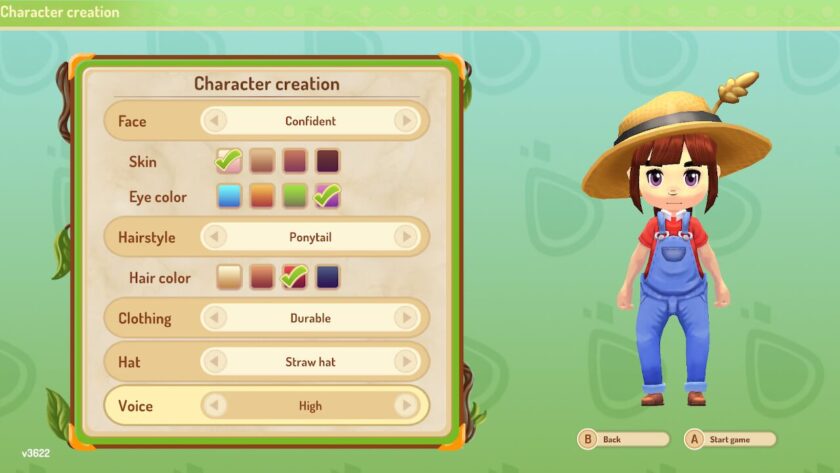
After a short animation, Sugardew Island starts with you creating your character. Compared to games in a similar genre, the options in Sugardew Island are quite limited. However, it is possible to change your look from within the game.
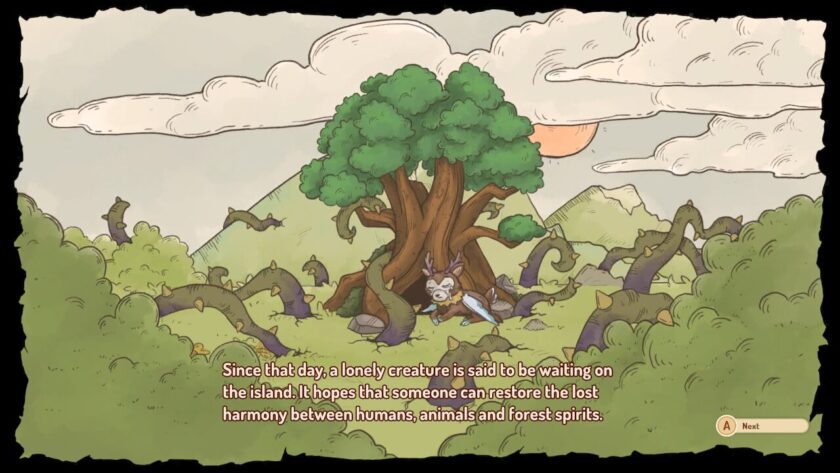
There is a narrative explaining what has happened on Sugardew Island, and that someone will come to restore balance.
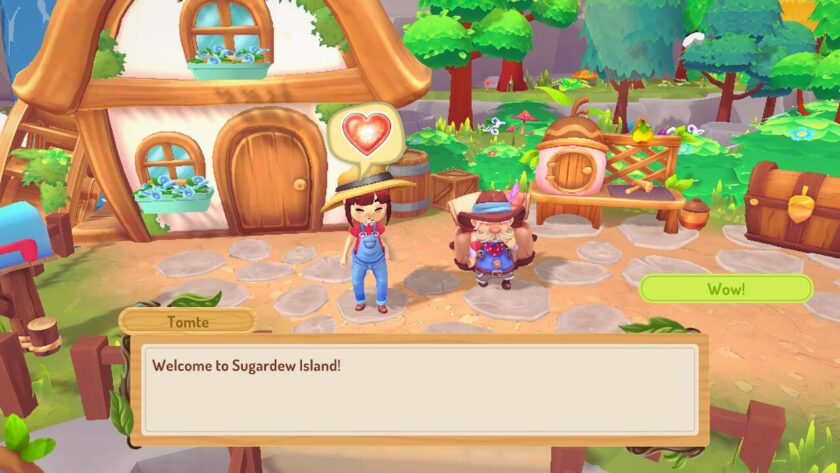
The introduction is not over yet, as you need to learn about life on Sugardew Island next. Your character wakes in a house, and Tomte, a brownie trader, explains how he found you washed up on the beach. Moving outside, he shows you the workbench, the meadow for animals and a store to sell your goods. He explains about the two areas of farmland and the forest behind.
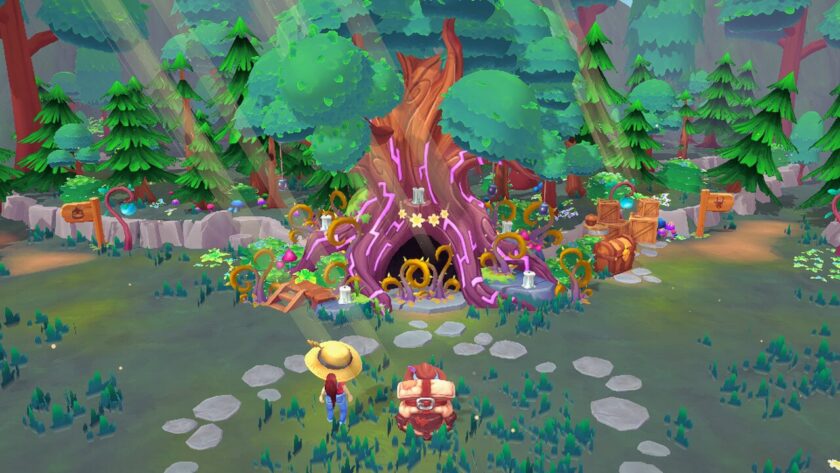
Going into the forest, Tomte introduces the Harmony Tree and the nature spirit which is trapped within. He goes on to explain that it’s only Harmony that can destroy the thorns and restore the island and that Harmony is received by selling goods to the Forest Folk.
There is a lot of reading and a lot of information given in the introduction (with even more explanations to come, although at least you can skip some bits of it!). Luckily, there is a player guide, accessed from the pause menu, which summarises the key points. I think Sugardew Island would benefit from a slightly slower show and do start (with the option to skip it all) rather than the hurried tell.
Restoring Sugardew Island
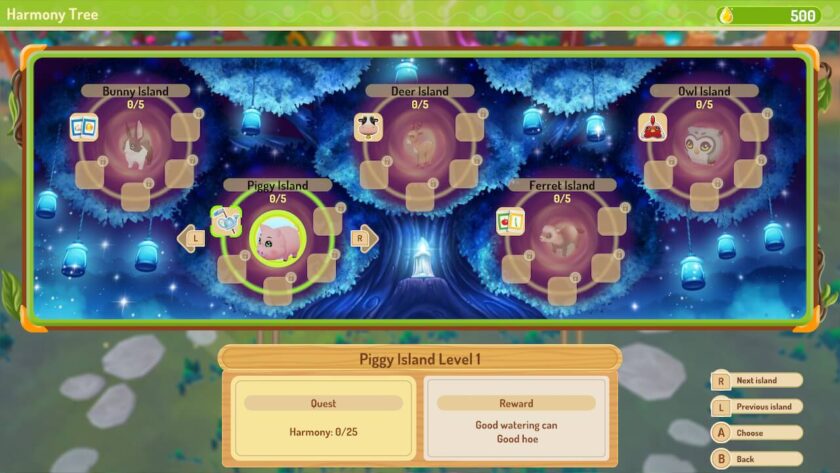
To restore the Harmony Tree, there are quests to do, each requiring a certain amount of Harmony to complete it. Completing each quest gives a reward. This might be new seed types, unlocking animals, or building and tool upgrades. You meet the Harmony Tree nature spirit and find out more about what happened on Sugardew Island as you complete the quests.
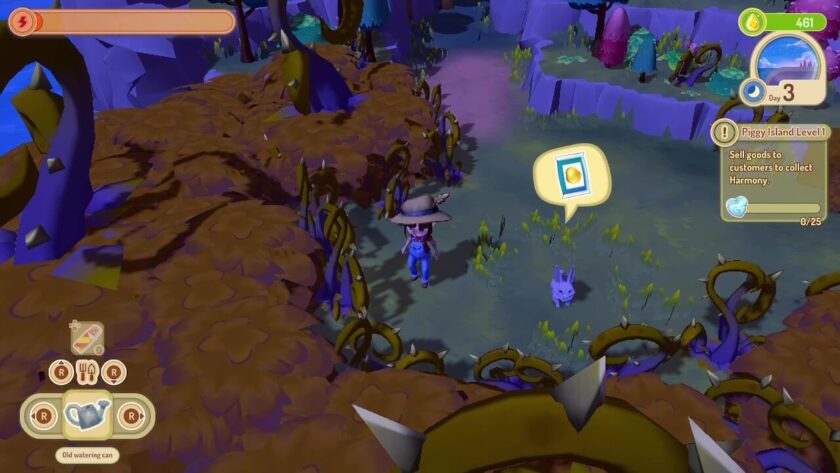
Aside from a reward, completing quests can release animals on each of the surrounding islands. In addition to being able to pet these creatures, they will sometimes give you seed packets. I was expecting this gift to be a ‘once a day’ reward, but actually, you can keep revisiting your furry/feathered friends and keep receiving seed packets. This might be an unintended ‘feature’ of Sugardew Island, but it is a very welcome one!
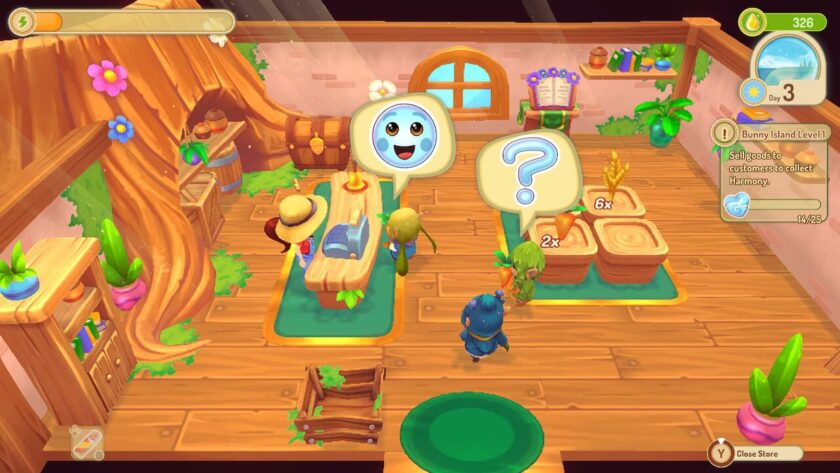
One of the highlights of Sugardew Island is running the farm shop. The adorable Forest Folk wander in and grab some of the items for sale. An emoji above their head tells you whether they will buy at the normal rate or whether they will want to negotiate. Discounting the item will always result in a sale, but obviously less sugardew, the Sugardew Island currency.
Each individual item sold equates to one Harmony. So if you sell the 25 carrots which Tomte leaves in your inventory, then you can complete a Harmony Tree quest on day one. However, there is a downside to selling – it uses stamina. I hope this is something which gets altered after release, as it takes away the cosy feel of Sugardew Island.
Life on Sugardew Island
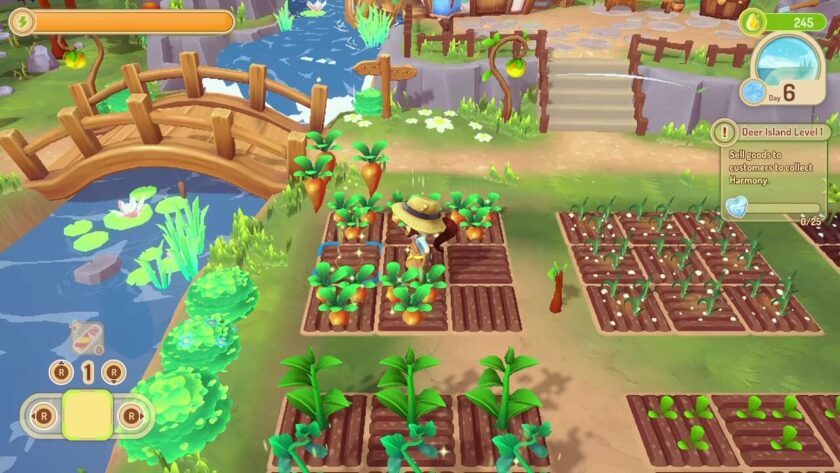
Farming on Sugardew Island follows a similar routine to most games: hoe, sow, water, harvest. Some of the crops, like tomatoes, will have multiple harvests; other crops, like carrots, will be just one harvest. Wheat is the quickest to grow and can be sold or used as animal feed. Sowing seeds and harvesting crops does not use stamina, however, clearing the land of rocks, trees and weeds, as well as hoeing and watering, does use energy. Stamina will increase as you level up your farming, animal care, and shop skills, and it’s possible to upgrade your tools for greater efficiency.
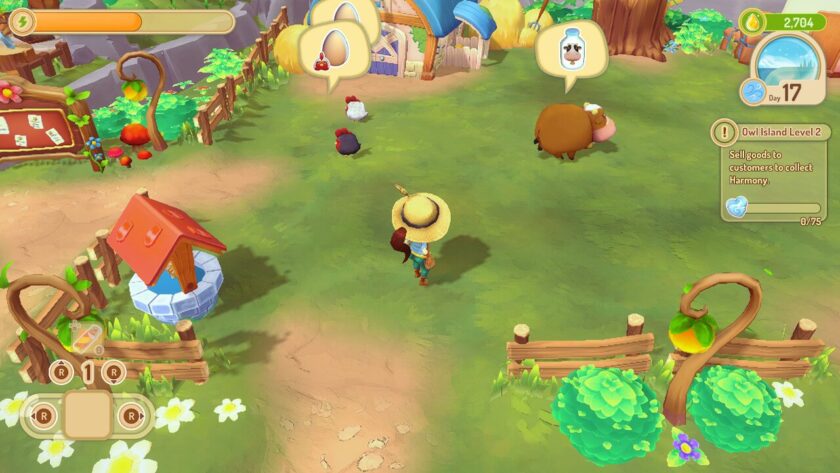
As well as crops, you can unlock and buy animals. All the animals live in the meadow area, next to the house and eat wheat, which is given via the silo. Animals that are fed will produce milk or eggs the following day. Petting the animals will increase your bond and will eventually increase their productivity.
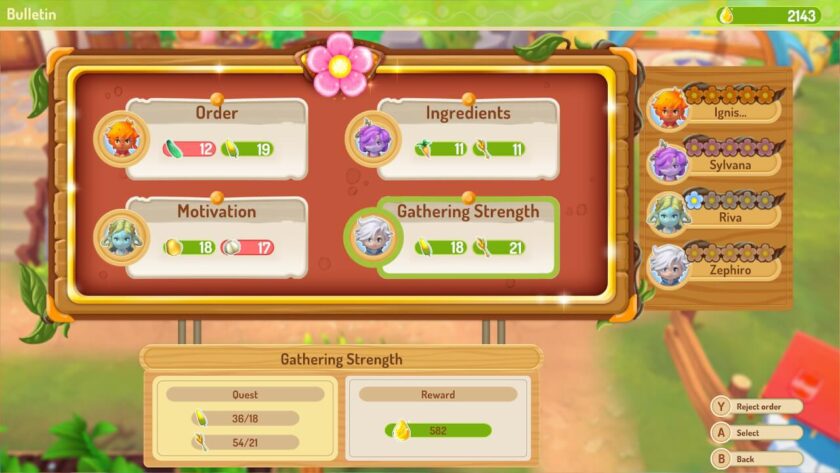
Besides selling crops and produce in your farm shop, there are four locals who will post quests on the bulletin board. These orders reward you with more sugardew, but do not give any Harmony, so it’s a balancing act between cash flow and Sugardew Island restoration. However, it does build friendships with the locals, and you can go on dates with them to hear about their lives.
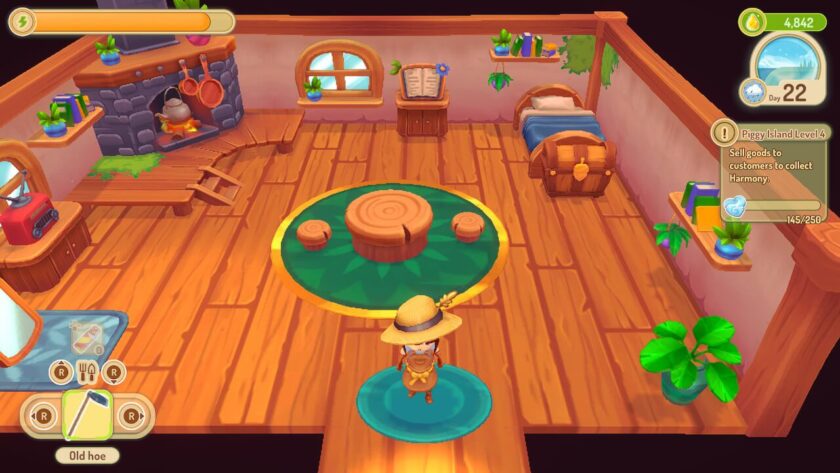
There is no time in Sugardew Island. When you wake, it’s daytime, and when you close the shop, it’s nighttime. Going to sleep will autosave and replenish your stamina. Upgrading your house will unlock the pet bed, and these cute creatures will follow you around. Somewhat surprising, though, you can’t pet them, nor do they sleep on their bed.
My daily routine consisted of tending to the fields and animals, opening the shop to ensure I had enough stamina to serve everyone, checking my island animal friends for seed packet donations, buying any extras from Tomte, and then planting the new seeds. Any surplus stamina would be used up in felling trees, bashing rocks, and pulling weeds, all of which re-spawn unless there are paths, hedges, or fences filling the space.
More Than Just Thorns on Sugardew Island
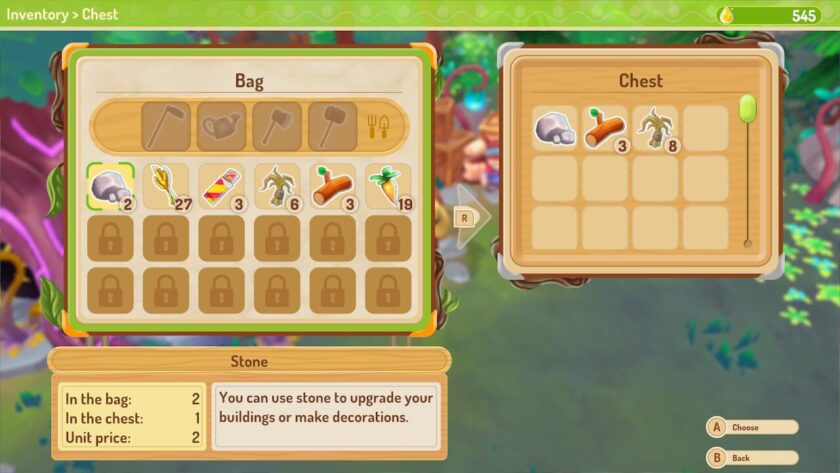
There are some great quality-of-life features in Sugardew Island. The watering can has unlimited water. All the chests interlink with each other, and the workbench and bulletin board use items directly from there. You can craft fences and paths from the start with no waiting for recipes. Harvested or collected items automatically go to inventory. You can walk into your house or shop without pressing a button, and the shop automatically closes when all the items have been sold or your stamina runs out.
However, I did find a few oddities. For example, Tomte’s shop inventory reserves the order of the goods if you swap between the tabs. I couldn’t read about the bulletin board in the player handbook. If you load a game that was saved after opening the shop, Tomte comments on the fact that you didn’t open the shop that day when you go to sleep. Gifts of chilli seeds from the island animals can’t be collected.
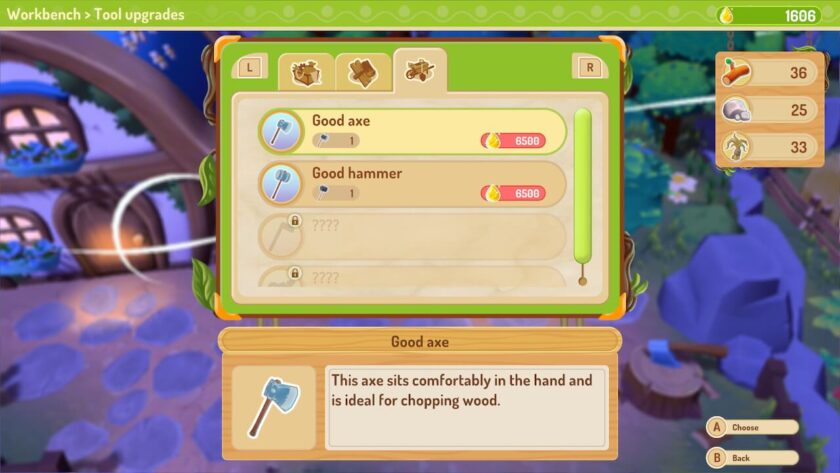
Unfortunately though, in the review version (1.0.1) there are issues which are more than just irritating. They stopped Sugardew Island from being the enjoyable experience it should be.
The first two Piggy Island quests unlock the ‘good’ tools, but unfortunately, if you exit and reload the game, the tool upgrades will revert to being locked. This means that unless you can unlock and purchase all the upgrades in one gaming session, you will never have access to improved tools. Regrettably, even though I started about half a dozen times, I couldn’t do that. Why? Because Sugardew Island kept crashing or freezing, forcing me to reload the game. Each time, I lost 20 to 30 minutes of gameplay and the ability to upgrade my tools.
Sugardew Island reminded me of Garden Witch Life — different in gameplay, but both promising to be a wholesome, cosy experience and failing to deliver because of issues that should have been captured at testing. We all know that getting updates to the Switch does take longer than other platforms, and hopefully, the issues will be resolved shortly after release. However, I can only review what I have played, and with no caveats from the developers, I can’t mitigate my experiences.
Gameplay
Whilst the majority of the controls are straightforward and displayed on screen, I could not get used to using the right stick to swap between inventory and tools. The text is large enough to read in handheld mode, but there is no touchscreen functionality.
Sugardew Island automatically saves when you sleep, and there is a manual save to one of three slots via the diary in the house.
I found the overall sound really quiet; even when I reduced all the other volumes, I could hardly hear the music.
There are loading screens as you move between each of the different islands and buildings, as well as when you talk to the locals and open/close your farm shop, all of which makes it a little disjointed to play. Although the animations of watering and sowing are fun, they make farming a bit tedious when you’re trying to be quick.
Conclusion
There is a lot to like about Sugardew Island. The Forest Folk are so cute as they run into the shop to purchase the items you’ve worked hard to produce. The colourful graphics, delightful animals, and straightforward gameplay are appealing, and although the island locals aren’t the most chatty, it’s fun to learn about their stories.
However, with the issues around upgrading tools and the numerous software crashes, I can’t recommend Sugardew Island at this time. Hopefully, the developers will hack away these thorny problems very quickly because there is an adorable farm shop simulation game waiting for us on Sugardew Island.
Final Verdict: I’m Not Sure 
UPDATE: 13th March 2025 (v1.0.2)
The issues around upgrading the tools have been fixed and works retrospectively. The bulletin board help is available from the handbook and chilli seeds can now be collected from the island animals, but unfortunately, these free seeds are less common. Running the farm shop no longer uses stamina, and the different prices are shown when negotiating with the Forest Folk.
Do you like our content?
Support LadiesGamers as a member on Patreon!
 Or buy us a cup of coffee or tea on Ko-Fi!

Love Sugardew Island, kinda reminds me of Story of Seasons.
Thanks for visiting LadiesGamers and I’m glad you’re enjoying Sugardew Island.