


Code provided with thanks to Keymailer.
Deck Out – A Different Kind of Deckbuilder
At first glance, Decked Out looks like another card-based roguelike where you’ll be building a deck, collecting upgrades, and trying to survive run after run. However, the big twist here is that combat happens entirely in real time. Rather than carefully considering every move while enemies politely wait their turn, Decked Out throws monsters at you and expects you to think on your feet.
The result is something that feels fresh, even within a genre that’s become incredibly crowded. After spending some time with the demo, I came away intrigued and eager to see how the game develops during its journey toward full release.
Defending the Town, One Spell at a Time
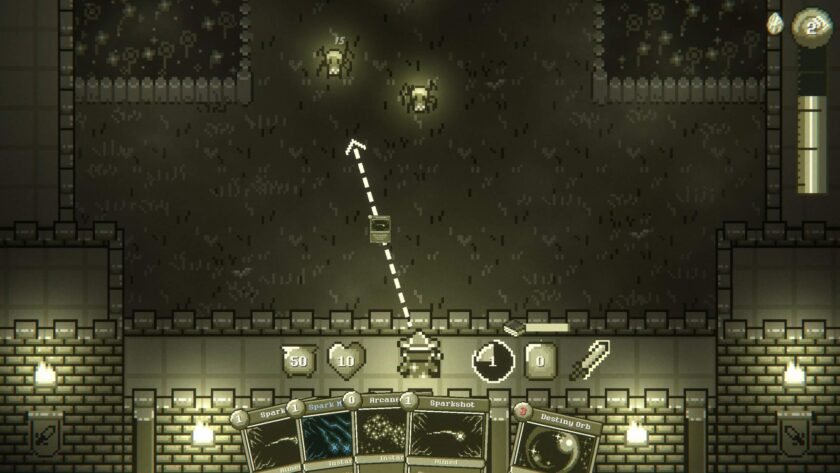
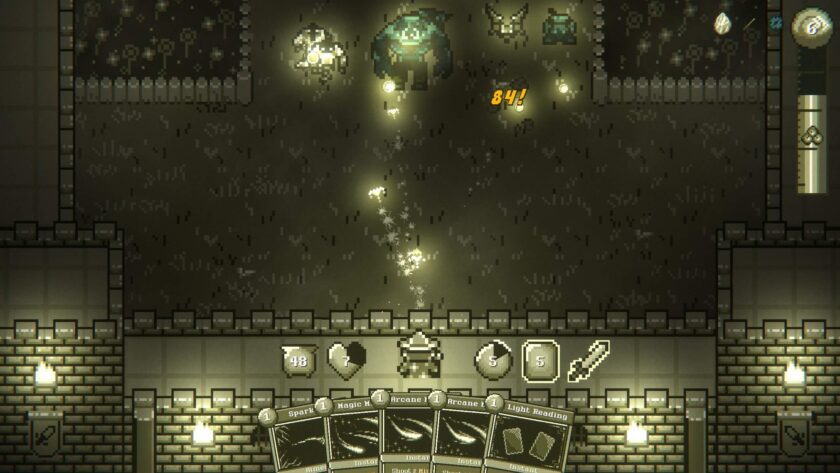
The premise is simple enough. You play as a spellcaster tasked with protecting your town from relentless waves of invading monsters. Rather than controlling a character directly around a battlefield, your primary weapon is your deck of cards. Cards appear along the bottom of the screen and can be dragged onto the battlefield to unleash spells and abilities.
Some cards activate instantly, while others require a little more precision. Certain spells need to be aimed directly at enemies, meaning you’re not simply throwing cards around and hoping for the best. There’s a satisfying sense of interaction as you physically drag and cast your abilities across the battlefield.
Of course, magic doesn’t come for free. Most cards consume mana, so there’s an ongoing balancing act between unleashing powerful spells and making sure you don’t completely exhaust your resources. Burn through your mana too quickly, and you’ll find yourself waiting for it to recharge while monsters continue marching towards your town. That constant resource management creates a nice layer of tension throughout every battle.
Fast, Frantic and Surprisingly Fun
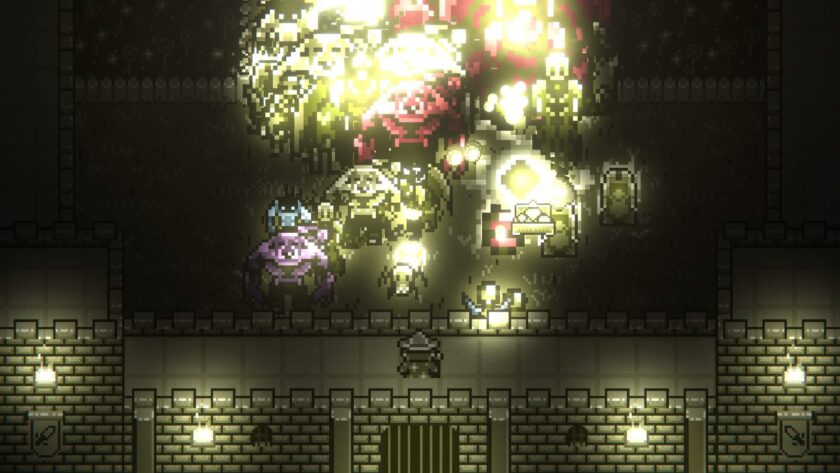
One thing that became apparent very quickly is that Decked Out isn’t interested in taking things slowly. As enemy numbers increase, battles can become chaotic. You’ll be dragging cards, aiming spells, watching mana levels, and trying to keep track of multiple threats all at once. The core combat loop is genuinely enjoyable. There’s something quite satisfying about drawing the right card at exactly the right moment and clearing out a large group of enemies before they overwhelm your defences.
That said, the speed of combat can occasionally work against the game. During some of the busier encounters, things became quite hectic. There were moments where so many enemies appeared on screen that it became difficult to properly assess the situation. Instead of making tactical decisions, I occasionally found myself rapidly throwing cards around and hoping for the best. I did wonder if some kind of optional slowdown feature could help players process the action more effectively when things get particularly intense.
The Town-Building Loop
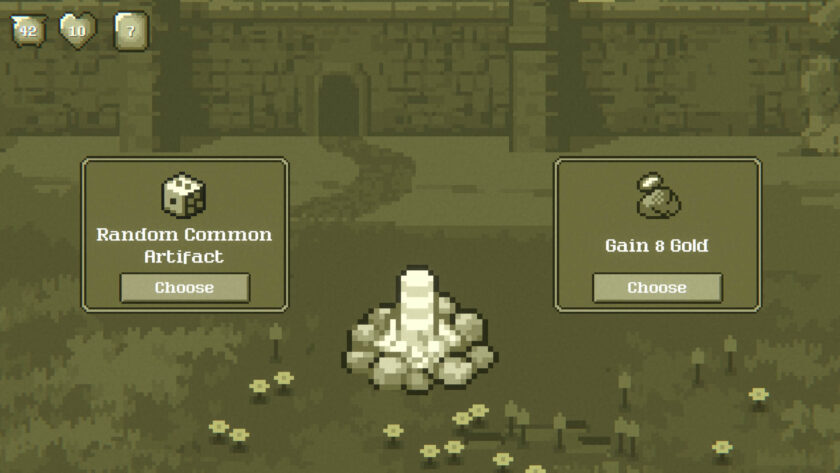
After surviving a wave of monsters, you return to town, where the game shifts into a management and upgrade phase. You’ll typically be presented with several locations to visit, each offering different opportunities to improve your chances of survival.
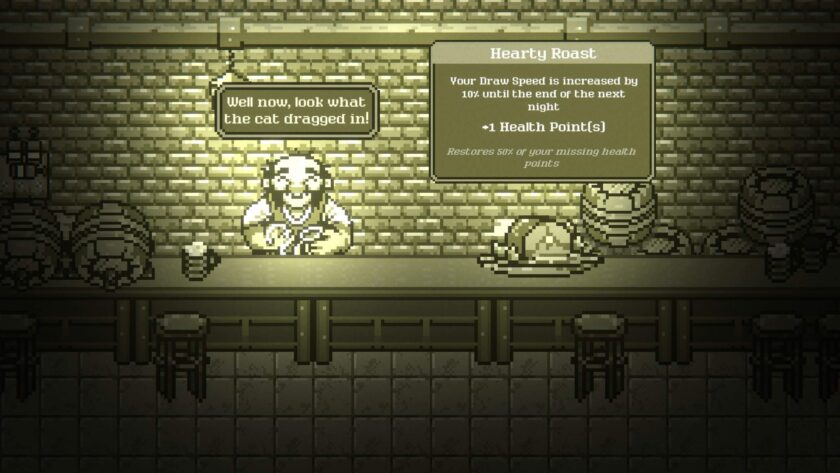
The fountain allows you to exchange cards for new ones. The blacksmith can upgrade existing cards if you have the necessary resources. The shop offers fresh cards, artefacts, and other useful upgrades. Meanwhile, the tavern provides an opportunity to recover some health before heading back into battle. There are also random events involving townsfolk and visitors. Some may offer beneficial trades, while others tempt you with powerful rewards in exchange for accepting a curse or drawback. I particularly enjoyed this aspect of the game because it constantly forces you to make decisions. You can’t do everything, so every choice matters. Do you strengthen your favourite card? Heal your character? Gamble on a risky event? Invest in new artefacts? There’s always a feeling that you’re making meaningful progress with each successful wave.
Growing Stronger Together
One feature I found especially interesting is how the town itself evolves alongside your run. Repeatedly interacting with certain buildings gradually upgrades them over time. This creates an additional layer of strategy because you’re not only thinking about immediate rewards, but also how your decisions might benefit future visits. Many roguelikes focus entirely on the player character, but Decked Out gives the town its own sense of progression. Protecting it feels meaningful because you can actively see your efforts contributing to its growth.
Monochrome Pixel Presentation
Visually, the demo has a distinct monochrome sepia-like pixel-art style that suits the game well. Despite limited colour everything is clear enough to read during combat, while still maintaining a fantasy atmosphere. The various cards, monsters, and buildings all have enough personality to stand out without overwhelming the screen. When colour is used in battles, it feels effective.
Niggles
My biggest concern at this stage relates to controls. Playing on Steam Deck felt noticeably more awkward than I would have liked. Since combat relies heavily on quickly dragging cards and aiming abilities, the experience feels naturally suited to mouse controls. Using the Steam Deck’s control scheme worked, but once enemy waves became particularly busy, I found myself struggling to keep up with the pace. This is very much demo feedback rather than a major criticism. There’s plenty of time for refinements and adjustments before the final release, but it’s something I immediately noticed during my playtime.
Final Thoughts
Decked Out takes familiar roguelike deck-building foundations and adds a real-time combat system that genuinely changes how the genre feels. The combination of frantic card-slinging battles, meaningful town upgrades, random events, and deck customisation creates a loop that’s easy to enjoy and difficult to walk away from after just one run. While the combat can become overwhelming, the foundations here are incredibly promising.
Most importantly, Decked Out already feels like it has its own identity rather than simply following trends. For a demo, that’s a very good sign indeed.
I’ll definitely be keeping an eye on this one as development continues, because there’s a lot of potential hidden within this growing little town and its increasingly desperate defence against the night.
A free demo is available now on Steam.
Do you like our content?
Support LadiesGamers as a member on Patreon!
 Or buy us a cup of coffee or tea on Ko-Fi!
