


Code provided, many thanks to Game Warden Games.
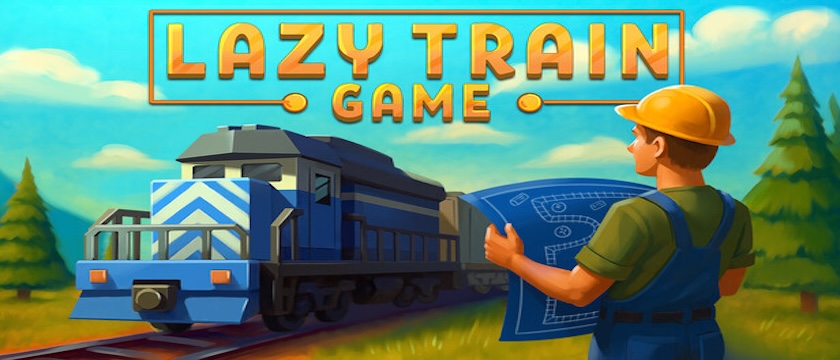
Lazy Train Game blends a couple of different genres together into a cozy experience that will be familiar to fans of both management games like Let’s Build a Zoo and incremental zen experiences like Loop Hero or, well, Cookie Clicker. Bonus, it’s way cheaper than getting into hobby trains, which require things like disposable income and a sizable spare room or basement.
It’s bite-sized, easy to figure out, low-pressure, and still tweaking its controls and other features. But does it all come together into an enjoyable package? Let’s ride the rails.
Lazy Train Game Is All Those Words Together, Yup
Something that the incremental genre effectively brings to other games is a relaxed sense of escalation. You put things in motion, then check back later for your ever-increasing boodle of resources and upgrade what you can, then dart off again for whatever else requires your attention. That’s part of why clicker games and idlers are great niches for office or home workers who like to use low-focus games as their brain-resting Pomodoro tools.

Blending the concept with management can create games that eventually overwhelm, if one isn’t paying fuller attention to all of the nuances. An example of this is Kittens Game, which is a phenomenal example of how an idle game can also create generational stories and weird mental images. It also eventually requires a certain amount of micromanagement, making it less relaxing for some people
This is where Lazy Train Game is already primed to learn from others’ successes and mistakes: although there’s plenty of resource collection and track reworking on offer, there isn’t a super-complicated chain of unlocks. Nor is it designed to be run for hundreds of hours. It’s a train toy, capable of being put down for long stretches and returned to when you feel like building another train. That’s a darn good start.
Fumbling Around The Yard
A general note — not a critique — of most idle or incremental styled management games is that there are two kinds: the ones that are optimized for quick and easy tapping, and the ones that very much are not. Due to the necessity of fine-tuning your train tracks (and placing your trees for your preferred prettiness), Lazy Train Game is currently best suited for people using a mouse and keyboard.
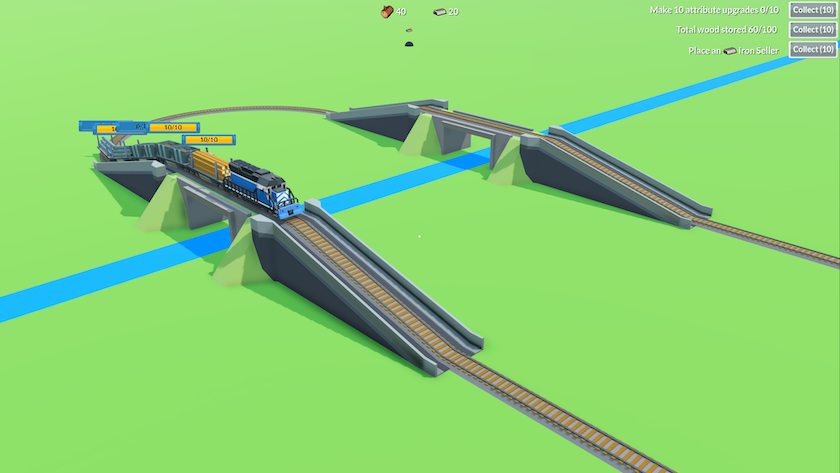
I was able to handle it with a little customization on a Steam Deck, where it runs just fine, but that’s rarely the best circumstance for a game like this one. Again, the point is to be able to let it do its thing while you go about your other business for a while. A Deck, which I use to do most of my testing, is not optimal for such games. There’s no fault to be handed out over that fact.
Set up your train, let it run minimized in the background of a PC or Linux/SteamOS system, and enjoy the ride. But don’t think this is a game for long sessions of active play, like Two Point Museum or whatnot. You can play it that way if you’d like, though, and I think toy train devotees might find this game a wonderful diversion for when they can’t get to their collection!
Get On Your Conductor’s Hat
The methodology of Lazy Train Game is beautifully simple: lay a track loop that passes various resources, and let the train collect those resources so you can build structures that hold more of those resources, so you can expand your tracks and collect more stuff. Gradually, you’ll build as intricate and multi-layered a track as you’d like, complete with ramps and environmental cosmetics.
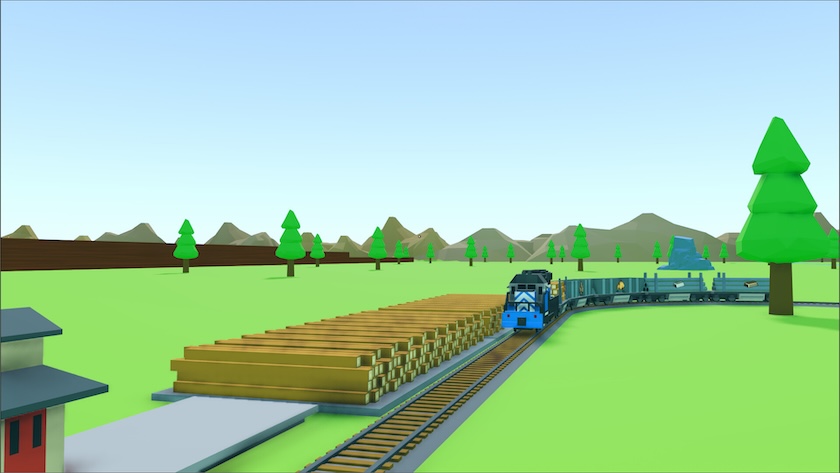
Not included are any people or living towns, so there’s no way to role-play a season of Deadwood while your choo-choo loops, which is honestly better for anyone with children in a five-block radius. It does mean the game is a highly streamlined experience: you are building this train presumably because you love the peaceful looping nature of the trains themselves. If that’s not something you want to play, there’s no real way of convincing you to give the game a try.
Final Thoughts
As a train simulator that’s still in relatively early stages, Lazy Train Game offers a surprisingly sturdy and enjoyable gameplay loop. While more customization options are always a plus, there are plenty of ways to develop your train to your liking, all while being vastly cheaper than getting into real hobby trains.
The effort on display here is clearly passionate about the topic, offering a chill, enjoyable way of enjoying a long-time hobby in a way even the most casual visitor can enjoy.
The only holdbacks here are whether or not you personally would enjoy the world of trains, and your primary gaming device. While there may be a way for fuller controller schemes to work in the future, it doesn’t change that incremental-style games like this one are always going to be better desktop backdrop toys for the casual visitor.
Do you like our content?
Subscribe to our daily news and never miss a review!