


Game: Actraiser Renaissance
Genre: Action, Simulation, RPG, Strategy
System: Nintendo Switch (also on Playstation 4, Steam, and Android)
Developer|Publisher: Sonic Powered Co. Ltd | Square Enix
Age Rating: US E10+ | EU 7
Price: US $29.99 | UK £24.99 | EU € 29,99
Release Date: September 23rd, 2021
No review code was used, I purchased the game myself.
Remasters and remakes are becoming more and more common as the years go by on the Switch. Taking games that are beloved and updating them for old and new fans alike is common sense. But there are definitely games that can still cause a shock when announced. When Actraiser Renaissance was shown in a Nintendo Direct, the response was definitely “…what?” How does this remake hold up for someone who has no experience with the original SNES game?
The Return of the Lord of Light
You play as the Lord of Light, the God that people look towards in their time of need. However, you have just awoken from a deep sleep and while you were away, Tanzra the Evil One has sent monsters to ravage the lands. People have scattered, the earth is scoured and faith in your presence is at an all-time low. But not for long!
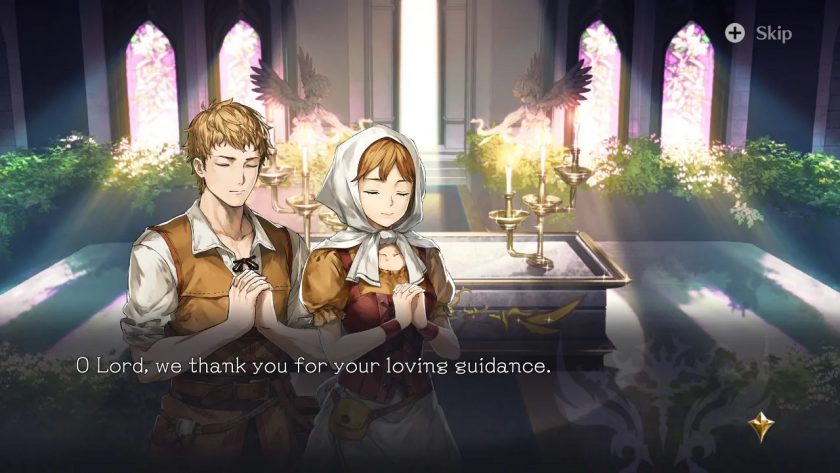
With your trusty angel by your side, you will travel to six different lands, clearing through monsters and helping the people as they seek to make the lands their ancestors lived inhabitable once again. And as you make your mark in each land, you will soon uncover a hero who is prophesied to pledge their power and soul to the Lord of the Light in order to banish Tanzra forever.
When it comes to the story, it’s about as straightforward as you get. Defeat the big bad and overcome evil. As you travel to each area, you will come across “new” villagers who are seeking your guidance. I saw new because outside of a few lines related to the hero, the story beats all tend to play out the same. As a result, it can make the game feel a bit repetitive as you continue to explore to later areas.
Side-Scrolling Adventure
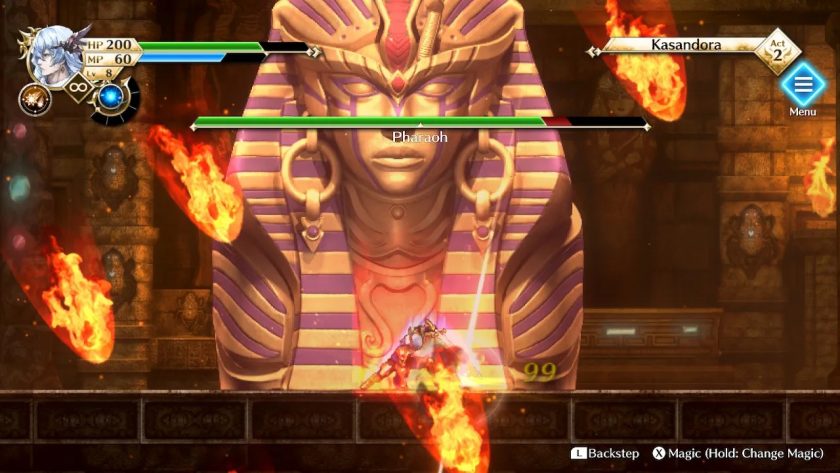
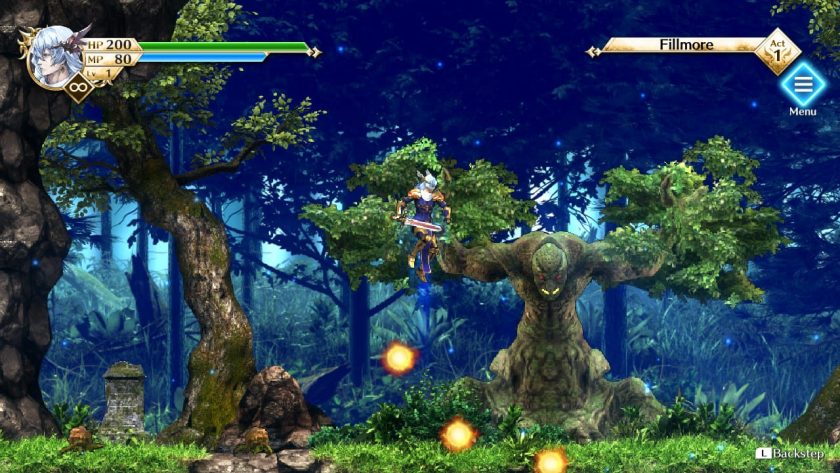
The gameplay of Actraiser Renaissance is split into two parts, the first part being an action side-scroller. Controlling the Lord of Light, you must traverse through levels, battling against monsters until you come up against the boss at the end of the stage. You have an HP and MP bar and if you lose all of your HP, you are sent back to the last checkpoint. If you haven’t reached a checkpoint prior to your defeat, then you are sent back to the beginning of the stage.
Gain Magical Abilities
As you unlock more lands and heroes, you will gain different magical abilities, such as fire or ice. You can change up which magic type you are using at any type, and this also affects the element of your physical attack as well. So if you do end up using up your MP in battle, you can still rely on your physical attacks to get by. Although truthfully, most of the boss battles can be cheesed by moving your character in just the right spot so that you don’t take damage. It’s not too hard to find an enemy’s blind spot or to even get behind them so that you have a few seconds to let loose.
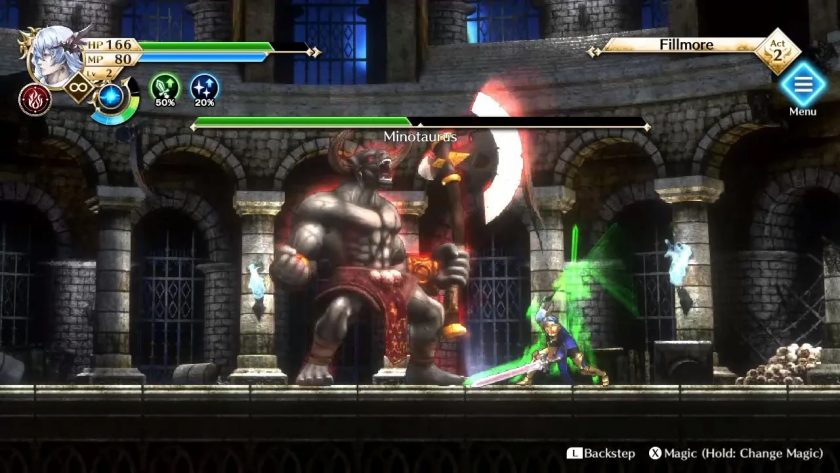
There are three difficulties that you can choose during your time with Actraiser Renaissance: easy, normal, and hard. Along with affecting the enemy strength, this also affects the number of lives that you have. If you go with easy, you will have unlimited lives while with hard, you only have one life. Lives act pretty much as your chance to pick up where you left off if you’re defeated. Once you lost all of your lives (if you’re not playing on easy mode), then it’s game over.
Real-Time Town Building
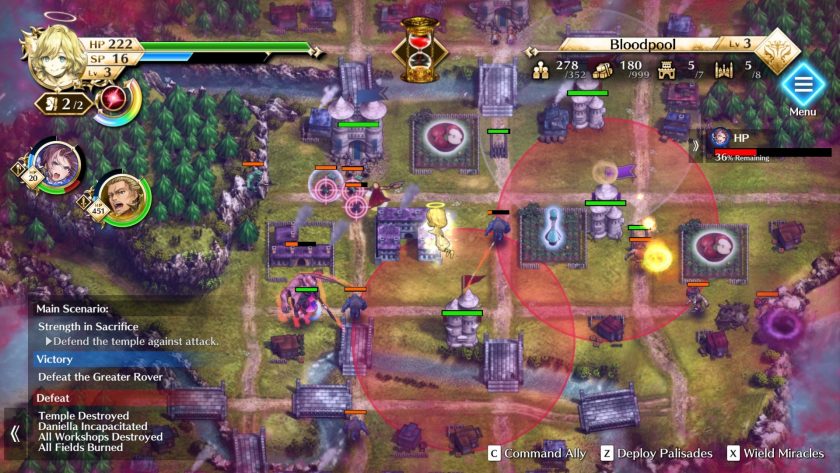
The other gameplay section is related to town building. However, if you’re looking to have control of where things are built and actually making the towns of your dreams, then you will be sorely disappointed. During these sessions, you act as both a protector and point of guidance. The humans below will be building up the towns while you are in charge of fighting any monsters that appear on the map, as well as clearing away any obstacles such as trees or rocks using your miracles.
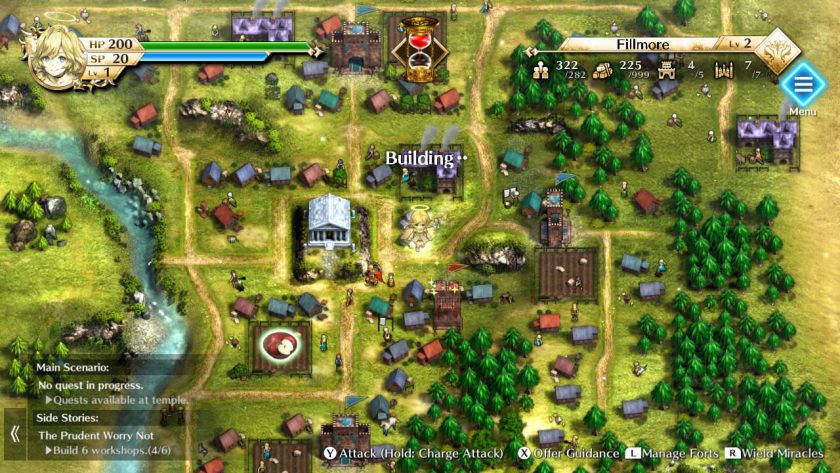
You will mainly control your angel companion as you watch the humans build in real-time. You can offer them guidance by telling them where to build roads and expand outwards. The angel is armed with a bow and arrow, which you use to fight against monsters. Defeating monsters is a good way to get some MP back as you use your miracles. But as you continue expanding, you will soon get the ability to destroy monster spawners permanently. Outside of that, you mainly just need to keep an eye on your people and fulfil any requests that they send your way.
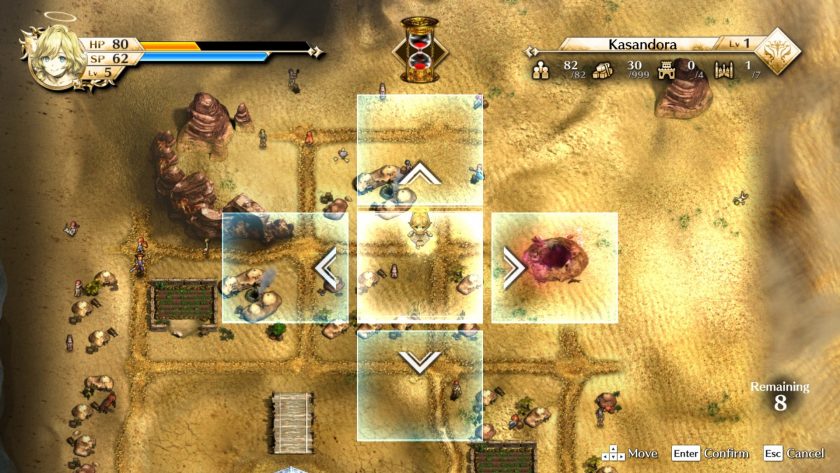
You do have control of one type of building and that is forts. It is your job to build up forts around the town to help protect your people during sieges. There are three different types of forts that can be built, each with its own purposes: gatehouses to act as barriers, blockhouses to fight against aerial enemies, and magehouses (which also fight against aerial enemies, but hit harder in exchange for weaker defence).
Sieges
There will be times when you will either get missions to defend the town, or random sieges will suddenly happen. During the random sieges, you just need to defend your temple. During missions, you will have to defend your temple as well, but there may be other buildings or lands that need to be defended as well, such as your farms or forts. The enemies tend to follow the same logic and each enemy type has its own attack patterns.
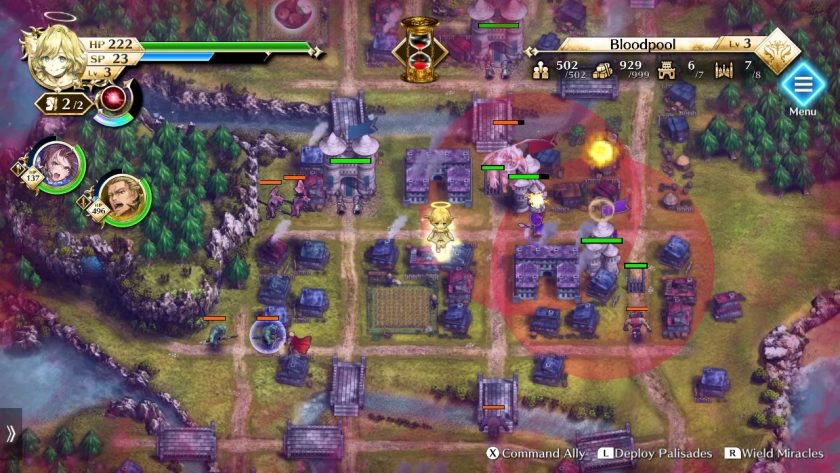
During these moments, you can’t use your angel friend to attack with their bow and arrow. Instead, you must make use of the hero in that land, your forts, your palisades (wooden barriers), and your miracles. If you’ve placed your forts in a good place, then you just need to worry about defending them, should a flood of enemies come rushing through.
The same can be said for your hero as well. It is important to have a variety of aerial forts and gatehouses, especially when accounting for your hero’s typings. Some heroes are melee only and can’t attack aerial monsters while others are able to take down aerial enemies with ease, but can’t get past the magical barriers of bulkier enemies. You can also use your miracles against enemies, each with its own weaknesses. You need to keep in mind each enemy’s weakness, especially during sieges where you find yourself easily overwhelmed by enemies.
Remake from the SNES Era
As this is a remake of a SNES game, there are plenty of differences for those looking to jump into the game a second time. Of course, the game has been updated visually and audibly. But outside of that, there are some other additions that have been added that weren’t in the original. You now have the ability to dodge, new magical abilities not seen in the original. You also have the ability to attack upwards and downwards. The variety of multiple difficulties and autosave, two things that we are used to with most games nowadays, are also new additions.
Beyond that, there is also a post-game area that has been added acting as a challenge area for those who weren’t satisfied with the difficulty of the main game. Overall, a sizable amount of new additions, to the point where may end up giving a new experience to older players.
Aesthetics
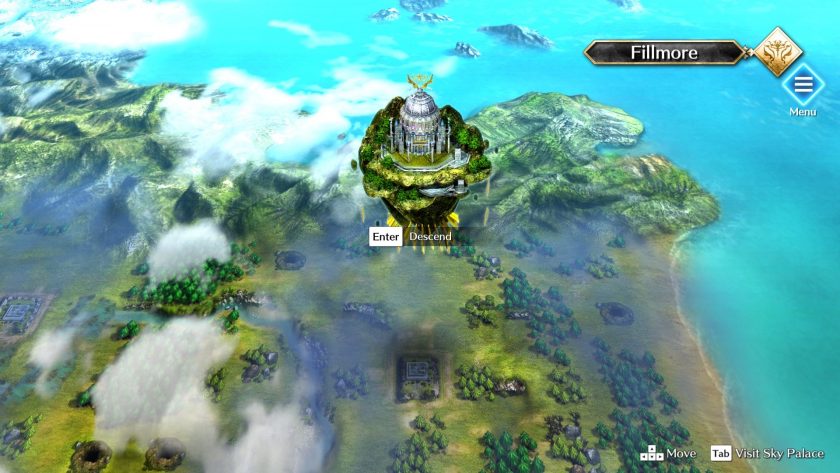
The aesthetics of Actraiser Renaissance are a bit of a strange thing to think about. When comparing the original art versus the updated art, Renaissance decided to go more along the lines of anime character sprites and realistic backgrounds. The sprite art looks very nice. The colouring is almost reminiscent of a storybook. Each of the villagers even has a different look when you go to different areas, which was a nice touch. When it comes to the 3D models, however, things look a bit rough.
This is mainly the case with the 2D side-scroller levels. Everything looks almost pixelated and it is hard to read any details in your character at all. While the art of the original has a charm to it, it’s hard to look at Actraiser Renaissance and feel any of that charm.
Sound
The music, however, was a delightful treat. You have the option to listen to either the original soundtrack or the Renaissance rendition, both of which are very good. And that should come as no surprise, given that the original composer, Yuzo Koshiro, returned to rearrange his SNES compositions. There are even some new tracks for fans of his work to enjoy as well. A majority of music is orchestral. Although there is the occasional guitar piece to really get the blood pumping and the montages rolling.
Conclusion
Actraiser Renaissance was definitely a surprising announcement to behold. It really goes to show that if there is a dedicated team out there, any game could possibly be up for a remake or remaster. But was this remaster truly needed? I would say it has its place. Similarly to the original, this game won’t appeal to everyone. The side-scroller section gives just a taste of what you would look for, with forgettable levels and (mostly) easy boss battles. The town building portion drags on, and the sieges can sometimes drag that irritation out. After the third world, it can start to get a bit repetitive. Fight in a side-scroller level, inhabit your new land, guide the people, beat the boss of that area, rinse and repeat.
It is a charming game in of itself. Of course, I can’t really speak for those who have played the original, whether they should pick this game up or not. For those with no experience in this game, however, I can say that it’s an interesting experience. The experiences with the action side-scrolling and town building may leave you wanting more. But both portions are done competently enough that you may find yourself passing a few hours by fulfilling missions and defending your towns from monsters.
Final Verdict: I Like it. 