

Welcome to another edition of Paula’s Game Ramblings. If you like these random thoughts, you can find the other ramblings here.
With the release of The Legend of Zelda: Echoes of Wisdom upon us, I thought it would be a nice idea for these ramblings to take a trip down memory lane and see how the Zelda series has changed throughout its 38-year existence.
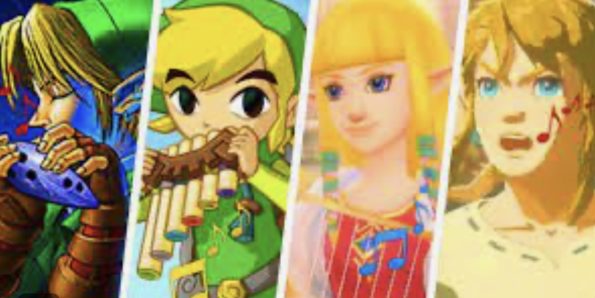
The Legend of Zelda series, first launched in 1986 on the NES, has stood the test of time as one of Nintendo’s most iconic franchises. From its humble beginnings as a top-down adventure to its latest open-world epics, the series has evolved significantly, adapting to new technologies and player expectations while maintaining its core identity. Let’s take a closer look at how The Legend of Zelda has transformed over the decades.
The Birth of The Legend of Zelda (1986-1991)
The original The Legend of Zelda (1986) introduced players to the vast kingdom of Hyrule, where they guided Link on his quest to rescue Princess Zelda and defeat the evil Ganon. It was revolutionary for its time, offering an open-world experience with non-linear exploration, which was a rarity in the 8-bit era. To advance, you had to discover hidden secrets, solve puzzles, and find powerful items, a formula that would become a hallmark of the series.
The sequel, Zelda II: The Adventure of Link (1987), marked a departure from the top-down view, adopting side-scrolling combat and RPG elements like levelling up, which made it the unique entry in the series to date. Despite its differences, Zelda II still contributed to the franchise’s legacy with its focus on challenging combat and exploration.
The 16-bit Leap (1991-1998)
With the release of The Legend of Zelda: A Link to the Past (1991) on the SNES, the series returned to its top-down roots but with enhanced visuals, tighter controls, and an even more intricate world. This game expanded on the original formula by introducing a dual-world mechanic with the Light and Dark Worlds. Many series staples, such as the Master Sword and heart pieces, were also established in A Link to the Past, cementing it as a classic.
The Game Boy title Link’s Awakening (1993) proved that the series could succeed on handheld platforms. It maintained the franchise’s puzzle-solving and exploration while introducing quirky characters and a more whimsical tone.
The 3D Revolution (1998-2006)

Arguably, the biggest Leap in the series came with the release of The Legend of Zelda: Ocarina of Time (1998) on the Nintendo 64. This was not only the first game to feature 3D graphics but also one that redefined the action-adventure genre. It introduced lock-on targeting (Z-targeting) for combat, the ability to ride a horse, and complex time-travel mechanics. With its sprawling world, plenty of emotional depth, and epic dungeons to explore, it set a new standard for what an adventure game could be.
Following in its footsteps, Majora’s Mask (2000) pushed the series in a darker and more experimental direction. Its three-day cycle mechanic and focus on side quests made it a much more personal, time-sensitive adventure.
As the series progressed, The Legend of Zelda: The Wind Waker (2002) introduced cel-shaded graphics, a striking departure from the more realistic look of previous games. Wind Waker is regarded as one of the most visually timeless entries in the series, with its vibrant world and emphasis on maritime exploration.
On the other end of the range, Twilight Princess (2006) took the series back to a darker, more mature look. It retained the 3D action elements of previous games. Still, it added the ability to transform into a wolf and introduced motion controls on the Wii, offering new ways to experience classic Zelda mechanics.
Experimentation and Refinement (2007-2016)
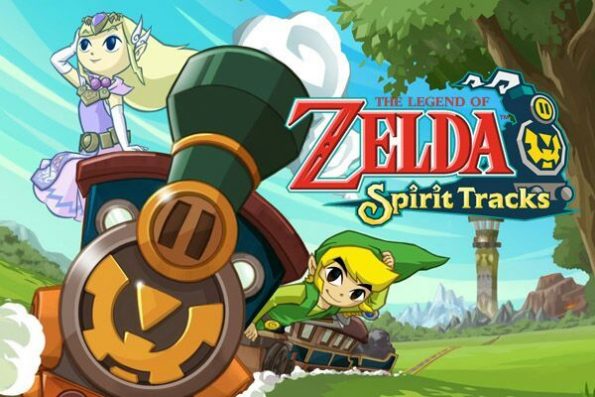
During this period, The Legend of Zelda began to explore different mechanics and structures. Phantom Hourglass (2007) and Spirit Tracks (2009) on the Nintendo DS introduced touch-screen controls and emphasised puzzle-solving, while Skyward Sword (2011) on the Wii was built around motion-controlled swordplay using the Wii MotionPlus.
While Skyward Sword was praised for its deep story and creative dungeon design, the reliance on motion controls divided fans. However, it laid important groundwork for the series in terms of lore, being the first game chronologically in the timeline, and it introduced a stamina meter, which would later return in future games.
A New Era: Open World and Beyond (2017-Present)
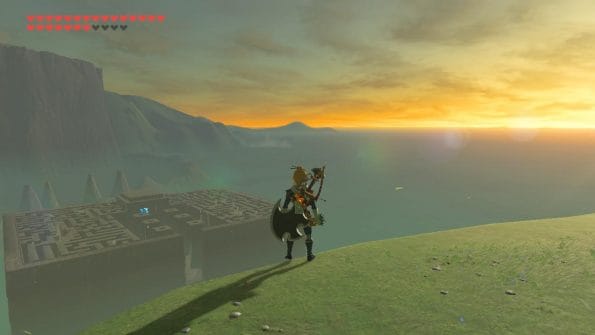
In 2017, The Legend of Zelda: Breath of the Wild redefined not just the series but open-world gaming as a whole. Departing from the traditional linear progression, Breath of the Wild gave us as players an unprecedented freedom to explore Hyrule at their own pace. The game’s physics-based systems, survival elements, and non-linear puzzle-solving made it a groundbreaking experience. Its minimalist approach to storytelling, placing a strong emphasis on environmental clues and player discovery, marked a shift away from previous games’ much more guided narratives.
Breath of the Wild became a blueprint for future open-world games, inspiring titles across genres with its emphasis on player freedom and emergent gameplay. The 2023 sequel, Tears of the Kingdom, expanded on this formula by introducing sky islands, underground exploration, and a more fleshed-out crafting system while still maintaining the sense of wonder that made Breath of the Wild so beloved.
What’s Next for The Legend of Zelda?
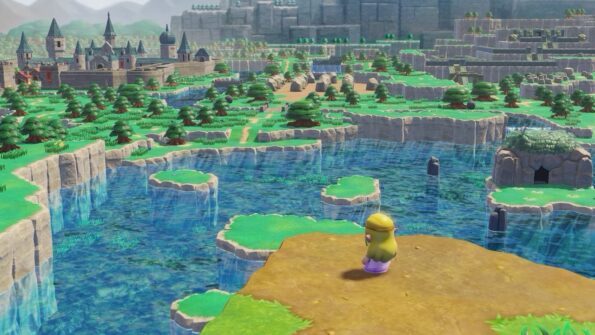
With each new entry, Nintendo has demonstrated a willingness to innovate while staying true to the core of what makes Zelda special: exploration, discovery, and Link’s heroic journey. Now, with the release of The Legend of Zelda: Echoes of Wisdom, we already know the series has changed again, with the introduction of Zelda as the main protagonist instead of Link taking centre stage. Let the fun begin!
Do you like our content? Support LadiesGamers on Patreon!
Check out our Tiers and Benefits and join us.