


Game: Lootbound
Genre: Adventure, Casual, Indie, RPG, Strategy.
System: Steam (Windows)
Developer|Publisher: ArtDock | Dreland Enterprises
Controller Support: Yes
Steam Deck: Playable
Price: US $14.99 | UK £14.99 | EU € 14,99
Release Date: July 31st, 2026
Review code provided with many thanks to Keymailer.
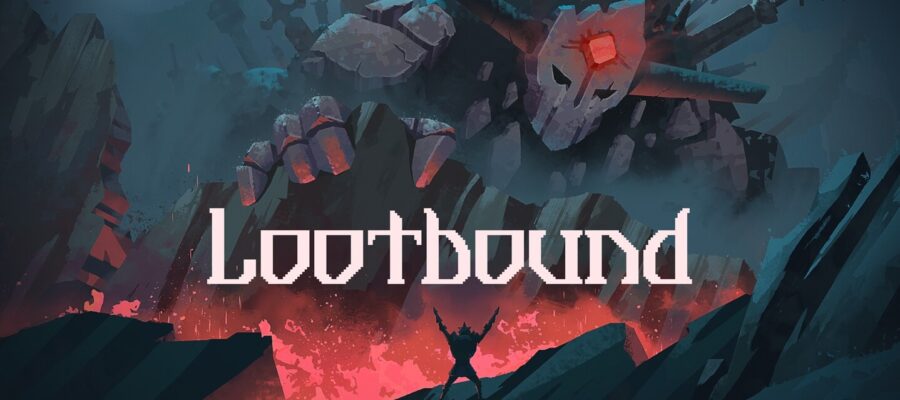
Lootbound – Can’t Beat a Good Looter
Lootbound is one of those little games that manages to take a familiar roguelike formula and give it a nice twist. At first glance, it looks like a fairly straightforward turn-based roguelike: pick a character, move from encounter to encounter, defeat enemies, collect loot and try to make it to the end of the run. But the real star of Lootbound is what happens between those battles. This is as much an inventory-management game as it is a turn-based RPG, and working out where to put your equipment can be just as important as deciding which attack to use. Throw some dice rolls, party building and equipment synergies into the mix, and you have an enjoyable little package.
A Roguelike With a Little More Going On
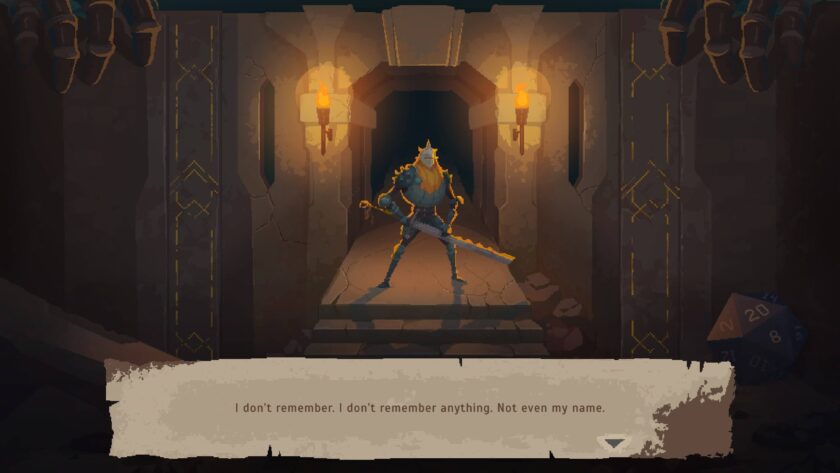
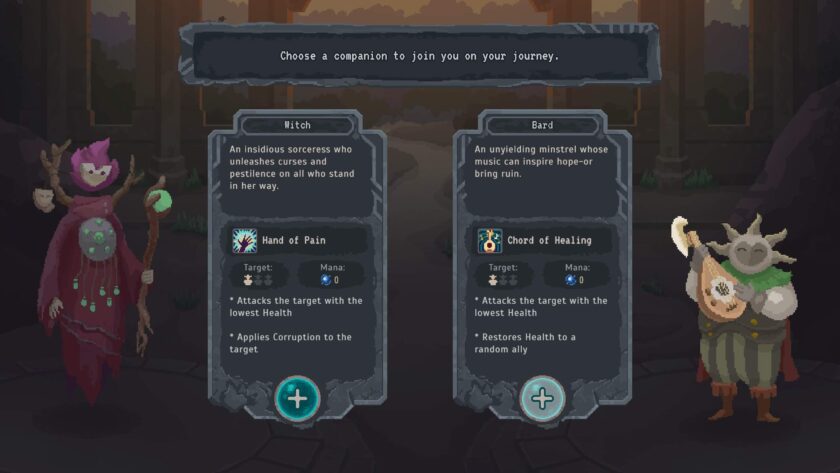
Every run starts with a single hero, and from there you make your way across a branching map, choosing which encounters and rewards you want to take on. You can pick different routes depending on what you need, whether that’s better equipment, an opportunity to upgrade your character or simply a safer path towards the next section. Along the way, you’ll also meet companions who can join your party, gradually turning your lonely little adventure into a small band of adventurers. It’s a simple structure, but it works well because you’re constantly making small decisions about where you want to go next.
The story isn’t really the main attraction here. Lootbound is much more interested in giving you a playground to experiment with different builds, and thankfully it doesn’t spend ages trying to convince you that its story is the most important thing in the world. You can enjoy the little bits of character interaction and dialogue around the campfire, but if you simply want to get back into another run, the game doesn’t get in your way.
The Loot Is the Real Star
The equipment system is where Lootbound gets particularly interesting. After defeating enemies and completing encounters, you’ll pick up various pieces of equipment that can be placed into your characters’ inventories. You can equip weapons, armour and other useful items, but the position of those items can actually matter. Some equipment has effects that influence adjacent items, creating little combinations and synergies within your inventory. So suddenly you’re not simply thinking, “This sword has better stats, I’ll equip that.” You’re thinking, “Hang on, if I put this here, it buffs that item, which then improves this one…” It gives the inventory a lovely little puzzle element.
Even better, you can stack identical items together, which makes organising everything surprisingly satisfying. There’s something oddly enjoyable about moving equipment around, trying different arrangements and seeing whether you can squeeze a little more efficiency out of your build. It’s the sort of system that looks simple initially but becomes more interesting the more you experiment with it.
Battles Are Simple, But Tactical
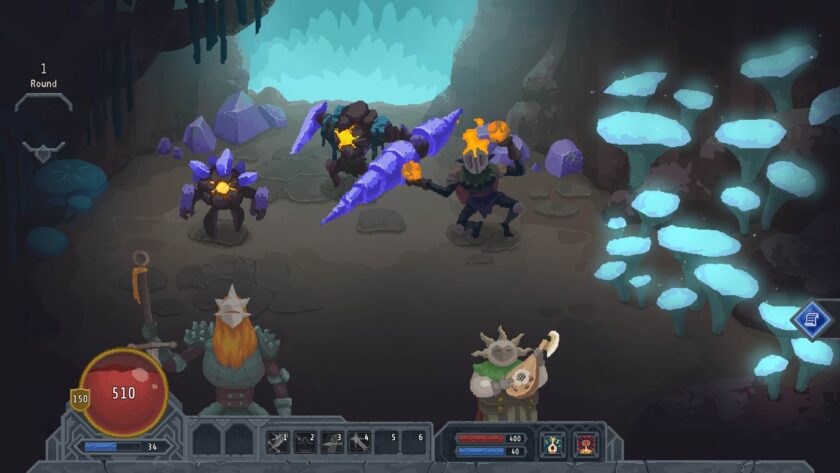
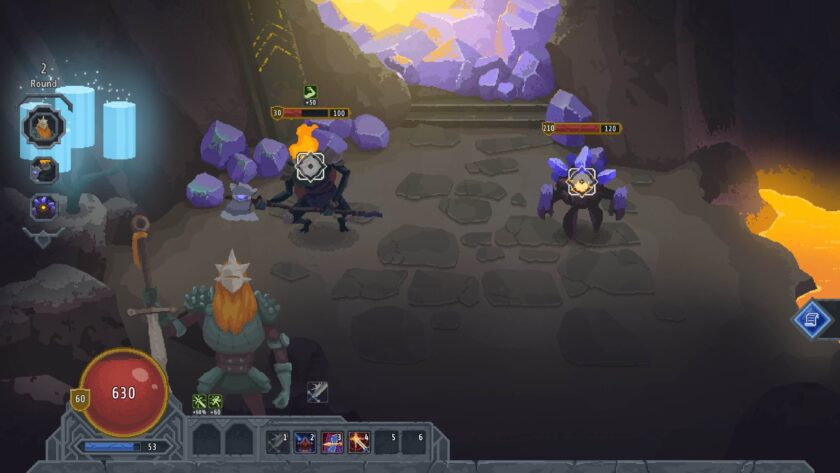
Combat itself is turn-based and fairly straightforward, but there is more going on than simply choosing whichever attack has the biggest number. Your characters have different abilities and damage types, while enemies have armour and health that can be approached in different ways. You might concentrate on destroying armour, penetrating it, exhausting an enemy or simply hammering away at their health.
My main character, the warrior, starts with a fairly basic set of abilities, but you gradually unlock more options as you progress through a run. I liked that the battles don’t hang around too long, either. Most encounters are fairly short, meaning Lootbound maintains a nice pace. You’re constantly moving from one thing to the next rather than spending ages stuck in a single battle. Your companions also operate somewhat independently, meaning you’re primarily controlling your own character while your party members do their thing. It’s not the deepest combat system I’ve played, but I think that will work well for players looking for a more pick-up-and-loot experience.
Sometimes You Just Have to Roll the Dice
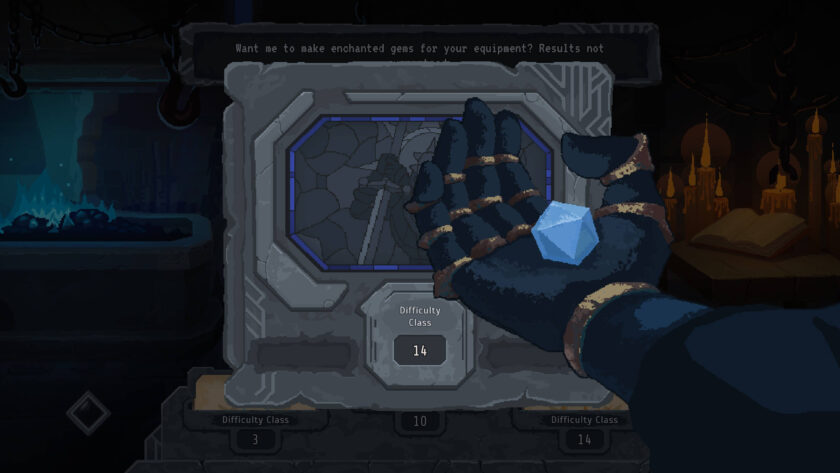
One of Lootbound’s other nice little ideas is its use of dice rolls when acquiring certain rewards. You’ll sometimes be presented with several potential items, each with its own difficulty rating. You then roll the dice, and if you meet the required number, you get the item. Obviously, this means you aren’t guaranteed to get the shiny new piece of equipment you’ve just spotted. And yes, this can be rather irritating when you need to roll a three and somehow manage to throw a miserable one. But I actually liked it. It fits the whole risk-and-reward philosophy of the game, giving the game a kinda tabletop feel too. You’re constantly making decisions about whether something is worth pursuing, whether you should use a reroll and whether taking a risk could give your current build a much-needed boost. Not everything is locked behind the dice, so it doesn’t feel like the game is constantly taking control away from you.
It Doesn’t Waste Your Time
One of the things I particularly enjoyed about Lootbound is its pacing. It’s very easy to pick up, play for a couple of runs and then put down again. The game gets you through its basics without burying you under a massive tutorial, and you’re free to experiment with your builds as you learn how everything works. That’s important with a game like this because there are quite a few systems to understand, but Lootbound introduces them naturally rather than throwing everything at you at once. The result is a game that feels very approachable. You can play it seriously and start thinking carefully about item positioning and damage types, or you can initially just throw things into your inventory and see what happens. Eventually, you’ll probably find yourself paying considerably more attention to where you’re putting everything.
Lovely Pixel Art
Lootbound also looks fantastic. The pixel art is particularly detailed, with some really nice character and armour designs. The characters have plenty of personality, and I especially liked that they don’t all fall into the usual fantasy RPG stereotypes. There are colourful characters, chunky armour, monsters and various fantasy creatures, giving the game a distinctive visual identity without trying to be overly complicated. The environments are similarly pleasant, really pushing the boundaries of pixel art; everything is just stunning. The soundtrack is also pretty good, providing a suitably adventurous backdrop without becoming distracting.
Some Niggles
As for niggles. Well, the roguelike curse of elite and boss enemies having ridiculous health bars surfaces its head again in this game. That is until you level up a character sufficiently between runs to make it more manageable. It’s certainly a swing in difficulty balance that irritated me early in my playtime. Runs seemed to flow so well until you hit the dreaded wall of the meaty enemy. That being said, the main gameplay flow still had me coming back to try again.
Conclusion: Lootbound – Pick up and Loot
Lootbound takes a familiar structure and adds an inventory system that gives the whole thing another layer of strategy. Battles are quick, equipment is fun to organise, the dice rolls add a little uncertainty and assembling your party gradually gives each run its own identity. Most importantly, it feels good to play.
There’s a satisfying rhythm to completing a battle, grabbing some new loot, stopping to work out where everything should go, choosing your next route and then heading into the next encounter. It’s also a game that respects your time. You can jump in, play a couple of runs and get out without feeling like you’ve committed your entire evening to it. As a relatively accessible tactical roguelike with a clever loot-management system, I think it does a very good job. I had a lot of fun with it, and it’s exactly the sort of game I can see myself dipping into regularly for a few runs.
Final Verdict: I Like it.
Do you like our content?
Subscribe to our daily news and never miss a review!