

Game: Sagres
Genre: Adventure, RPG, Simulation
System: Nintendo Switch (also on Steam (Windows))
Developer|Publisher: Ooze | Kakehashi Games
Age Rating: EU 3+ | US Everyone
Price: US $19.99 | UK £16.75 | EU € 19,99
Release Date: April 17th, 2024
A review code was provided, and many thanks to Press Engine.
Sagres a Unique Open World Adventure
Sagres is an open-world sailing simulation RPG that made a stealth drop onto the eShop courtesy of the recent Nintendo Indie Direct. Originally released on Steam late last year. The game was developed by an incredibly talented solo developer who has managed to spin together an adventure that is unique and incredibly hard to put down if its mechanics click. Though not without the odd flaw, this is one not to be missed if you are looking for something different.
Set Sail
Set in the 1400s, you control Fernando, the newly appointed Captain of a ship and crew from Portugal. You are tasked with seeking out the legendary explorer, Sir Antonio, who happens to be the father of one of your crew, Lucina. But this is no single voyage; you’ll explore the seven seas, taking on various quests and maybe learning a little about the world along the way. I found myself being quite taken by the plot of Sagres. The main character, Fernando, doesn’t talk, just a simple dude who could really do with trimming his fringe. It’s the support characters that really sold me.
Early in the game, you team up with Lucia, who is able to haggle down costs with merchants occasionally. But she also provides some light-hearted banter about the various situations you find yourself in. Always looking at the optimistic side of things and showing plenty of gratitude. Then you have Nicolau and an older fella familiar with the seas but keen for one last epic adventure. Sagres is probably the only game I can think of where you play as characters from Portugal, which is something quite different in the gaming sphere.
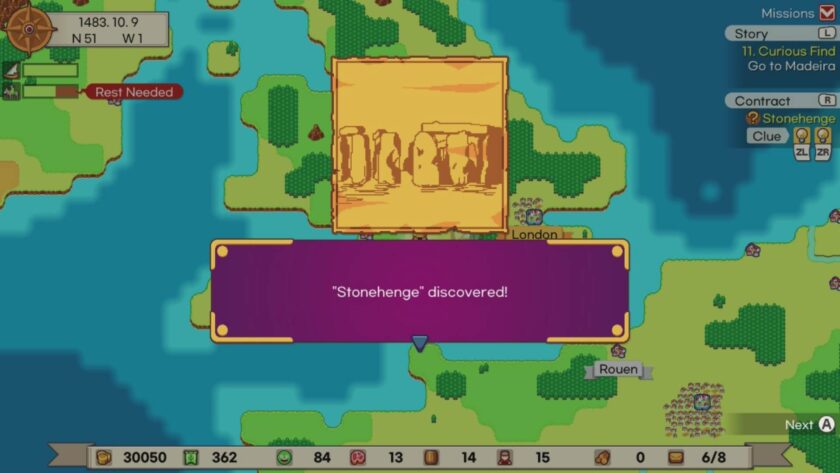
On top of all of this, Sagres makes an effort to present some historical accuracy to the premise. As you sail around the world, you will visit famous monuments from Stonehenge to the Great Pyramids. On these occasions, the game takes a moment to provide snippets of education through the character dialogue. It has impressive attention to detail.
Quests
Fernando may be the Captain of a ship and crew, but he begins the game as a simple commoner. In order to progress the game, you need to increase your renown score to trigger story quests. To do this, though, you’ll need to take on a variety of side quests from the local guild. This generally works when you accept a quest and then make preparations for your ship. This will include making sure you have enough crew and supplies to sail to your destination. If you need a hint, you can stop at the local tavern and ask about rumours that will point you in the right direction.
Sagres is probably the first game in a long time that I have pulled out my notepad to make notes. I even pulled up a world map to get my bearings on places to go since the world map mimics the real world. When ready, it’s time to set sail to your destination. Some quests simply require you to visit a local monument that might be located in town; other times, you need to venture out on foot.
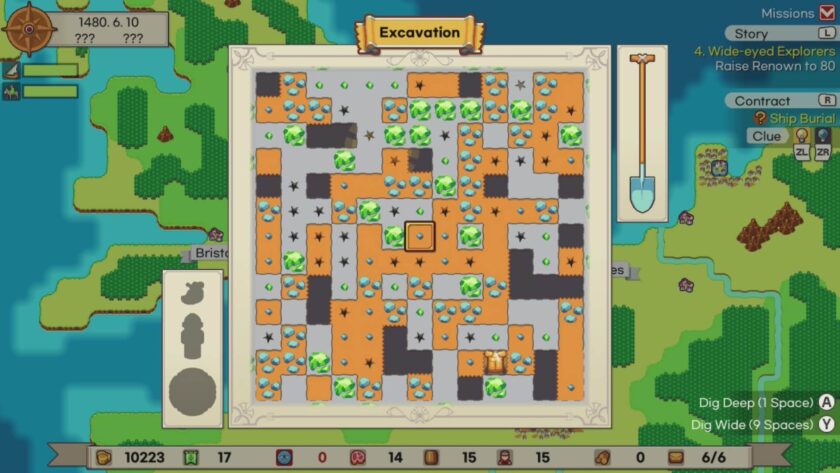
Other quests might have you play a little mini-game such as digging, fishing or solving a push block puzzle. And, of course, sometimes you need to fight, but I’ll get to combat a little later. When the quest is complete, you sail home cash in your quest, increase your reputation and bank a little money. This money can then be reinvested into various upgrades and equipment. But be careful always to leave some money spare to keep your crew well-fed and rested, keep morale high, and keep your ship repaired.
Combat of Sagres
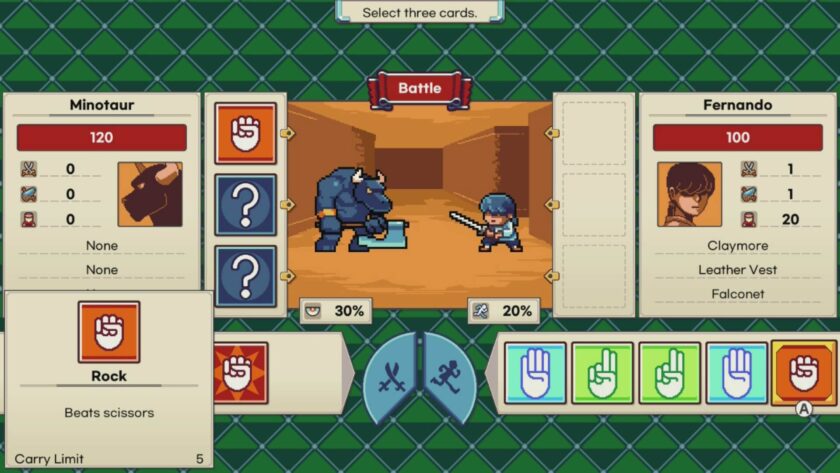
Combat is interesting. As you explore on the ship or ride about on land, you’ll often encounter the odd enemy. You can choose to engage or flip a coin to evade, though some fights are unavoidable. Combat is a turn-based rock, paper, scissors affair with cards drawn from a deck. Depending on your stats, you may be lucky and can see the cards your enemy will play, allowing you to select the right cards in your pool to defeat them. But most of the time, it is random, and you’re making a best guess.
How you customise your ship will often help you succeed here. You can choose to have more cannons and equip perks to improve the durability of your ship. But every action you take often has a consequence somewhere else. But that’s also part of the enjoyable pull of the game. Generally, I didn’t mind the rock, paper, scissors things, but there was certainly the odd occasion where the random chance was not working in my favour.
Flip a Coin
When you begin the game, an old fella asks you a few morale questionnaires to create your starting stats. This includes various skills like medicine and leadership. It doesn’t matter too much where these stats fall, as you’ll be able to improve them over time. They tend to play a part in random events that will occur as you explore on quests. This might include a rat infestation or a typhoon heading towards you. You are then given two choices to solve the problem, and a coin is tossed to determine the outcome. The higher your stats in a specific solution, the more likely you’ll come out okay. But if you fail, it usually just means a small cost to resources, which can be salvaged later.
A feature I particularly liked is language skills. As you explore the world and enter different territories, you actually won’t be able to understand specific languages, and the dialogue will just present as a huge mess. The quick fix to this is hiring navigators who include specific stats themselves, helping translate but also adding to the overall stat pool. But only a limited amount can be taken on.
Plenty of Choice
Ultimately, what hooked me was the number of choices available to play with. Sagres is an open-world game that really allows the player to do things their way. In addition to the quests, there are lots of cool little features.
You can engage in trading. Buying goods and then finding another town to sell them at a higher profit. You can enter the lottery in a bar and try your luck making a win. You can, of course, just raise anchor and just go on an adventure and see what you find. Those who choose to explore the world will reap special rewards like being able to turn in multiple quests at once. Even for new players, Sagres does a good job of getting you started on things without totally holding your hand. I really got quite into micromanaging my various stats to the degree that it became a tad bit obsessive.
Pixel Graphics
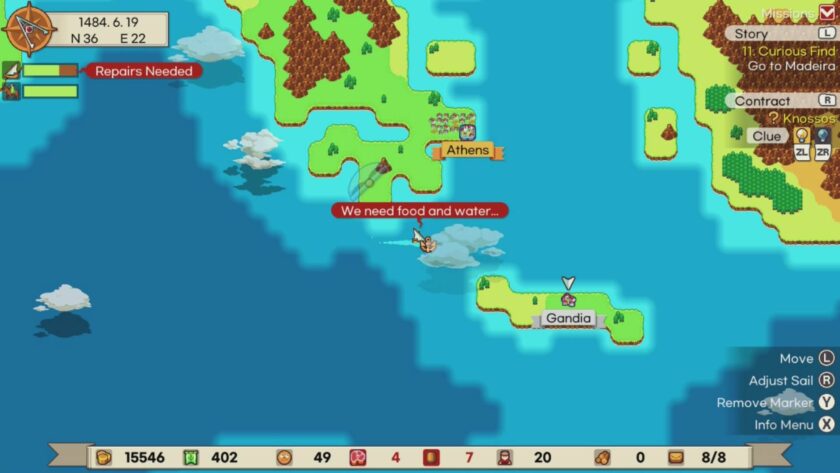
Sagres is another game where the developer uses the familiar pixel graphic art style but manages to make the most of it. Character picture sprites and monuments use a simple colour palette but appear detailed like a pixel sepia tone.
The world map itself does an impressive job recreating the actual Earth we live on in pixel form. Sure, very simple sprites are used to differentiate the different terrains like mountains, sand and grassland, but it gets the point across clearly. The soundtrack is pretty good, though a tad repetitive. I’m putting this one down to the developer’s limitations, but should it not rock your boat, I guess you can always throw a podcast on. The game clearly doesn’t ask much from the Switch hardware to run fine in TV and handheld modes.
Niggles
While I really liked this game, it’s only fair to highlight a few niggles. The main one I encountered is the difficulty can be very inconsistent. When playing standard side missions, if I were defeated out at sea or land, my character would simply wake up at the last city I visited, losing some gold. However, if I failed on a main story quest, the game would be over.
On one mission, I was doing fine defeating random pirates, but then I met this boss fight with absurd health and stats compared to what I encountered. Since I saved so close by, I was a bit locked into trying until I got lucky and succeeded. But it would have been preferable if the game let you restart at the start of the quest to let you prepare better for the battle.
Sagres does not really offer difficulty options in its settings, but I would generally say this is suitable for all audiences, even novice players. The only other niggle is the missions did feel a bit repetitive and didn’t always make the most of the mini-games to keep things varied. Still, I won’t deny that I am pretty addicted to this game.
Conclusion: Ship Shape
Sagres feels right at home on the Nintendo Switch, especially in handheld mode. It is an addictive adventure that can be picked up in long and short bursts that will particularly appeal to players who like numbers and stats.
The difficulty can spike a bit unfairly in places, and missions can sometimes feel repetitive. But with an addictive gameplay loop and impressive detail to history and geography, Sagres is currently looking like one of the best hidden gems this year. If you’re looking for something different to become immersed in, then I highly recommend sailing the seas of the eShop to find this.
Final Verdict: I Like it a Lot

Do you like our content? Support LadiesGamers on Patreon!
Check out our Tiers and Benefits and join us.