



Code provided, with many thanks to Critical Hit PR.
Talystro had a playtest this month, and I was honored to take part. This roguelite deckbuilder is billed as a Slay the Spire, Balatro, and an educational math game mixed together, so let’s see how it adds up.
The Gameplay of Talystro
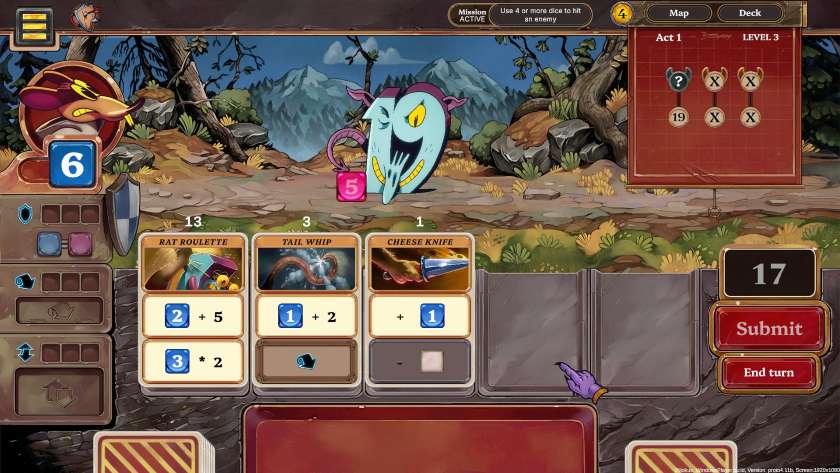
As an avid fan of Slay the Spire and Balatro (I have about 740 hours in Slay the Spire and 200 in Balatro), I was really interested to see how this new take on the roguelite deckbuilder genre from developer Filiokus would turn out. You begin with a starting deck that is the same each time, and you use dice to battle against evil numbers. In order to kill a number, you need to match its amount with the dice and cards you have available to you.
In the example below, the enemy is a 21. You can use as many dice and cards as needed to get up to 21, so I would put the 8 die into the EQUILIBRIUM card, which adds 7. Then I would put the 6 die into the CHEESE KNIFE + slot, which will add up to 21. There are other options, of course, but you need to keep in mind any other numbers on the board and numbers that will be coming up next as well.
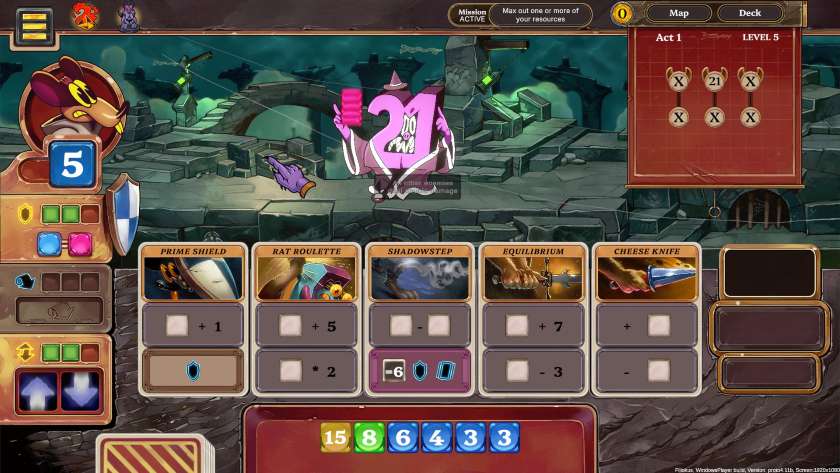
After you have the amount needed to destroy the enemy number in front of you, a “Submit” button will appear on the right side of the screen, and the number you can destroy will gain a spotlight. Any numbered enemies left at the end of the round that have a die next to them will deal one damage to you, then you will get a new hand of cards along with a new roll of the dice to put into those cards.
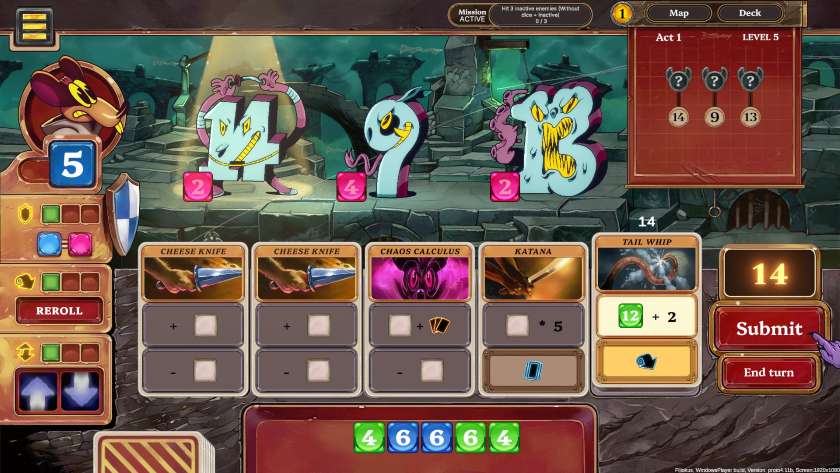
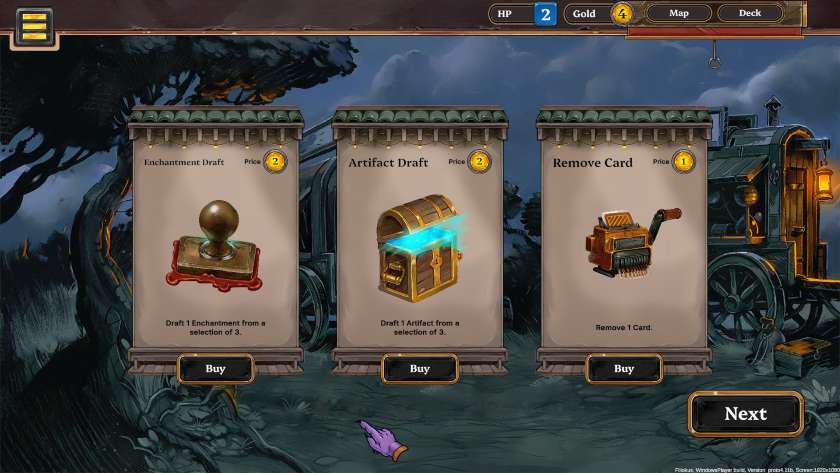
Talystro does have a sort of Slay the Spire feel in that you can upgrade your cards, and you get to choose your route as you progress through the game. You get to upgrade your cards, destroy cards in your deck, add new ones, and obtain relics that upgrade them and your dice.
There is the same amount of strategy in battling against each monster and making sure you don’t take too much damage. However, Slay the Spire‘s upgrading systems and multiple heroes make it a much more complex game than Talystro‘s playtest. I assume there will be a lot more complexity to come in full release; the final screen after beating the playtest promises ascension, five bosses, more than 80 cards, around 30 artifacts, and an armory.
As for Balatro, Talystro has the same kind of snappy, satisfying animations and the same kind of math-centric feel to it. While it has a lot in common with Slay the Spire, I feel like it feels a lot less like Balatro. However, there is a lot about Talystro that is completely unique, and those things are probably more important to talk about.
The Math of It All
You might have seen that Talystro is an educational math game and noped out of this review without a second thought. However, I’m here to tell you that you shouldn’t. While it is math-focused and could be used as an educational tool, Talystro is a fun game, first and foremost. The gameplay is a lot of fun, and while it does make you think hard about how to best take down the numbers in front of you, the ludic interactions are really satisfying and neat.
The whole game has a hand-animated Cuphead kind of feeling to it, and it’s really beautiful and highly polished. The math part of the game is actually really fun, and the upgrades are meaningful without being too expensive. While the playtest was pretty short, I still got a good idea of what upgrades, artifacts, and cards were going to look like, and I hope we get more decks and characters with future upgrades.
The Cons of Talystro
I didn’t really have too many issues with Talystro while I was playing. There were a few things that I feel like the game didn’t teach me in the tutorial, but those were few and far between. One of the things it didn’t teach was that if you have two identical numbers you are battling against, you will kill both of them as long as you get a combination of cards and dice to their number.
Another is that you can only roll what is on the die itself, even when you put a die into the Adjust Resource. The first time I used it, I assumed I would be able to turn a six into a seven, but instead it cycled around to a one. Same with upgraded die; if you upgrade a die, it will only roll up or down to the next number that actually appears on the die itself. This was a little bit challenging, since I didn’t memorize the numbers on the upgraded die, but I did eventually get used to it. This is sort of explain in the mouse-over menu on Adjust, but I misinterpreted what it said, and it didn’t feel clearly explained. That might be a me problem, however.
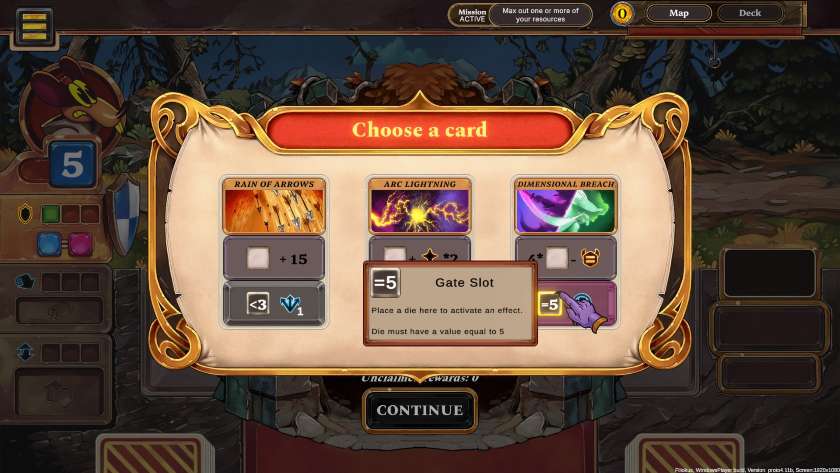
The only bug I came across was when you finish a round. At the end, you get to claim your prizes; you get a coin for completing the round, a coin for completing the mission, and you also get other items you can claim like new cards, healing, and other upgrades. If you have more than one and you click “CLAIM” on it, then you immediately click “CLAIM” again before the previous one loads, it deletes one of them. I didn’t do it on purpose; sometimes the claim just takes a second to load, and I’m super impatient sometimes.
Final Thoughts
From what I have seen of Talystro so far, it’s basically perfect. It’s fun, it’s polished, the music and sound design are good, the animations are amazing, and it’s a great game to play. I want a lot more of it, and I can’t wait for the full release. If you like Slay the Spire-type games, you will like Talystro, and I can’t recommend this one enough. Love it, and looking forward to more!
Do you like our content?
Support LadiesGamers as a member on Patreon!
 Or buy us a cup of coffee or tea on Ko-Fi!
