

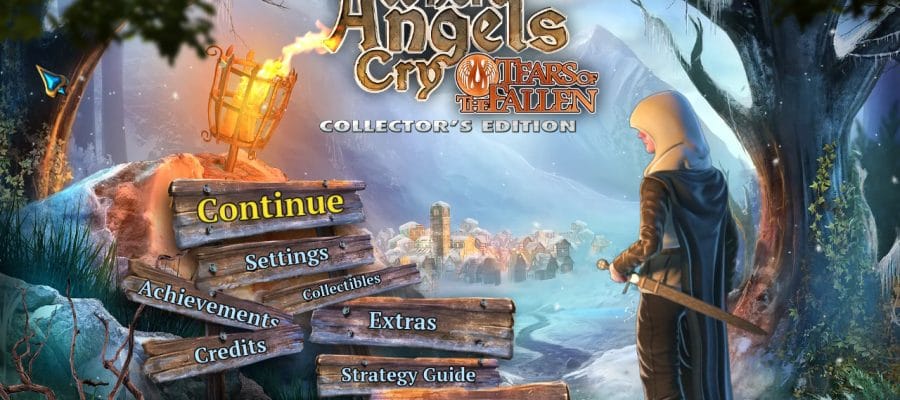
Game: Where Angels Cry: Tears of the Fallen Collector’s Edition
Genre: Point and Click Adventure/ Hidden Object/ Puzzle
System: Nintendo Switch (also on PC, Android, iOS)
Developers| Publishers: Cateia Games | Ocean Media LLC
Age Rating: EU 16+| US T
Price: £ 17.99|€ 19,99| CA $26.25| US $19.99| AU $30.00
Release Date: 16th January 2020
Review code used, thanks to Ocean Media LLC
Point and Click games fall into an odd realm of nostalgia which I am always willing to talk about. Playing through Where Angels Cry: Tears of the Fallen Collector’s Edition (CE) had me thinking about what makes a good Point and Click. Before I give a verdict, I’d like to explain my thoughts a bit and try and outline these thoughts.
The Need for an Entertaining Story and Challenging Puzzles
My first introduction to the genre of Point and Click and the subgenre of Hidden Object Games was as a young elementary aged kid playing The ClueFinders 4th Grade Adventures. The game struck into me a love for the kinds of odd stories popular in the genre that seem, with their animated cutscenes, to be a game version of something otherwise more akin to a 40-minute animated Scooby-Doo movie. The kind made-for-tv: good, enjoyable, great to pass the time, but definitely not life changing (which is totally fine).
An interesting point of observation for the ClueFinders series is that it was created by The Learning Company for 8-12 year olds as an educational tool. Though, as an adult, this makes the game unsatisfying as a puzzle game, it’s a good game because it challenged its intended audience, kids, in ways they found challenging as well as keeping them motivated with proper entertainment and humorous characters, that I still find entertaining (for the purpose of this review I watched a longplay of the game). Though, to be fair, the entertainment is equivalent to cooking while watching an old cartoon, like I said, not life changing.
User Interface
Later I found myself playing a game on the Nintendo DS, 2005’s Trace Memory, released in Europe as “Another Code: Two Memories”. While not strictly a Point and Click, it felt like an evolution of the genre. After all, a key element of the genre often has you trying to find different items or clues, whether by searching or by solving puzzles. You then have to piece them together in order to build or acquire a key item in order for the story to progress.
The game aspect of the genre is often the screens you have to pore over in order to gain details. The video game aspect of it is often in the parts of the game you would least expect: The User Interface (UI).
The UI, or in other words the menus and screens of a game, is key because it’s the means by which you organize the world in front of you. It can be a place to look at all your evidence, all of your objects, your tools, a map.
In this regard Trace Memory was fantastic. It saw the potential of the DS as a platform for UI innovation and in a time before smartphones it integrated the idea of using an in-game device as your UI, an intentionally DS shaped object called the DAS. While the puzzles of Trace Memories were a bit lackluster, it ultimately felt like a positive experience because its UI was intuitive yet progressive enough to make your progress through the story feel motivated and compelling.
If it isn’t yet clear as to why UI matters so much, allow me to briefly reach into a completely different genre for example. We should stop and think about a game like 1987’s Phantasy Star where you have to work your way through “3D” dungeons without in-game maps. In the case of Phantasy Star, you were expected to go out, buy some graph paper, and make your own maps. In a modern iteration of the idea, like Etrian Odyssey, you record a map within the game, it gives you the tools to do so. It recognizes that making your map is a key aspect of its gameplay. It also recognizes that modern gamers may not be keen on doing this with pen and paper. Rather than do away with a possibly outdated game mechanic, it embraces it and provides the in-game tools to reinforce the game mechanic in a modern way.
This is an example of UI being fundamental to a game, being thought about, and then improved and updated.
Missing the Mark
I bring all of these things into focus because I want you to understand my position that Where Angels Cry: Tears of the Fallen CE is not a game you should be flocking towards. Story is critical, puzzles are too, as well as your UI. More importantly, you can have a good Point and Click with two of the elements done well, you don’t need all three, but you need at least two.
An Unmotivated Story
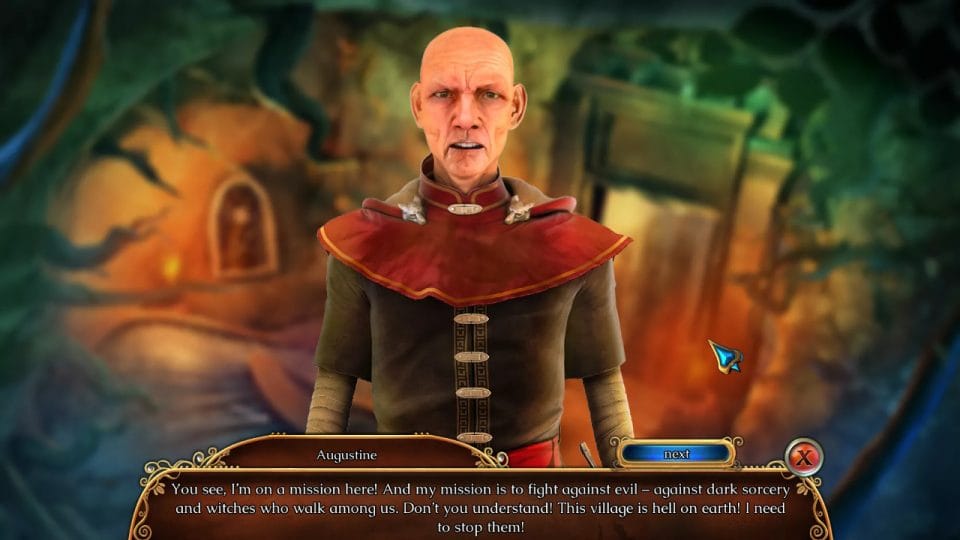
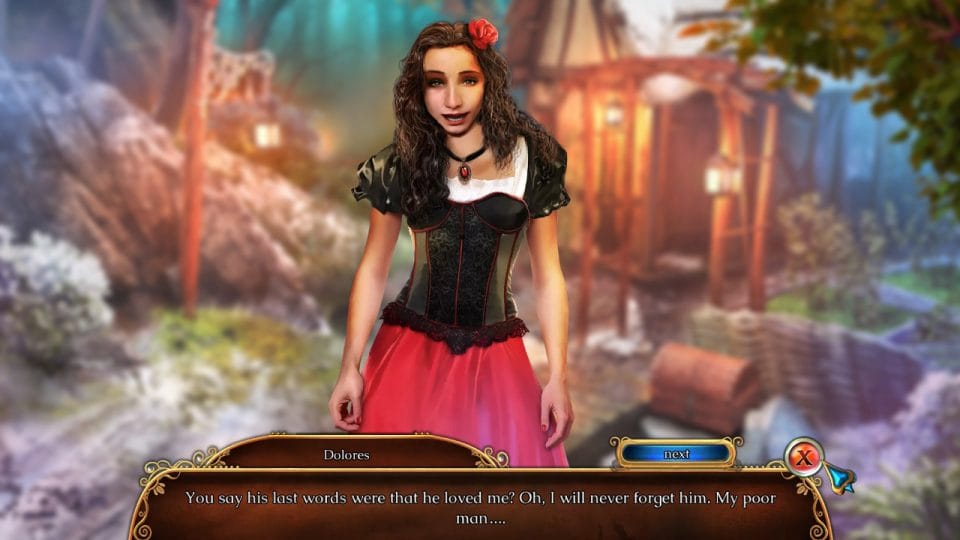
However, the game lacks all of the elements I’ve suggested here. It neither gave a provoking, stimulating, entertaining, or humorous story. The story is unmotivated, the villain as well. Though the collector’s edition adds a bonus story which shows the reasoning for the antagonist’s motivation, it comes too late and would have been better placed before the main game. Beyond this, though the voice acting is decent, the writing leaves characters feeling cold. One characters husband dies an untimely death and she seems relatively unfazed.
The Usual Genre Puzzles
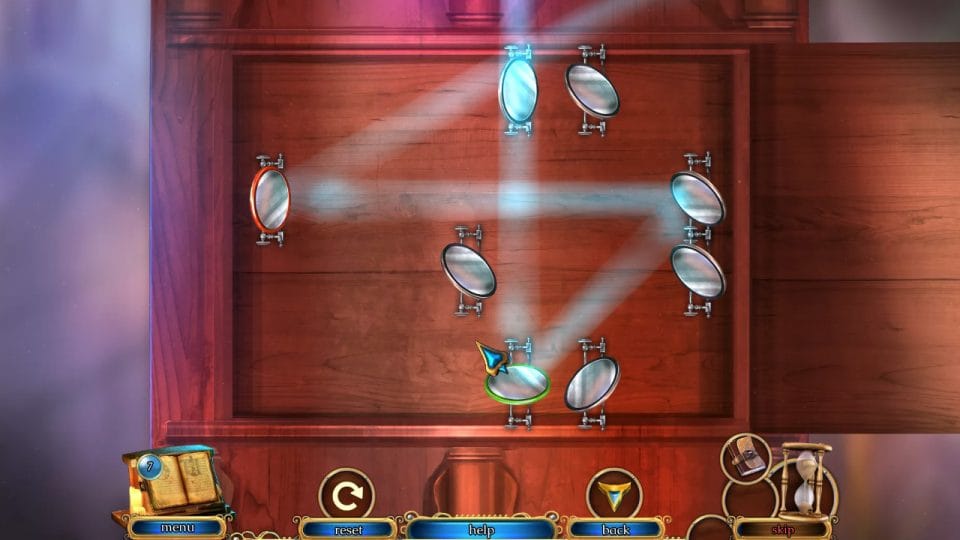
The game did not provide puzzles that were difficult. They were puzzles I have seen before. Which is not by itself a terrible thing, because there are puzzles which are staples of the genre. The issue arises in that they feel unchanged, unoriginal, without anything to modernize them.
The game instead fills its time with Hidden Object challenges that lacked challenge. These Hidden Object challenges were the equivalent of a small crossword, if you scanned it closely left to right and up to down, you would find everything with ease. Though illustrated well, great illustrations do not make a great game. Because of this, the game was unbalanced. Hidden Object Puzzles are meant to pace a game out, meant to give you a moment to relax from difficult puzzles. Here, they feel like filler.

Who Needs this Strategy Guide?
The Collector’s Edition also includes a strategy guide which will walk you, step-by-step through the game. I genuinely don’t understand the need for this. The game offers hints if you need them. Why is a strategy guide necessary? It suggests that maybe you’re not in it for the puzzles and want the story instead. This being said, the story would not be satisfying to someone in it for the story. So I ask again, why is a strategy guide necessary, and why is it a selling point for the Collector’s Edition?
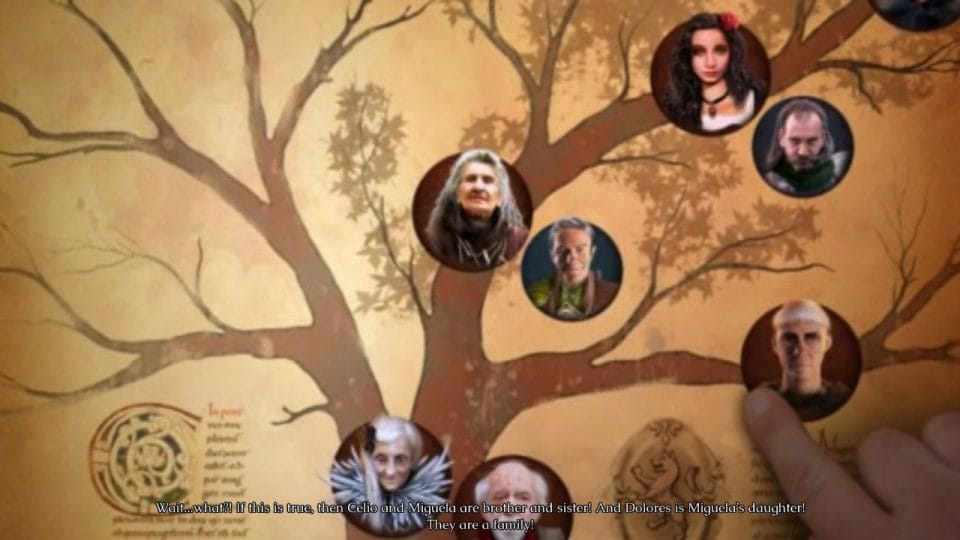
Speaking of the story again, there is very little mystery, the common motivator in this genre. Everything is clear, or uncompelling. You do at one point discover a secret genealogy of some townspeople, but it feels unimportant and unrewarding, like little more than a plot point meant to be passed over on your journey to the aforementioned uninteresting antagonist.
Issues and Crashes
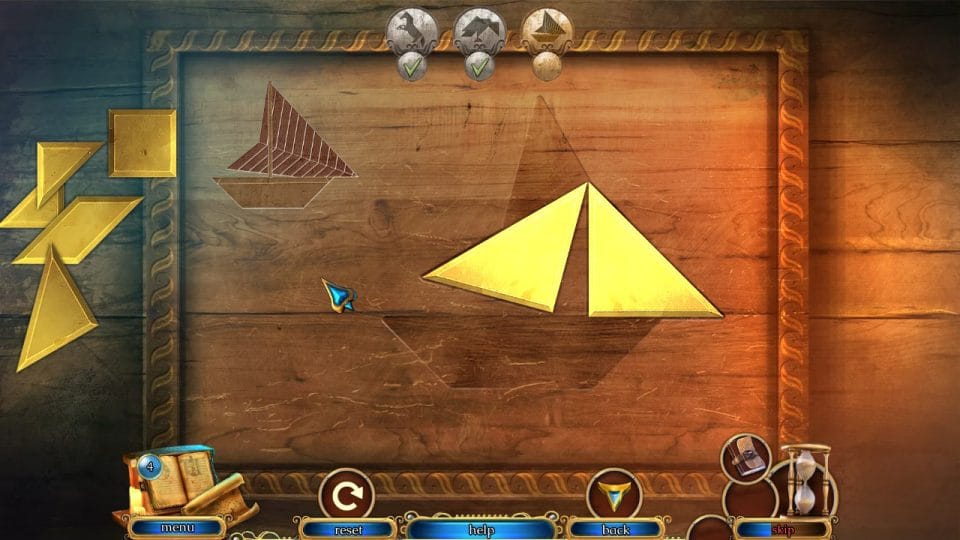
The game has touch controls, but I played it on the TV because the illustrations would have been a strain to scan over on the smaller screen of the Switch. On the topic of the touch controls, there’s a puzzle near the end of the bonus chapter which involves you piecing together a drawing. During this puzzle the game would not register inputs through the controller, so I had to undock the Switch and use the touch screen for the puzzle. This was the only puzzle with this issue, but as soon as I completed the puzzle the game crashed on me. The game crashed on me a total of 5 times throughout my entire playthrough, and while it autosaves, that was 5 times that I had to redo puzzles I had just finished completing. After completing this post-game puzzle, the controls returned immediately.
This brings me to the subject of the controls and the UI. There was no point where I recall the controls being explained. The controls use the right joycon’s joystick to control the pointer, and the right trigger to select an object. The game will only work if you have both joycons undocked which requires you to leave the left one lying around. This would not be so bad if it didn’t, at times, interfere with the gameplay. If the left joycon is leaning on a surface or facedown or slips between your couch cushions it might push on the joystick. This, in turn, keeps the game from registering your right joycon inputs and suddenly, again, we have issues. This took me a while to figure out, and once I did, I placed my joycon face-up on a desk and continued with the game.
As far as the UI goes, it is also lacking. The game has a map which consists of the names of areas with lines drawn between them. A useful tool integrated into the map are colored orbs that appear next to the names of places that have objects or puzzles you can investigate at that moment. This would be useful; however, the game doesn’t make this explicitly clear, just as it doesn’t make clear that its map doubles as a fast travel menu. It took me until around half-way through the main story to realize this.
Is It Worth It?
Overall the game and its bonus chapter took me less than 5 hours. If it weren’t for all of these issues, I would be able to recommend this game to someone who has an avid interest in Hidden Object games or Point and Clicks, albeit at a lesser price. The Steam version of this game is $9.99 USD whereas the Switch port is $19.99. I cannot recommend what is ultimately a frustrating and abrasive experience that would be better enjoyed on PC without all of the input issues of the Switch port.
Where Angels Cry: Tears of the Fallen Collector’s Edition leaves much to be desired, and though this doesn’t make the game unplayable for someone who enjoys starting up a new point and click and spending an evening beating it, I cannot recommend this game for the price, especially given that it is available on other platforms for a lesser cost and with less issues. Even then, if you’re an avid fan of the genre and are used to the kinds of issues I outlined here, I would suggest waiting for a good sale. If you’re not a fan of the genre, I, unfortunately, cannot recommend this title.
Final Verdict: I don’t like it