



Game: WizardWare
Genre: Indie, Casual, Simulation.
System: Steam (Windows)
Developer|Publisher: Ghost Garden Games
Controller Support: No
Steam Deck: Playable
Price: US $4.99 | UK £4.29 | EU €4,99
Release Date: April 20th, 2026
Review code provided with many thanks to Ghost Garden Games
WizardWare: A Wizard With IT Problems
WizardWare is one of those games that immediately tells you exactly what it is within the first few minutes. You are the apprentice to a rather talkative wizard named Webediah, and instead of brewing potions or casting giant fireballs, your task is basically fantasy-themed computer maintenance. Honestly, it feels a bit like Papers, Please collided with an old Windows desktop and then somebody covered the whole thing in magic sparkles.
It is a very straightforward setup, but sometimes straightforward works absolutely fine. The entire idea revolves around checking incoming downloads, deciding whether they are safe or suspicious, and trying to stop your magical operating system from collapsing into disaster. It is silly, light-hearted, and very much designed as a quick pick-up-and-play sort of experience. The game does not pretend to be some huge simulation epic, and I actually appreciated that.
Spotting Dodgy Downloads
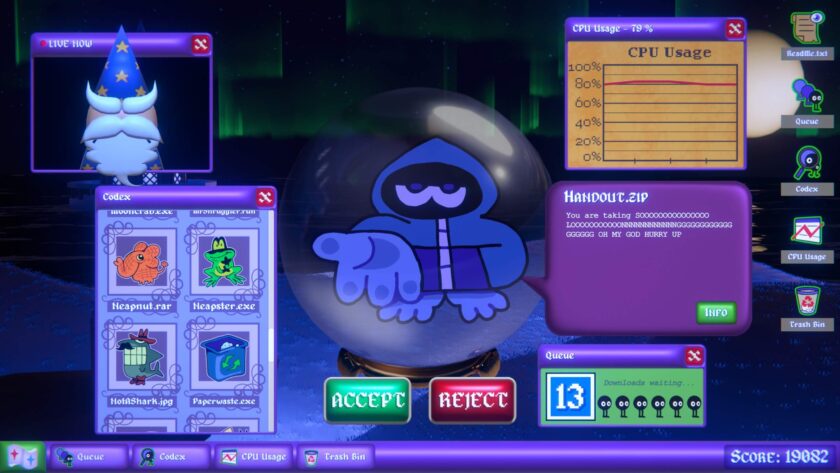
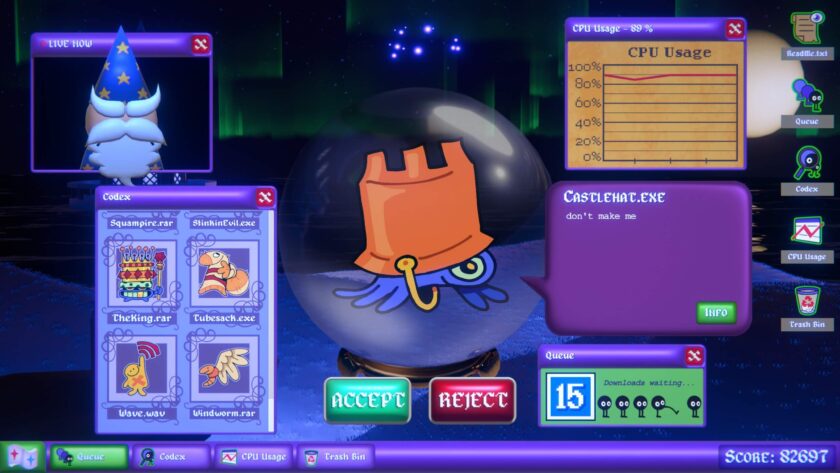
The core gameplay loop is simple but surprisingly entertaining for short bursts. Downloads appear in your queue one after another, and you need to compare their details against information found in your codex. You are checking file names, symbols, memory usage, images, and various little bits of information to decide whether the file is legitimate or should be rejected.
At first, it feels a little overwhelming because you are juggling multiple windows at once, but after a while, your brain starts recognising patterns more naturally. That is where the game becomes quite satisfying. You begin spotting suspicious files almost instantly and quickly throwing them in the reject pile before moving on to the next one.
The pressure comes from the timer constantly ticking away. If you linger too long over one file, the queue starts piling up, and things quickly spiral into panic. You can only make so many mistakes before the run ends, so there is definitely that arcade-style “just one more try” feeling attached to it. It is not a deeply complicated game, but it does enough to keep your attention. I found myself repeatedly jumping back in for another run just to see if I could beat my previous score.
Y2K Desktop Meets Fantasy Tavern
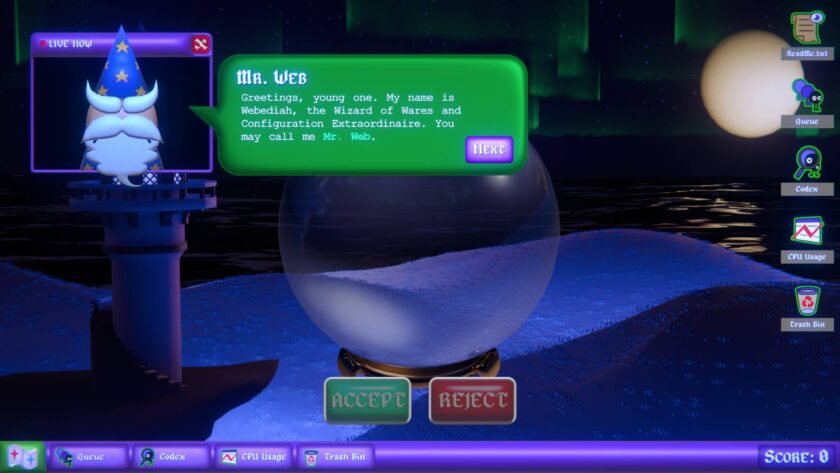
One thing WizardWare absolutely gets right is its presentation. The entire game looks like an old fantasy-themed operating system from the late 90s or early 2000s. Windows pop up everywhere, menus clutter the screen, and everything has this amusing, magical desktop aesthetic.
It genuinely feels like somebody turned a wizard’s study into a computer interface. The visuals are colourful and playful without becoming too distracting. The game is obviously not aiming for realism or technical spectacle, but it does a good job creating its own little identity. The fantasy-computer combination works much better than I expected it would.
The humour also helps carry the experience. Webediah constantly comments on your performance with fully voiced dialogue, and while the voice lines do begin repeating after a while, the delivery itself is entertaining enough that I still found myself smiling occasionally. Some jokes land better than others, naturally, but the game keeps a cheerful tone throughout. It never feels mean-spirited or overly stressful, even when things start getting hectic.
Quick, Simple, and Easy to Jump Into
One of WizardWare’s biggest strengths is how approachable it is. You can launch the game, play for ten or fifteen minutes, chase a high score, then happily leave it until later. It fits nicely into that “between other games” category.
That is not a criticism either. Not every game needs massive progression systems or giant open worlds. Sometimes you just want something small and entertaining that you can dip into during a work break or while relaxing in the evening. There is definitely an arcade spirit to it. Once you understand the systems properly, runs become faster and smoother, and you naturally begin developing little shortcuts in your head for identifying threats quickly.
That said, the game probably will not hold everyone’s attention for dozens upon dozens of hours. The gameplay loop is enjoyable, but it is fairly limited in scope. After a while, you have mostly seen what it has to offer. Still, considering the low price point, I think it delivers a decent amount of entertainment for what it is trying to achieve.
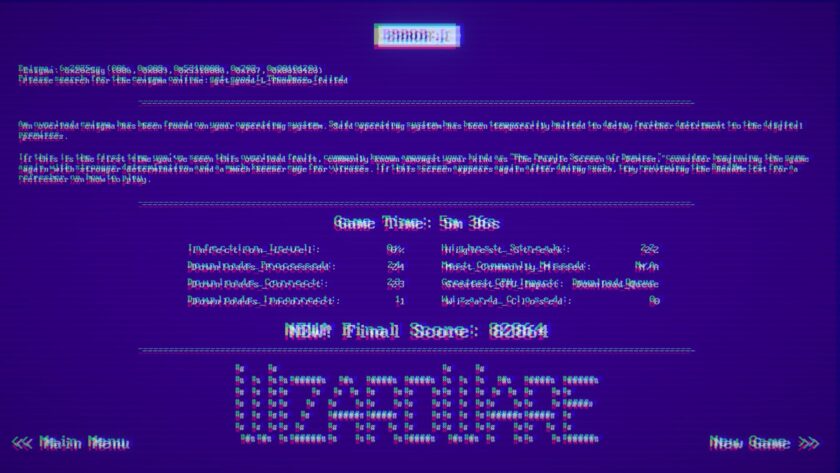
Conclusion: Wizard Crash Report
WizardWare is a fun little score-chasing management game that blends fantasy humour with old-school desktop aesthetics surprisingly well. The gameplay is simple, but there is something enjoyable about quickly scanning files, spotting suspicious downloads, and trying to keep your magical operating system alive under pressure.
It does not have huge depth, and it probably is not going to become somebody’s next hundred-hour obsession, but that is completely alright. It succeeds at being a quick, entertaining arcade-style experience that is easy to pick up and difficult to completely put down once you start chasing better scores. The fantasy computer theme gives it a bit of personality, the presentation is enjoyable, and the whole thing feels approachable without becoming too dull.
If you enjoy smaller high-score-focused games with a humorous twist, WizardWare is worth a look.
Final Verdict: I Like it 
Do you like our content?
Subscribe to our daily news and never miss a review!