

Game: Atelier Sophie: the Alchemist of the Mysterious Book
Genre: JRPG, Simulation/Crafting
System: Nintendo Switch (also on Steam & PS4 )
Developers | Publishers: Gust | Koei Tecmo
Age Rating: US Teen | EU 12+
Price: US $39.99 | UK £32.99 | EU € 39,99
As part of the Atelier Mysterious Trilogy Deluxe Pack (released on Switch and PS4):
US $89.99 | UK £73.99 | EU € 89,99
Release Date: April 22nd, 2021
Review code used, with many thanks to Koei Tecmo Europe
It’s no secret that I’m a big fan of the Atelier games, have been since Atelier Rorona: the Alchemist of Arland was released in 2009. Most of the games in the series were released on the Playstation consoles, but the trend was broken with the release of Atelier Lydie & Suelle: the Alchemists and the Mysterious Paintings on the Switch in 2017. Lucky for us Switch owners, the older games were released in trios, starting with the Arland trilogy. And after the Dusk trilogy it’s now the turn of the Mysterious Trilogy.
This trilogy consists of Atelier Sophie: the Alchemist of the Mysterious Book, Atelier Firis: the Alchemist and the Mysterious Journey and Atelier Lydie & Suelle: the Alchemists and the Mysterious Paintings. All games come in the DX version, which means new content is added to the games and all DLC is included.
Let’s take a look at the first game. And if you are interested, there’s a detailed synthesis guide up on our site as well: Atelier Sophie Guide to Synthesis
We Meet Sophie and Plachta
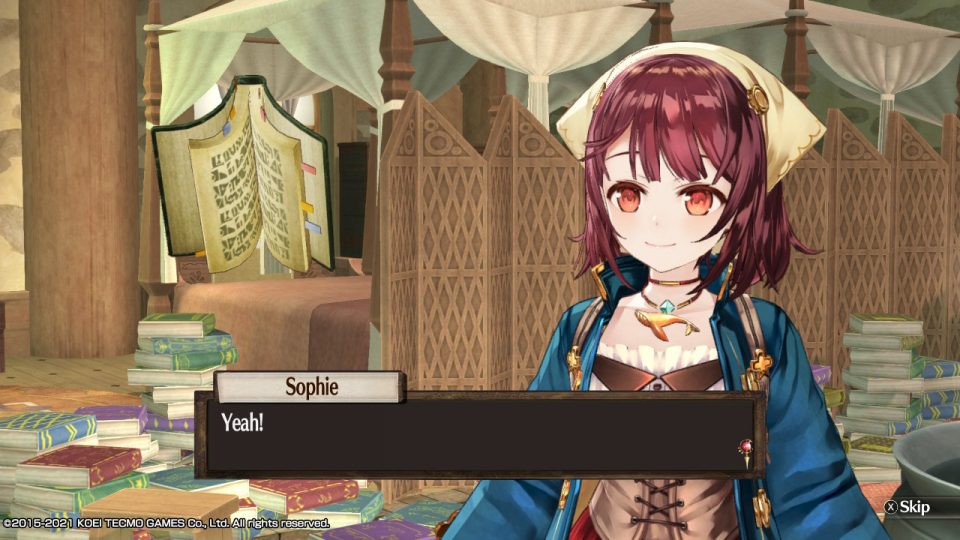
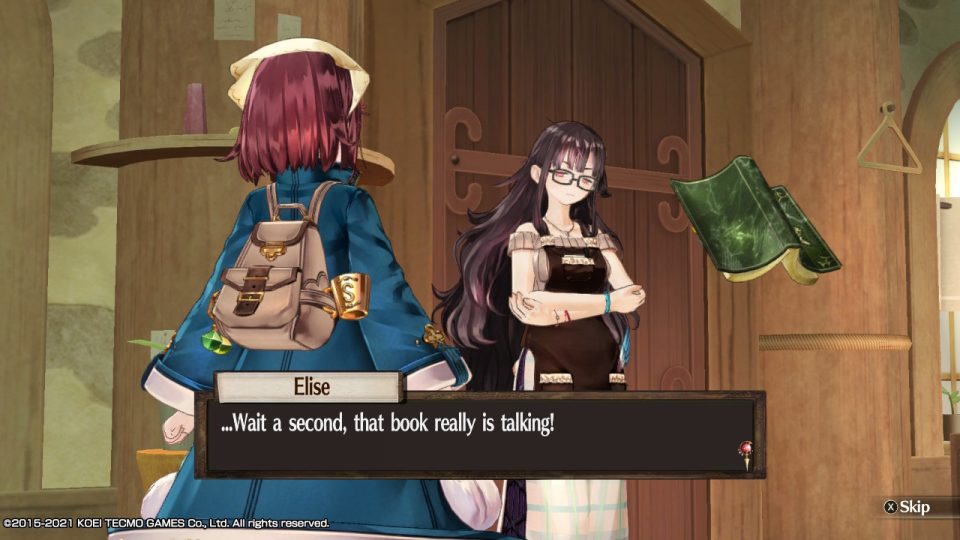
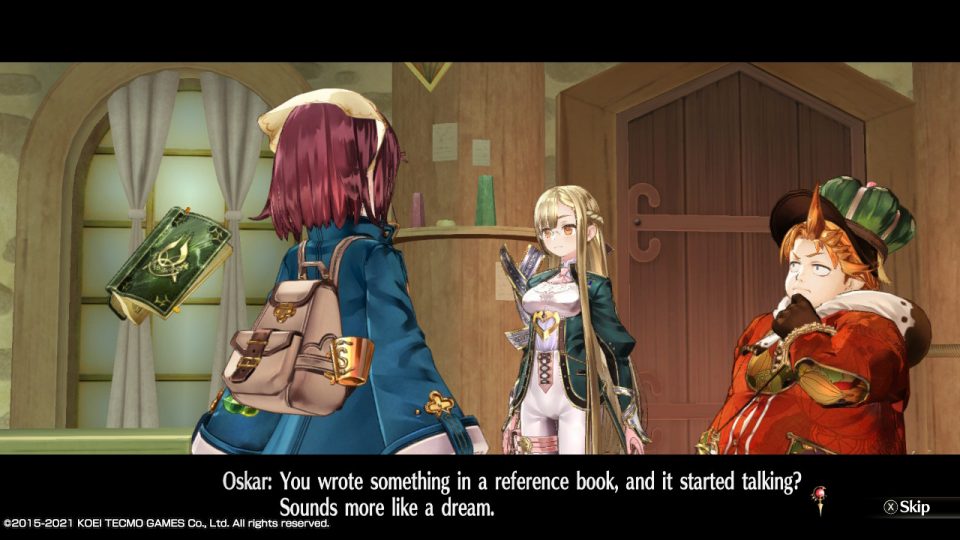
Sophie Neuenmuller lives in a town called Kirchen Bell, and tries to practice alchemy. Tries to, because ever since her grandmother passed away orphan Sophie doesn’t have anyone to teach her. She’s often lonely, until she finds a book. A mysterious book, that flies through the air and can talk! And here I was thinking that only books at Hogwarts had a life of their own! After finding the book that introduces itself as Plachta, her life changes.
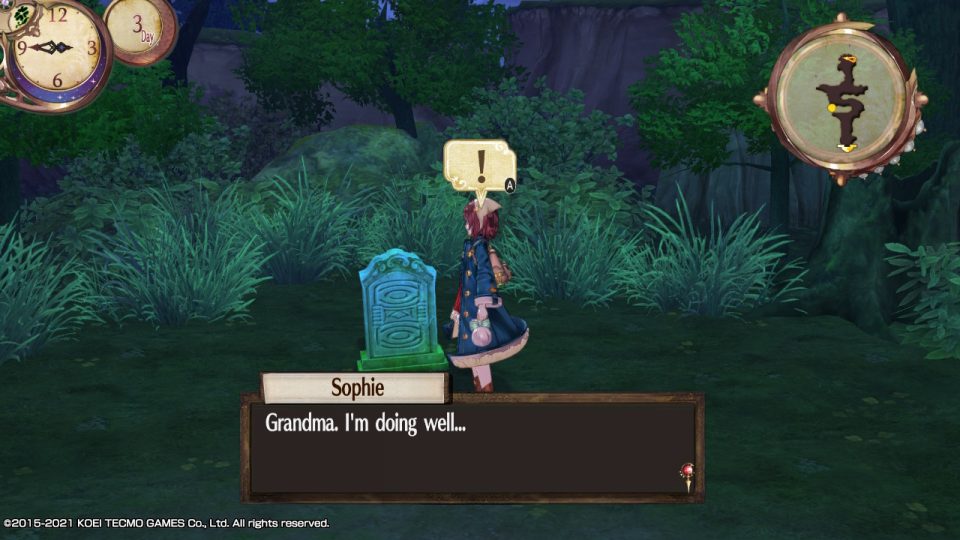
It seems the book was once a human, and she was a very good alchemist. When Sophie manages to find new recipe ideas and writes them down in the book, Plachta slowly regains some memories of her former life. These memories are the main storyline, with Plachta’s memories taking a long time in coming.
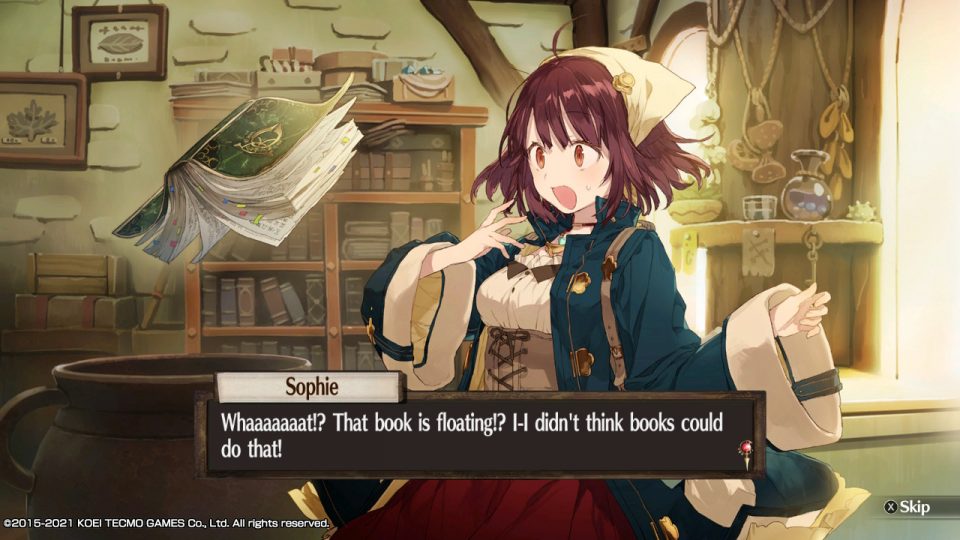
Sophie is the sort of Atelier protagonist we’ve come to expect, a happy bubbly girl and maybe a bit too trusting for her own good. As in every Atelier game there are a lot of characters to join her team like Oskar who loves plants and Sophies friend Monika who is a good fighter. We see familiar faces too, like Logy takes up a business as Blacksmith.
Evolving the Atelier Series
When playing a game in the Atelier series you can’t help but compare. When you have played them in order, reaching for the newest game released during your video gaming days, you notice things have changed since the Dusk trilogy.
Playing the game now for the first time, after you’ve already enjoyed the Ryza games, the most recent ones, you’ll see marked differences. The series has evolved, so you might feel for example that the town of Kirchen Bell is a pretty empty place compared to Ashra-am Baird in Ryza 2.
With Ryza the series has taken a definite turn to being much more of a simulation game while keeping the wonderful elements that make up earlier games. For the sake of this review of Atelier Sophie: the Alchemist of the Mysterious Book DX I will highlight where this 17th game in the main series makes changes to evolve.
In the Mysterious trilogy there’s is no set time in which to meet certain conditions. This is perhaps the biggest difference, it gives a free feeling, you don’t have to keep looking for the point of no return, when you won’t be able to finish the story as it should. Like I had in Ayesha, when I found I wouldn’t have enough time to find her sister Nio anymore. Time Management is less of a factor, deadlines aren’t rock solid.
Time does matter though in Atelier Sophie, but in a different way. It influences what the people in town are doing, and it also changes the monsters that are present. The weather is another such factor, I’ve seen sunshine, rain and thunderstorms, and that too makes different foes come out. Time flows differently too in Sophie, there are five days a week called Sprout, Bud, Flower, Fruit and Seed. Those last two are the weekend days. There are 30 days in a month, so six weeks. On a side note, a great way to spend a week, with only three days to work and two to celebrate the weekend. I could get used to that too!
Another difference is that you don’t buy books to learn new recipes, but you get inspired by ideas anywhere and everywhere. Meaning, you never know when Sophie will come up to an idea that allows her to make a new item. Of course, there are certain conditions that have to be met before you see a little light bulb above her head, but the conditions can even be met by things in her everyday life. I did feel that the first hours of the game are a bit slow, it’s only after you have filled up the Beginners Recipes fully that the game opens up.
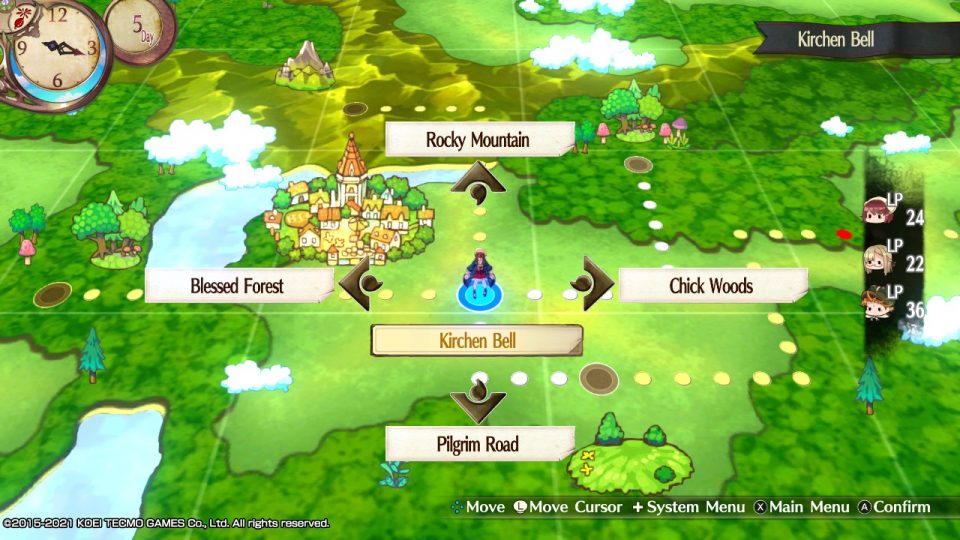
You can see who is where on your town map, I did noticed that everyone you meet in Kirchen Bell has something to say to you. Maybe not a real cut scene moment, but all people chat with you and although it’s not a bustling town, that does make roaming around more pleasant, as I remember from the earlier games that a lot of the people you met didn’t have anything to say.
Staple Ingredients: Synthesising and Fighting
If you’ve played Atelier games before, you’ll know all about traits, effects, quality of ingredients and such. In this game things are done a little differently though. Every item you use has a certain grid value, and a grid colour.
The way you stack and arrange things on the panel of whatever cauldron you use will define the outcome, what traits an item gets, or which level of quality. It may sound intricate, but it’s actually easy to do, and I found this process to be quite satisfying. So much so, that I’ve made an in-depth guide which you can find here; Atelier Sophie Guide to Synthesis.

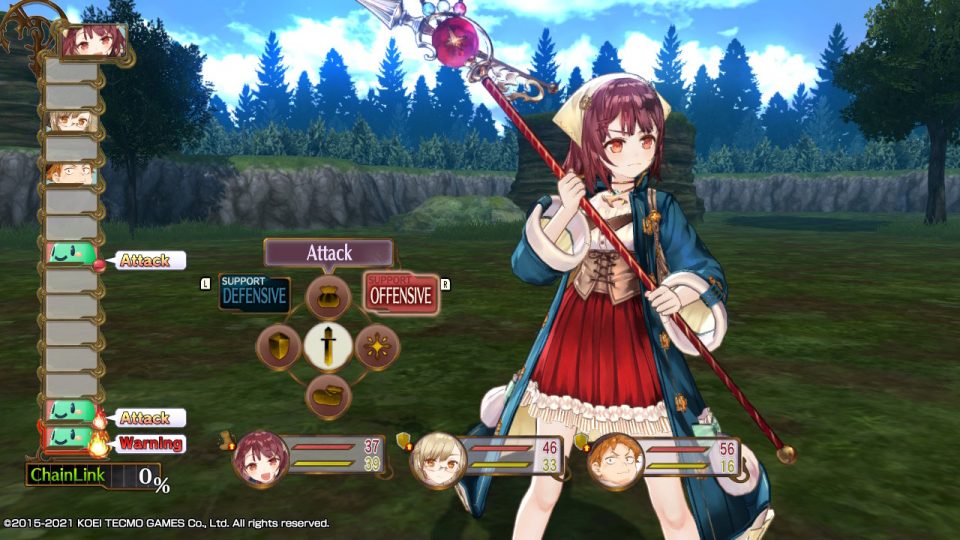
They shook up the fighting formula too. No surprise as that too changes with every Atelier game. In this one you choose whether you want to have defending support of offensive support attacks, give everyone their orders and then you watch the fight play out. I like that, ample time to ponder what moves to make. The downside is that once the board is set, you can’t change anything anymore. There is so much to tweak in the combination of normal attacks, skill attacks, support attacks and special attacks that it took me a while to come to grips with all that is possible.
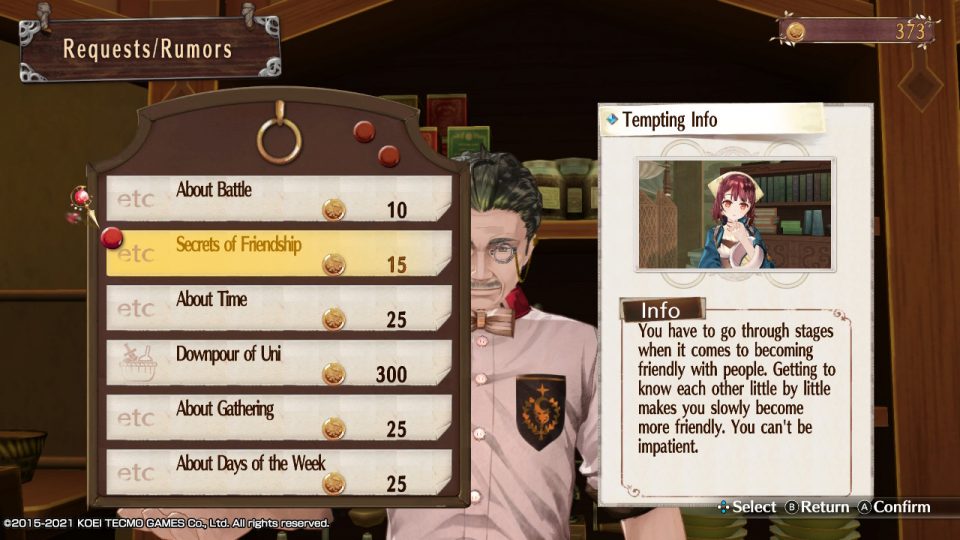
The cafe is once again the hub of the town. It’s the place where Mr. Horst has requests for you, but he also sells Rumours. They can be anything: in the beginning its mostly background info. Luckily it’s the cheaper kind of rumour, as the cole (in-game money) is hard to come by. Later on you can buy more expensive rumours about special items to gather, special monsters to fight etc.
Each key character in the game has a friendship level. Increasing this level requires either having that character be a part of the active party in combat or by giving them gifts whenever you see them around town. Every character has their own likes and dislikes for the items they receive, which can influence not only the rate at which their level grows, but also the gifts they bring to you in return. All of this makes for a great character development, makes Sophies friends much more lifelike.
Extra Additions in This DX Version
Rest assured, Atelier Sophie: the Alchemist of the Mysterious Book DX is another solid entry in the series. This is the game where the series makes a turn in what Atelier games are about. Time influences, weather influences, lots of people to interact with, lots of shops and workshops. And you can even give presents to people now! For the first time, the games lean towards simulation, with lots of fighting and crafting to spice things up.
There is a good plot line, Doll Making is added to the gameplay and by building friendships in battle and by giving presents, you feel as if you are part of Sophies life.

The graphics, as ever, are lovely. I have played the game before on my Vita, and on the Switch screen it really looks outstanding. Don’t forget that you can have the voices in Japanese and English in the settings.
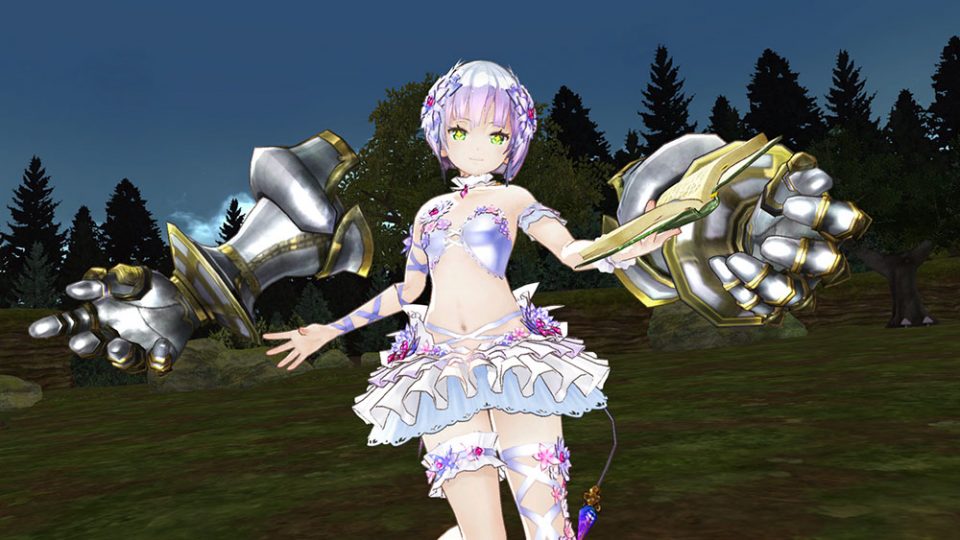
In this DX version extra things are added, making this the most definite version: there are new episodes and scenes depicting Sophie wanting to be more like her grandmother (including her grandmother’s outfit from her youth). 3 New cauldrons are added as well as a dash function. Extra soundtracks are added, and additional gathering area called The Archive and six new bodies for doll making.
Conclusion
It’s fun to follow the journey Gust is making with their Atelier games from the Arland trilogy to the Dusk trilogy and now the Mysterious trilogy. And what’s more: all these games are now available on the Nintendo Switch in their definite edition.
Atelier Sophie: the Alchemist of the Mysterious Book DX starts the series off in the direction of more sim-like elements, and presents us with a lovely “slice of life” story. No wars or terrible happenings, but a good interesting storyline following a girl who wants to learn how to be a great Alchemist.
Final Verdict: I Like It a Lot
My biggest disappointment for the original was the lack of new game+. Has the DX version corrected this?
Thanks for commenting! I’m not sure what you mean by the new game +?
Thank you for getting back to me. Every Atelier game with the exception of Atelier Sophie has an option to start the game again and carry over stuff from your previous playthrough, like weapons and currency. I was wondering if the DX release has added that option to Sophie.
I don’t know, to be honest, I haven’t tried to restart it, but I don’t think it will. In the older Vita versions of the DX games you did get some extra costumes if you had a playthrough of the other games in the same trilogy, but never weapons or money.