


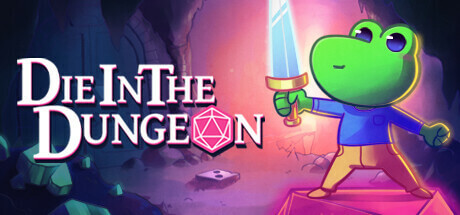
Game: Die in the Dungeon
Genre: Indie, RPG, Strategy
System: Steam (Windows)
Developer|Publisher: ATICO | HyperTrain Digital, Sidekick Publishing
Controller Support: yes
Steam Deck: playable
Price: US $14.99 | UK £12.79 | EU €14,99
Release Date: February 21st, 2025
Review code provided with many thanks to Thinky Games.
Die in the Dungeon – A Different Kind of Roguelike Roll
Die in the Dungeon is a roguelike deck-builder, only there are no cards here at all. Instead, everything revolves around dice. That simple swap changes the entire feel of the game, shifting the focus away from fast reflexes and toward careful planning, positioning, and decision-making. It feels calmer than many action-heavy roguelikes, but no less engaging for it.
What’s especially impressive is how confident the game already feels despite still being in early access. Whether you have ten minutes for a quick run or settle in for a longer session, it’s easy to get pulled into that familiar “one more dice roll” loop. From the very first run, it’s clear the developers have found a strong foundation to build on.
Straight Into the Dungeon
There isn’t much story getting in the way here, and honestly, that works in the game’s favour. You play as a small frog warrior heading into the dungeon in search of adventure, fame, and froggy fortune (possibly). The setup is brief, the goal is clear, and before you know it, you’re already rolling dice and fighting monsters.
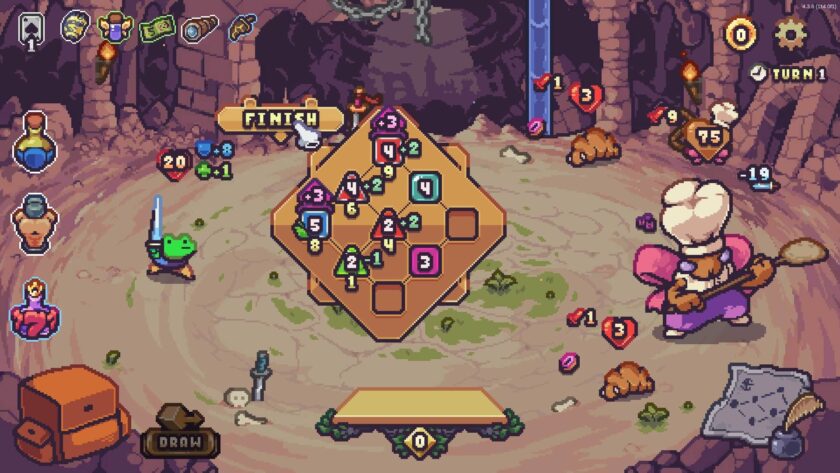
The presentation is welcoming and easy on the eyes. The pixel art is detailed and animated with care, and while enemies come in many shapes and sizes, they lean more toward friendly-looking than frightening. Despite the ominous name, this is very much a family-friendly experience, one that feels inviting rather than intimidating. The soundtrack is also brilliant, feeling epic in space, adding appropriate tension as you plan your next move.
Dice Instead of Cards
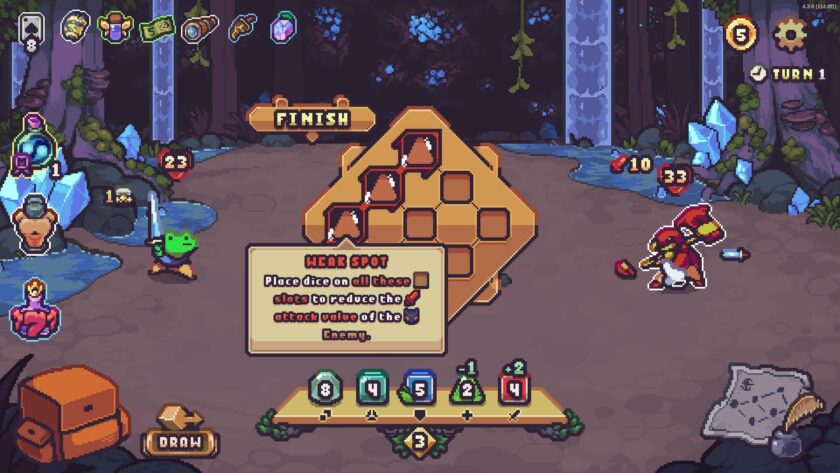
The real magic of Die in the Dungeon comes from its combat system. Instead of drawing cards, you draw dice into your hand, each representing a specific action. Red dice handle attacks, blue dice generate shields, green dice restore health, and purple dice act as multipliers, boosting the effects of other dice placed nearby. There are many more dice to discover over time.
Combat plays out on a board where positioning matters just as much as what you roll. Where you place a die can dramatically change the outcome of a turn, especially when multiplier dice create glowing zones that enhance everything around them. This turns each battle into a small puzzle, asking you to think not just about what to use, but where to use it.
A well-designed tutorial introduces these ideas without overwhelming you, and from there, the game gradually opens up. It’s easy to understand the basics, but there’s a lot of depth waiting once you start experimenting with more advanced combinations. Should you need a reminder, everything can be checked on screen with small descriptions of enemies, dice and your deck, making planning more accessible.
Planning Your Path
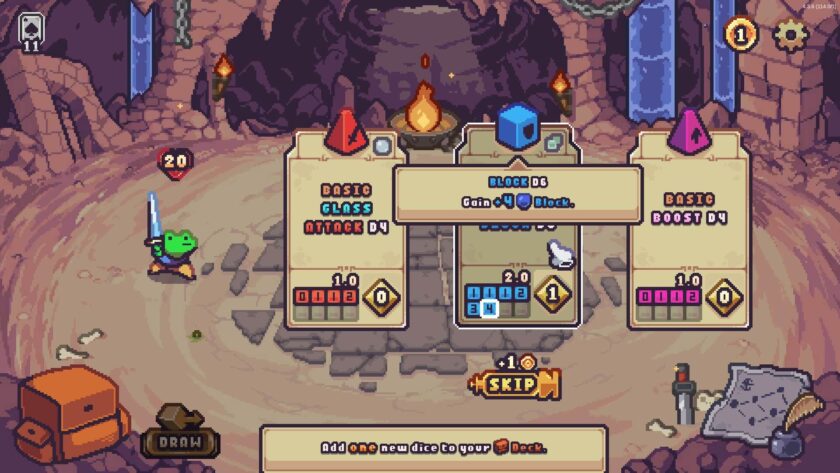
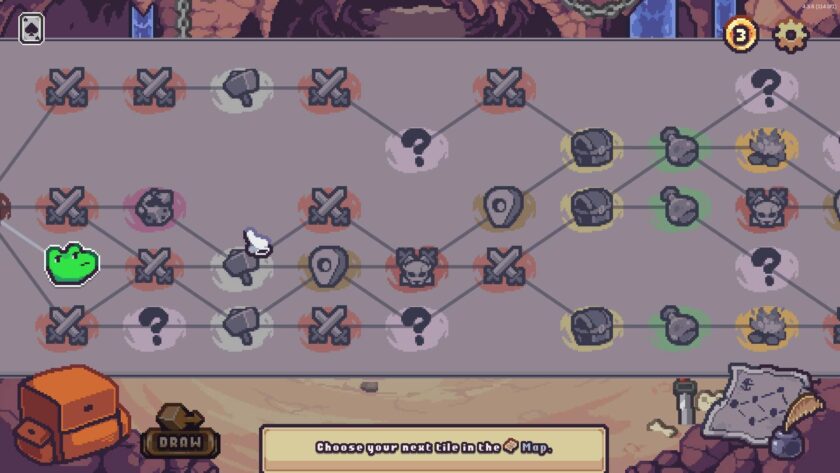
As with most roguelikes, each run is different. After battles, you’re shown branching paths through the dungeon, allowing you to plan ahead. You might aim for relics, shops, healing spots, or unknown encounters, weighing risk versus reward with every decision.
Between fights, you’re often given chances to improve your deck. New dice can be added, unwanted ones removed, and sometimes even modified. One standout feature is the ability to change the numbers on the faces of certain dice, adjusting the range of possible outcomes. It’s a clever system that adds another layer of control without removing the thrill of rolling.
Relics also play a big role, offering powerful bonuses with meaningful trade-offs. Stack the right effects together, and your build can snowball quickly, but overconfidence can just as easily undo a promising run.
A Flexible Pace
One thing I really appreciated is how the game respects different playstyles. You can take all the time you want studying enemy intentions, checking stats, and planning turns, or you can move quickly and rely on instinct. Both approaches are valid, and the game never pressures you to rush.
Healing is also a more central part of the experience than in many deck-builders, which makes runs feel less punishing and more strategic. Potions can be used mid-battle to gain an edge, though I’ll admit I occasionally forgot they were there while focusing on my dice placements.
Runs, Failure, and Progress
Most runs will end in defeat, and that’s very much by design. Each attempt unlocks new dice, relics, or options that feed back into future runs. Even when things go badly, it rarely feels like time wasted. There’s always something learned, some small improvement made.
Boss battles act as skill checks, demanding a good understanding of your build and mechanics. Difficulty can feel a little uneven at times, with some encounters swinging from manageable to overwhelming depending on your luck and setup. That said, balance tweaks are expected during early access, and these moments never soured the experience for me.
Steam Deck Friendly and Easy to Dip Into
Die in the Dungeon plays well on Steam Deck, making it a great option for handheld sessions. Controls feel natural, text is readable, and performance is solid. It’s an ideal game to dip in and out of, whether you’re killing time or settling in for a longer stretch.
Conclusion: Rolls High In Stats
Die in the Dungeon stands out in a crowded roguelike space by doing something genuinely different with its core mechanics. Using dice instead of cards isn’t just a novelty; it’s a thoughtful design choice that reshapes how you think about combat, builds, and strategy.
Even in early access, it offers a polished and engaging experience that rewards curiosity and experimentation. If you enjoy deck-builders but want something that feels fresh, or if you’re looking for a roguelike that values planning over speed, this is well worth your time. Failure is there, but it always encourages you to roll again. And I was more than happy to have another roll with this gem.
Final Verdict: Two Thumbs Up