


Game: Mirrors of Epiphany
Genre: Puzzle
System: Steam (Windows)
Developer | Publisher: Sigmund Hoien
Controller Support: No
Steam Deck: Playable
Price: US $6.99 | UK £5.89 | EU € 6,99
Release Date: July 17th, 2025
Review code provided with many thanks to Sigmund Hoien.
Mirrors of Epiphany Review – Casual Laser Logic
There’s a comforting simplicity to Mirrors of Epiphany. It’s the kind of game that doesn’t try to wow you with flashy graphics or elaborate storytelling, but instead focuses on one idea and executes it with a quiet confidence. You’re given lasers, mirrors, and a board, and your job is to guide those beams of light to their intended destinations. That’s it. And while that might sound bare-bones, there’s a meditative pleasure in lining everything up just right and watching the solution snap into place.
Lasers and Logic
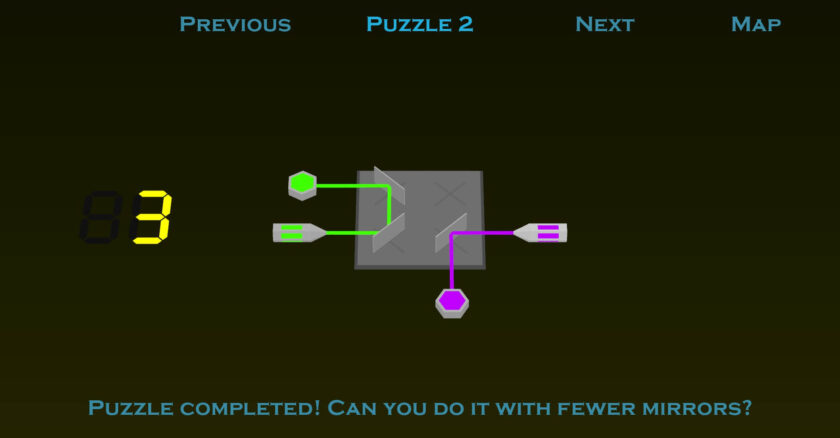
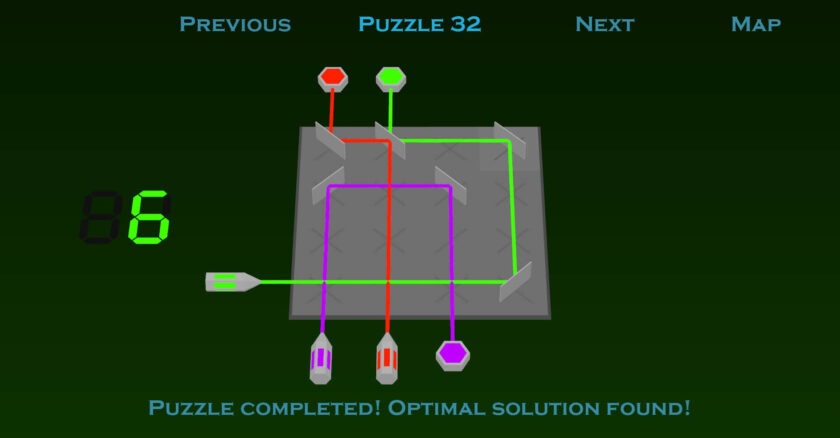
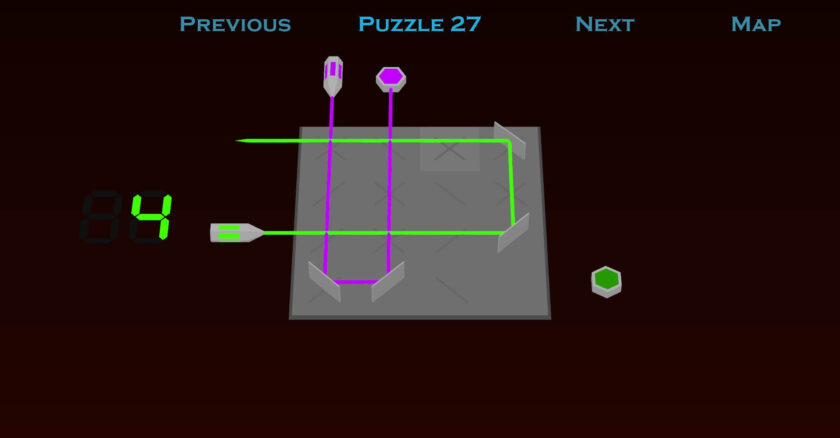
At its heart, Mirrors of Epiphany is about directing colour-coded laser beams to their matching receptors. You do this by placing mirrors around a grid-like board. Each mirror reflects the beam at a right angle, and the trick is finding the right combination of mirror placement and orientation to complete the puzzle.
You’re given full control, place mirrors, rotate them, remove them, and test the setup in real-time by clicking the laser to see where the light goes. All achieved with a simple click of the mouse. This interactive feedback loop makes experimentation easy and enjoyable. If something doesn’t work, just tweak it and try again. It’s forgiving, but that’s the point. This is a chill puzzle game, not a stress test.
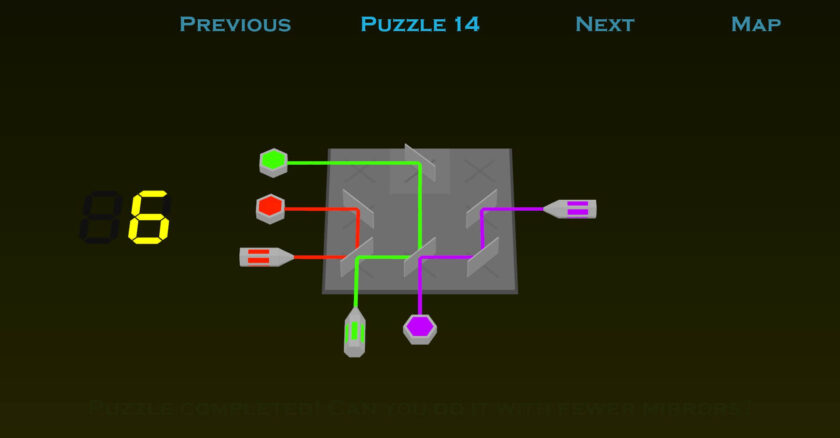
As you progress, the puzzles gradually become more complex. New restrictions are introduced; some grid squares won’t allow mirrors to be placed, others limit orientation, adding just enough friction to make you pause and think a little harder. But nothing ever feels unfair or overly obtuse.
One Goal, Many Paths
Each of the 100 puzzles has one optimal solution that uses the fewest mirrors possible, but you’re not penalised for taking the scenic route. In fact, the game encourages experimentation by giving you a “green” success screen if you hit the optimal solution and a “yellow” one if you don’t, along with a gentle nudge that a better way exists.
This creates a nice balance between progression and replayability. You can move through the puzzles casually, or double back later for perfection. Most levels can be solved in a minute or two, though a few may stump you long enough to make you feel clever when the answer clicks into place.
And that’s where Mirrors of Epiphany succeeds best: it never pressures you. There’s no timer, no scoring system beyond the number of mirrors used, and no punishment for tinkering. It’s just you, some beams of light, and a grid to play with. And that can be strangely satisfying.
Minimal Style, Subtle Charm
Visually, the game is extremely simple, almost to a fault. The board is basic, the lasers are coloured lines, and the whole presentation leans heavily on function over form. There’s little in the way of flair, and it certainly won’t win any beauty contests. That said, the clean design does serve the gameplay well, keeping distractions to a minimum.
There’s no real story here, either. Mirrors of Epiphany is entirely abstract, which leaves room for your imagination. Personally, I started pretending I was a laser engineer killing time in a lab on my lunch break. It didn’t affect the gameplay, of course, but it was a fun little narrative to tag along with the logic.
There’s no music to speak of, just a calm, quiet soundscape that lets you focus on solving each puzzle. A few gentle chimes and clicks mark your progress, and a pleasant little melody plays when you complete a level. It’s not much, but it adds a hint of warmth to an otherwise sterile experience.
One delightful little surprise comes from the main menu, where selecting “reset all progress” doesn’t just instantly wipe your data; instead, a message pops up to reassure you that it takes more than one click to erase everything. It’s a small thing, but it speaks to the game’s overall low-key, thoughtful approach.
Conclusion: A Light Touch
Mirrors of Epiphany isn’t a game that’s going to wow you. It’s not trying to. But for what it is, a compact, calming puzzle experience, it does a commendable job. It’s approachable, rewarding in small bursts, and gently encourages you to think a little more critically without ever raising your blood pressure.
If you’re looking for a quiet game to chip away at in the evenings, something that engages your brain without overwhelming it, Mirrors of Epiphany is worth a look. It won’t stick with you forever, but for a few hours of relaxed laser wrangling, it more than earns its place.
Final Verdict: I Like It
Do you like our content?
Subscribe to our daily news and never miss a review!