


Welcome to this edition of Paula’s Game Ramblings; you can find the previous Game Ramblings here if you like these random thoughts.
If you are a regular visitor to LadiesGamers, you may have noticed that I have written a few reviews featuring Nintendo’s Super Mario games.
As I said in the Super Mario Bros Wonder review:
“I’m not entirely sure why I bought Super Mario Bros Wonder, as I’m not really a fan of Mario or platform games.”
And that is true; I’m not a fan of platform games, nor am I keen on Mario as a character. But I was when the very first game, Super Mario Bros, was released all those years ago in 1985. However, I was a lot younger then. Now, my taste in gaming genres has changed, and most of all, my reflexes are also much slower; if I were to play Super Mario Bros now, I probably wouldn’t get too far before getting very frustrated with myself.

With recently having played Super Mario Bros Wonder and then Mario vs. Donkey Kong, I got to thinking about why the Super Mario games have been so successful. For me, Mario isn’t the star character (sorry, Mario, it’s Yoshi…); it’s the game mechanics and the well-designed levels and music that I enjoy.
Why Are Super Mario Games So Popular?
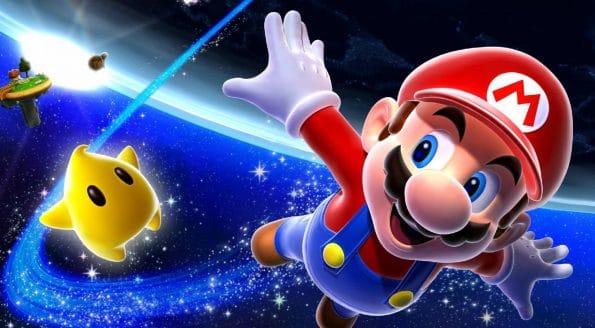
Mario has become a well-known symbol for Nintendo, appearing in numerous games and products. Nintendo smartly uses Mario’s popularity to its advantage, knowing that whatever Mario features in, brings financial success for them. Many people have played at least one Mario game and find them likeable due to their simple design.
Mario himself isn’t perfect, which I think makes him easy for players to relate to. However, his simple design in primary colours also makes him instantly recognisable, even in old-school graphics. They also know how to tap into nostalgia by reusing elements from older games. While Super Mario’s stories might not be as complex as some other games, they are all about quick thinking and problem-solving, keeping players hooked with fast-paced action and rewarding challenges.
Nintendo’s Unique Approach to Game Design
For me, Nintendo stands out in the gaming industry for its unique approach to game design, which prioritises mechanics over narrative. Unlike many other AAA developers, Nintendo focuses on creating games where the gameplay reigns supreme, with the story serving as secondary to the gameplay.
For instance, at its core, Super Mario games are all about running, jumping, and navigating through levels filled with obstacles and enemies. The storyline, which typically revolves around the rescue of Princess Peach from the clutches of Bowser, acts as a backdrop to the gameplay experience.
Continuously Changing and Evolving
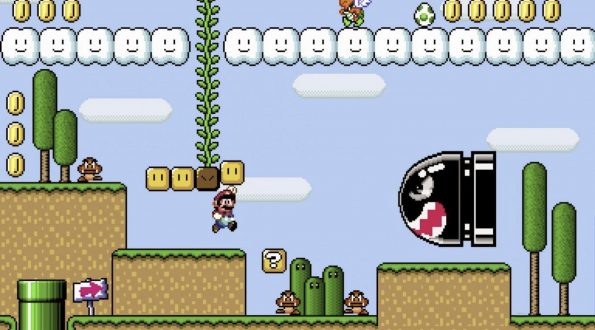
What sets Nintendo and the Super Mario franchise apart is that they are continuously changing and evolving the gameplay, basically refining the core mechanics of their games with each new Super Mario instalment they release.
In 1985, Super Mario Bros was a game-changer. It was the first platformer where you could control your jump, making the gameplay feel amazing. Plus, it was packed with secrets like warp pipes, rewarding players who explored.
Since then, each major 2D Mario game has introduced innovative elements that expand upon the simple premise of running and jumping. For example, Super Mario Bros 2 introduced different jump types and the ability to pick up and throw objects.
Iconic Power-Ups
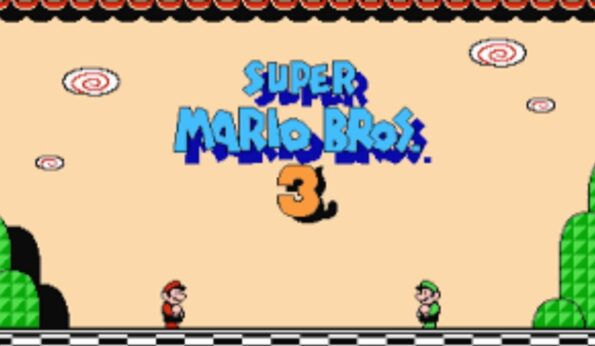
In contrast, Super Mario Bros 3 introduced power-ups like the iconic Tanooki Suit and added new ways to traverse levels, such as flying with the Super Leaf. Similarly, Super Mario World introduced Yoshi (did I mention I love Yoshi?) and new level mechanics, while New Super Mario Bros U incorporated wall jumping and refined flight mechanics.
When 3D games came along, Mario moved with the times, too, with Super Mario 64 marking another milestone in game design. With it, Nintendo went on to explore fresh gameplay ideas, such as more intricate level designs. Novel power-ups like the Wing Cap and Metal Cap altered Mario’s abilities in the 3D world were also added.
Possess Objects with Mario’s Hat
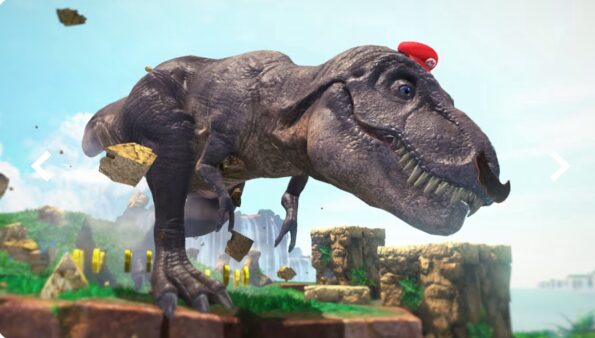
Following titles like Super Mario Sunshine, Galaxy, and Odyssey continued this tradition of innovation, introducing new mechanics like FLUDD’s water-based abilities, gravity-defying platforming, and the cool ability to possess objects with Mario’s hat.
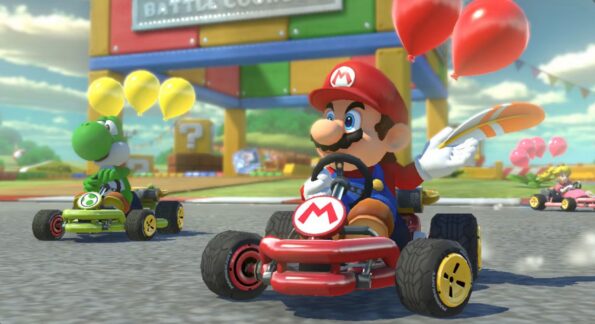
Even in spin-off titles like Mario Kart, the focus is on accessibility with engaging gameplay mechanics and family fun. Mario Kart’s emphasis on racing and using items strategically combined with its simple control scheme means that players of all skill levels can enjoy these games without the need for confusing control inputs or complicated storylines. For instance, my 3-year-old grandson really enjoys playing Mario Kart with his big brothers, even if his kart is constantly going backwards around the track.
While other games may offer deep and immersive storylines, such as The Legend of Zelda games, Mario games shine at delivering minute-to-minute gameplay experiences and exploration challenges that captivate players without the need for a sprawling plot. And most importantly of all, they are just happy, bright and fun games! And we can certainly do with that!