



An EA code was provided, with many thanks to Press Engine
Preserve, released in Early Access, is a nature-building game that gives you the freedom to choose your difficulty. Want a bit of a challenge? You can go for the puzzle mode. Prefer no pressure at all? You can go for creative mode. In all cases, you build a natural setting by forming habitats with plants and trees and placing animals that belong in that environment. Meanwhile, making a beautiful-looking bit of nature along the way.
I played the demo a few months ago, let’s see what the Early Access mode for Preserve has to offer.
Good Tutorial To Realize the Depth
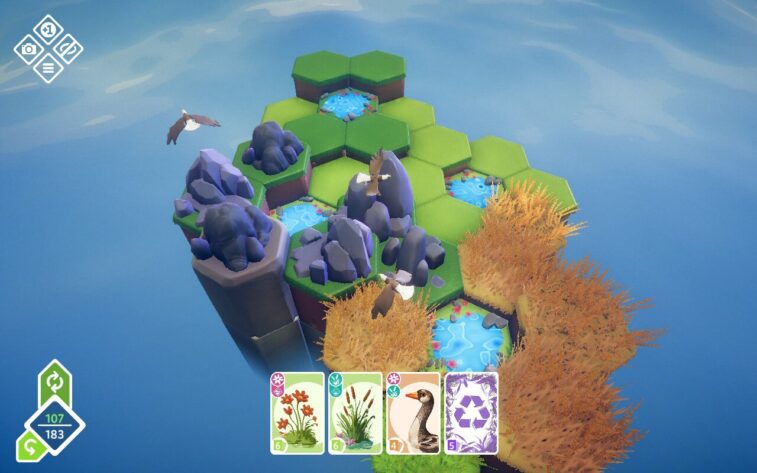
Preserve starts off with a little tutorial using the hexagonal field that is typical for the game. You get a certain number of cards and a small assignment at first. Like, use the three rain cards that are presented to water some tiles. Water is the main thing to get things going, without it the trees and plants can’t grow. Each action gives you harmony points, and you have to reach the milestone that is set. Soon you will handle multiple cards, representing biomes, animals, rain, rivers and also elevation cards. Combinations you make or placing certain cards next to each other gives you extra harmony points.
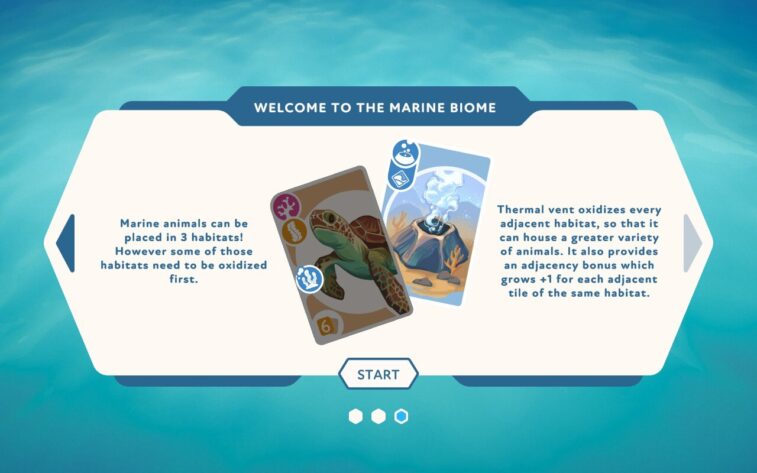
The habitats you make can house several animals. Animals are worth 10 harmony points. Place three of the same kind in 1 habitat, and you get 30 bonus points. And 60 bonus points for placing three different animals in 1 habitat. But you can’t just keep on placing them; the habitat has to be big enough to house more of them.
Several Biomes in the Menu
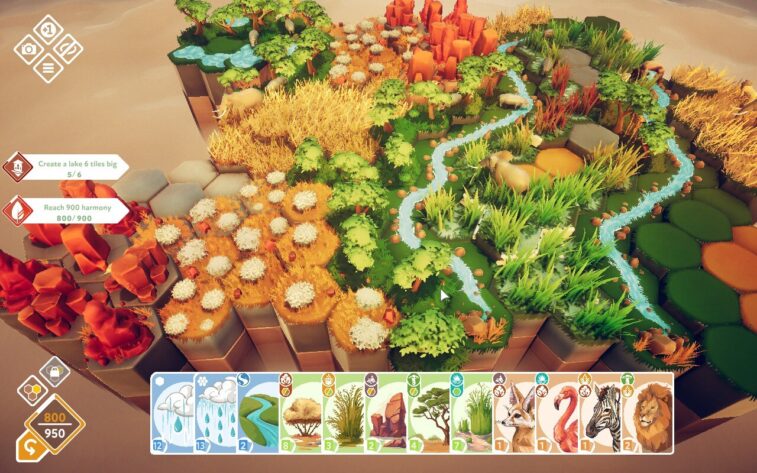
From the start, you can play with three different biomes, each with their own flora, fauna and special rules. There’s a fourth biome in Preserve that’s locked at first. It’s a good thing that they keep repeating the two or three tips every time you enter, as you will soon find racking up the acquired amount of points can be challenging. Each biome has its own special rules: for instance, in the Continental Biome, rainfall always turns the tiles green. But in the Savanna Biome, water turns them yellow, allowing for a different kind of vegetation. It’s rivers and ponds that colour the tiles green here.
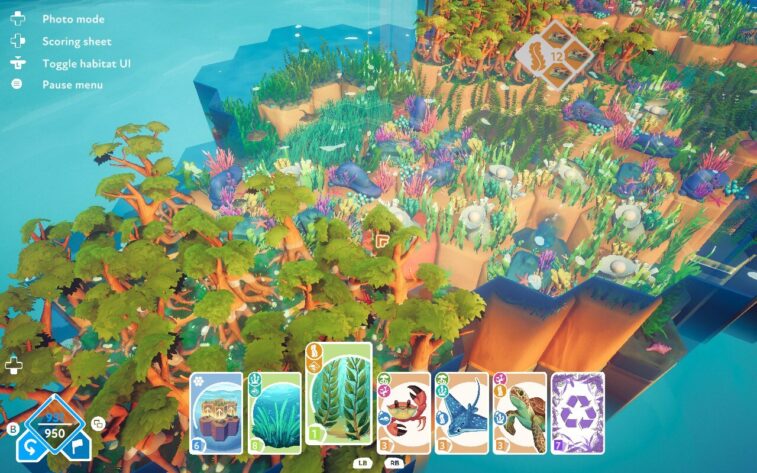
You can imagine the Marine Biome has a different set of rules altogether. You literally play underwater, making it sometimes hard to see what exactly you are doing. Once you get the hang of it, it’s awesome that you can raise the land and even plant some mangrove that supports yet another species.
I think it’s great that every time you hover over a card, you get a small reminder of what effect the card will have and what it can be used on.
Different Game Modes in Each Biome
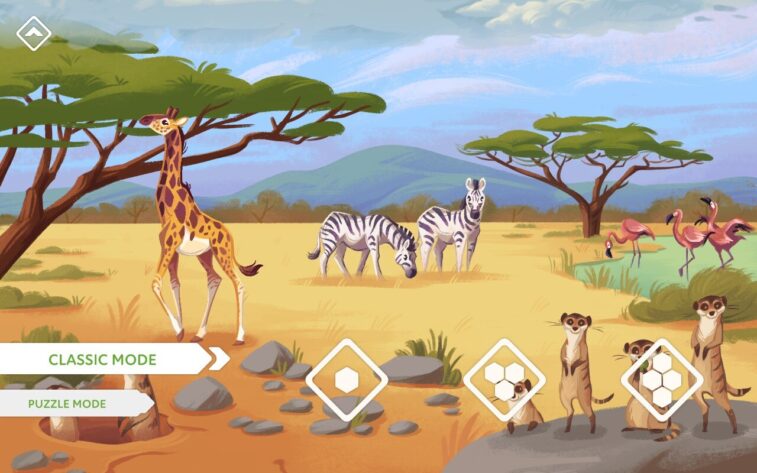
Every biome has several play modes. There’s Classic Mode, where the board you get is either small, medium or large. Every time you reach a milestone, a new plot of hexagons can be added, until they are all used. Once the first milestone in harmony points is reached, you can return to the menu, or keep on playing as long as you have cards to play and new plots to unlock. You automatically venture into the milestone set, for example for the first medium puzzle, and that is duly registered.
Aside from the milestones to be reached, there are one or more extra challenges that pop up while you are playing. Like, form a pond of 6 tiles, which will give you extra harmony points. You can go back one move, or use one of the few removal cards if you’ve done something that wasn’t so smart in hindsight.
You can go for what I’ve found is an even harder challenge in Preserve: Puzzle Mode. You are then presented with a string of puzzles, that start out easy but get more difficult pretty quickly. You have to make the most out of every tile you place, you can’t just place it and hope for the best. It takes some insight to get the maximum amount of points. There are several that I tried over and over again, but haven’t solved yet. Which means that you can’t progress.
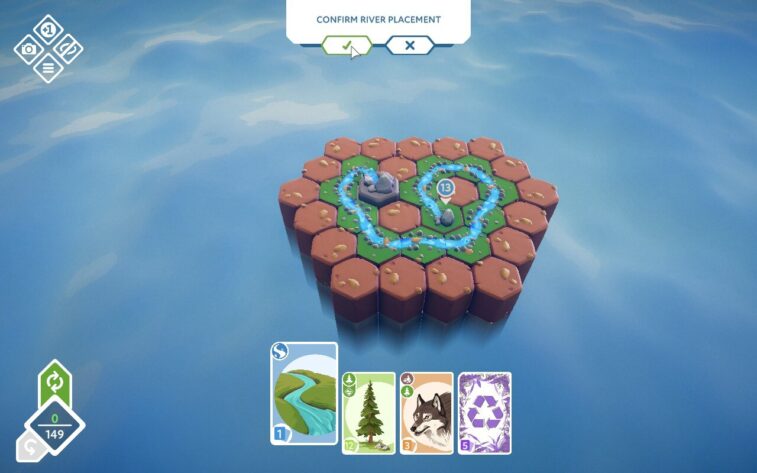
You can also choose Play Creative in Preserve with no pressure at all. You get all possible terrains, vegetation, and animals and make it as you want. This does take away the game element, but it is relaxing to see your little world come to life without having to worry about creative points. You will find unexpected items to add like a lighthouse but what’s even more fun, is that you can string all the biomes together and make a diverse world. Let the Continental Biome lowlands flow into the ocean, with a mangrove wood and some lovely coral beds off the coast.
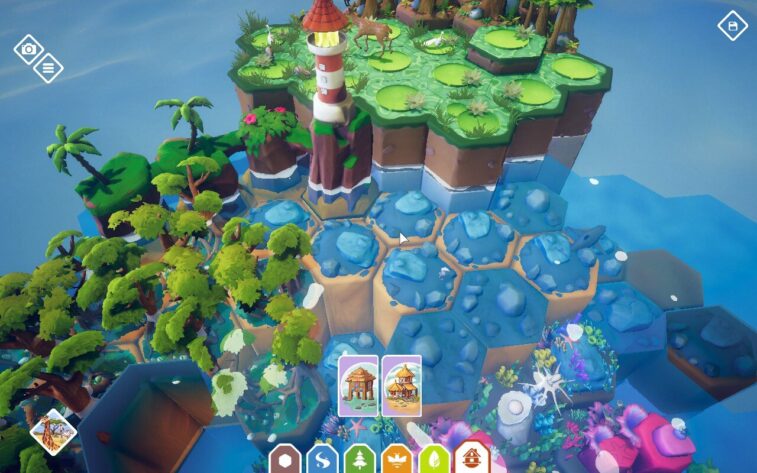
Playing in this mode you can clearly see how Preserve strings fauna cards together. You add to certain vegetation and it changes to something bigger: three tiles of trees turn into a veritable wood. And the corals don’t look the same on every tile placed: there is variety that I loved to see.
Looks and Plays Great
Graphically, Preserve looks great. It’s fun to see the boar roam the forest or to see bees above the flower meadow. The Coral bed looks lovely, and even the fields of rocks can house little meerkats. The landscape you form ‘lives’, and you can zoom in to look in on it.
There’s a camera icon available, so you can capture what you have made and share your fruits of labour with some nice features to make the most of your image.
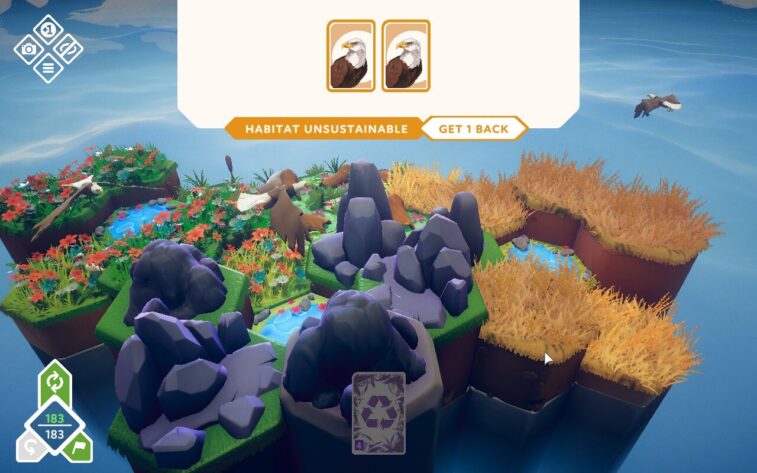
I’ve played Preserve on the Steam Deck. It works well and works even better when you connect a controller to it. The challenge is good, and there’s something for everyone!
Final Thoughts for Preserve
When I’m writing about a game, and I can’t wait to stop writing and just go play again, that’s saying something. Even in the Early Access release, Preserve works well and feels great to play. Maybe the puzzles could be a little less hard so early on, but otherwise, I look forward to everything else the game has to offer!
Do you like our content? Support LadiesGamers on Patreon!
Check out our Tiers and Benefits and join us.