


Game: Shalnor Legends 2: Trials of Thunder
Genre: Action, Adventure,
System: Steam (Windows)
Developer|Publisher: Johnny Ostad
Controller Support: Yes
Price: US $14.99 | UK £12.79 | EU € 14,99
Release Date: September 5th, 2023
Review code provided with many thanks to Johnny Ostad.
The Traditional Adventure Formula
Shalnor Legends 2: Trial of the Thunder is a top-down adventure that takes heavy inspiration from the classic Zelda games. Since that series is now focusing on big open adventures where you can make bizarre creations with your magical arm, it’s left a void to fill for those who are hungry for the more traditional formula.
Once again, leave it to the indie developers to happily provide. I never played the first game in the Shalnor Legends series; in fact, the only time I remember bumping into it was when it was on the eShop on Nintendo Switch at a heavy discount. I passed at the time as my backlog was already longer than an NHS waiting list. That’s a joke for the British folk. The sequel feels like quite the upgrade but doesn’t add much to the adventure formula. Although, for some players that won’t be a problem.
An Orcs Tale
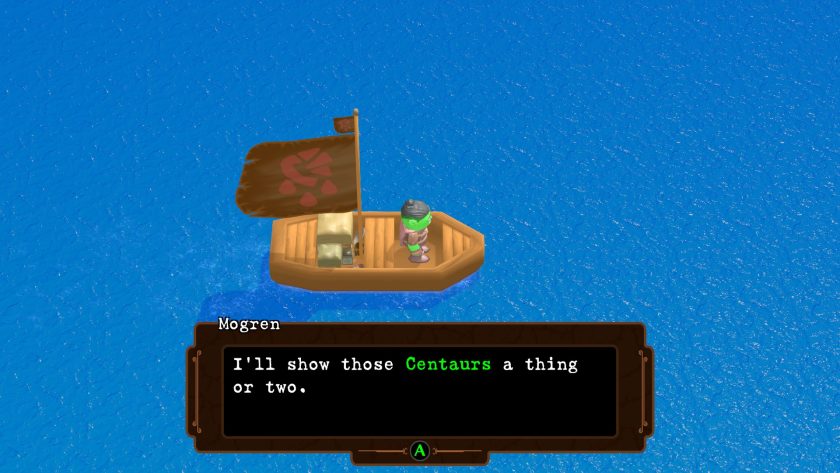
You play the young Orc named Mogren on a quest to prove his orc’s worth and impress his father. But fate has other plans as you sail across the sea, a storm hits and you’re shipwrecked on a totally different island. Turns out this was the plan of the local Thunder God, who has chosen you as his champion. Your quest now sees you take up the Gods’ axe and seek out five scrolls to upgrade your abilities and eventually test your worth against the Thunder God himself.
As far as far as plots go, it’s straightforward. It was very refreshing to play as an Orc for the main hero. Usually used as one of the enemies in adventure games, it made a change not to play some generic hero. I felt a bit mixed in the game’s dialogue. Like so many games today, witty humour is injected into the narrative, and it just doesn’t seem to fit with this experience. At times it comes across as quite forced when I would have honestly preferred if the game took a more serious approach. After all, you’re playing as an Orc; there’s much to unpack there. An impressive amount of effort has been put into world-building to the game’s credit. Should you want to go into the world’s lore, there are lots of books dotted around the island, which you can take your time to read.
Low Poly 3D Sprites
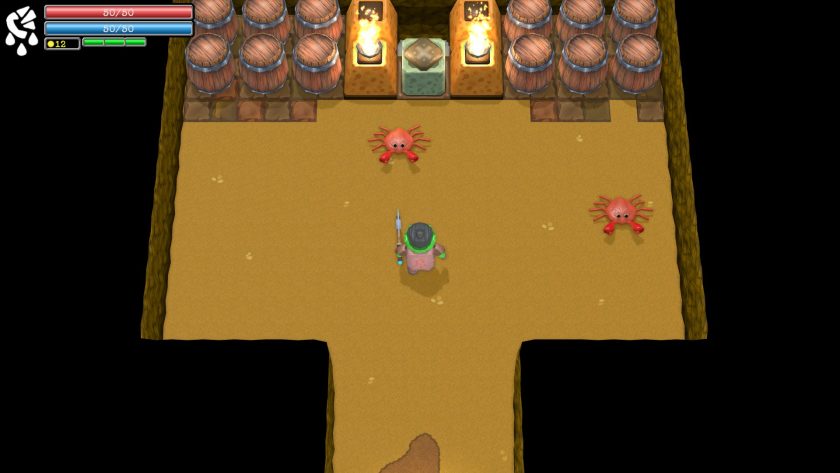
Graphics are low poly 3D sprites which look similar to the PSone/N64 era in gaming. Considering so many indie games adopt the familiar pixel art style, it felt very refreshing to see this design instead. Even the first game in the series adopted a pixel sprite design, so this feels like a nice step up. Sure, some may view the design as simplistic, but the developer has done a decent job creating a variety of island and dungeon environments. What I won’t praise so much is the music, which didn’t pack the epic heights or melody you expect when embarking on an adventure.
Explore the Island
The gameplay follows the familiar formula of a top-down adventure game. There is a nice balance of exploration, combat and puzzle-solving. You have a large island to explore, with the map gradually revealing itself as you explore new areas. Of course, areas are gated off until you have unlocked a new ability at the most recent dungeon.
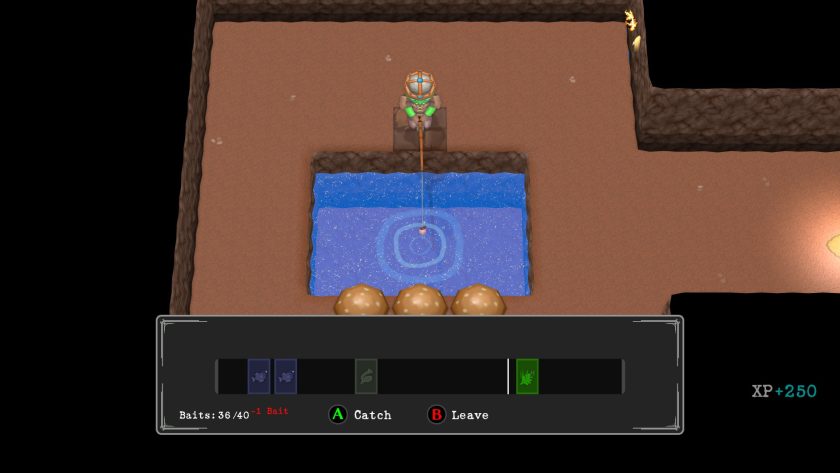
The main quest is fairly easy to follow, with NPCs pointing you in the right direction. To distract your attention, you can take on various side quests, which often feel like tedious collectable quests but are worth taking the time to do to improve your chances in the main quest. To help with this, you can unlock various warp points around the island, which you can access at any time in the main menu. These side quests can also easily be tracked in the main menu. As well as the main adventure, you have a fishing mini-game, which I found rather dull. To succeed in a catch, you need to press the button on the designated box three times without error, which feels tedious.
Temporary Buffs
You can cook food to give you temporary buffs in abilities, provided you have the recipe, the ingredients and a pot to cook it in. There is also plenty to unlock, like cosmetic hats, soundtracks and many secrets if you’re willing to sink the time in.
I found it best to enjoy this game in small bursts. This is because some of the cheap deaths and combat frustrated me, so I found it best to walk away for a bit. However, after a breather, I found my way through these walls. However, I do wonder if the frustrating moments may be too much for some gamers.
Combat
Combat is a bit clunky. The reach of the axe isn’t great. I feel like you need to get very close to deal damage to enemies and bosses. In fact, when you defeat them, they just statically poof away in a black silhouette, which feels odd. It lacks a satisfying punch to it. Things do get easier when you unlock new abilities, but it’s a tough initial start. Boss fights also feel like a mixed bag.
I enjoyed learning the patterns and mastering each, although I didn’t care for their absurd health bars feeling like tedious meat shields. Your character feels ridiculously underpowered in terms of health. You are easily down in just a few hits, which often feels cheap. After failure, you are sent back to the last checkpoint, which is usually the start of the dungeon, luckily, with any progress you made along the way intact. You can upgrade your stats from levelling up, though I didn’t notice a significant improvement in my abilities with each skill point added, particularly to health buffs. It seems to favour levelling up abilities you unlock in the dungeons.
Puzzles
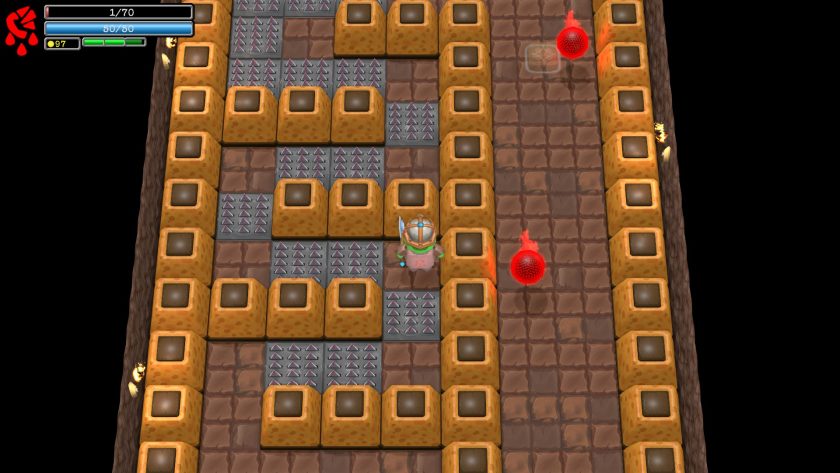
The puzzles are probably the best part of the gameplay. The main dungeon, as well as several mini-dungeons scattered around the map, has a variety of puzzles to conquer. Sometimes, you’re navigating yourself and a clone through some deadly spikes; sometimes, you need to direct a crystal into a target; other times, you must find a specific code to open a door. Some of the puzzle themes are repeated, but I was impressed by the variety on display. There was the occasional cheap one where failure would kill you in a single hit.
The other niggle worth mentioning is the game does repeat the same door-opening animation when you solve a puzzle. This is where a stone slab rotates and drops to the floor, with the grindy stone sound effects included. I saw this animation so much I started having weird dreams about it. While I liked the puzzles, I didn’t see a lot here that makes this adventure stand out from its inspiration, but it does an admirable job.
Conclusion: An Orc With Rough Edges
It’s easy to look at Shalnor Legends 2: Trial of the Thunder and write it off as a Zelda clone that doesn’t quite reach the heights of that series. However, that is not how I have chosen to view it. While it’s not without faults, this is a big step up from the developer’s first game in the series, both in terms of graphics and gameplay.
This is another example of a game where the effort and love from the developer shows, plus you get to play as an Orc for a change. It also launched without any glitches or bugs that I could spot. If the developer keeps at this trajectory, I don’t doubt that their future projects will be truly special. So long as you look past some rough edges, a satisfying adventure awaits if you choose to set sail.
Final Verdict: I Like it
