

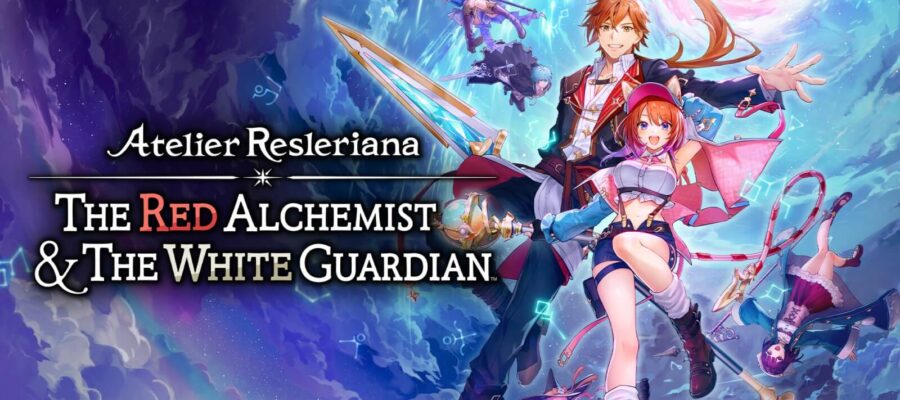
Game: Atelier Resleriana: The Red Alchemist and the White Guardian
Genre: RPG
System: Nintendo Switch (Also on Steam (Windows) and Playstation)
Developer | Publisher: Gust | Koei Tecmo
Age Rating: US Teen | EU 12+
Price: (for the base edition) US $59.99 | UK £49.99 | EU € 59,99
Release Date: September 26th, 2025
Review code used, with many thanks to Koei Tecmo Europe.
At the beginning of 2025, Atelier Yumia: The Alchemist of Memories & the Envisioned Land was released, and after the highly successful Secret Trilogie with Ryza as the main star, it was interesting to see what direction Gust would take. After all, Atelier Yumia featured an open-world design, entirely overhauled synthesis, combat, and exploration systems. I did like the game, but as I stated in my conclusion:
I must admit to looking back longingly to the fighting and synthesising systems in Atelier Ryza and earlier games. The fighting feels too much like button mashing for me, and I miss all the complexity of synthesis of older Atelier games.
Can you imagine my joy when diving into Atelier Resleriana: The Red Alchemist and the White Guardian? Turn-based fighting is back, the synthesis system is a bit more beefy, and the more linear map is back. All fine by me! Let’s see if Atelier Resleriana is a worthy game in the series.
The Story and The Protagonists
Atelier Resleriana begins with a poignant tale of two protagonists: Rias Eidreise and Slade Clauslyter. You can choose to play as one of them, though, as they meet up pretty soon in the game, it doesn’t make a lot of difference in the rest of the gameplay. But all through exploring dungeons, you can easily switch between the two.
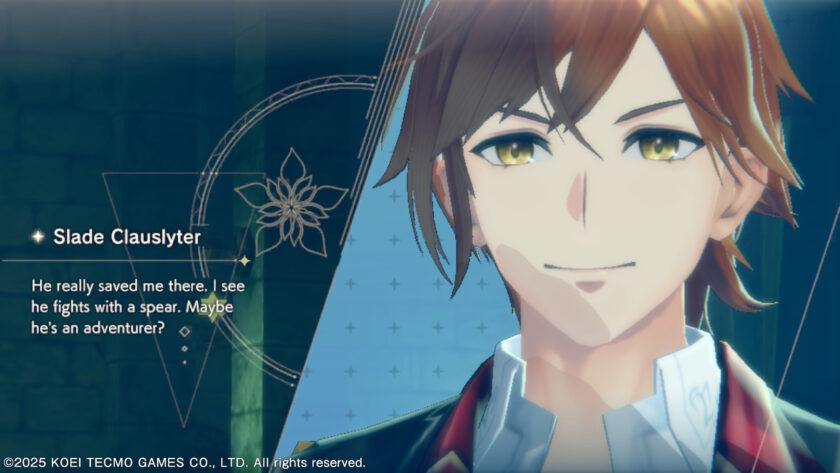
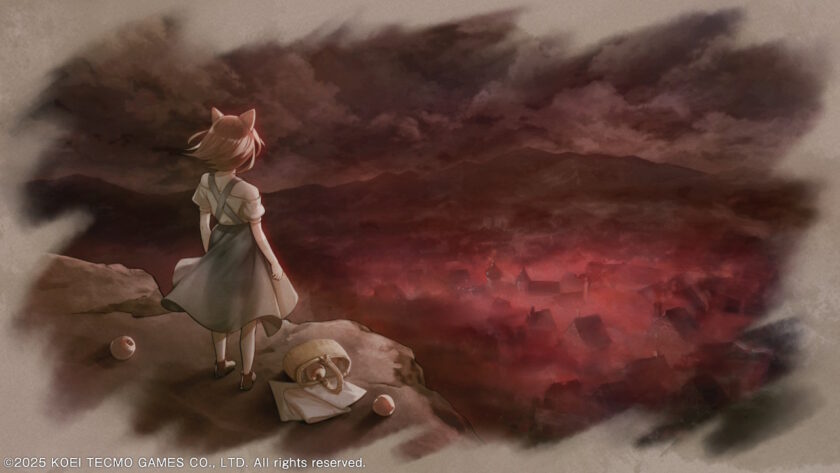
Both carry the weight of the past, one that they share. Twelve years ago, their hometown of Hallfein was swallowed up by a mysterious red mist. The entire population vanished, and in their place, monsters roamed the streets. Rias lost her beloved grandfather, a kindly shopkeeper who had raised her and was cherished by travellers from far and wide. Slade, meanwhile, lost his parents, who left behind powerful artefacts for him known as Geist Cores.
Rias is your typical Atelier girl, enthusiastic, bubbly and energetic, and as a series first, a Beast girl. Slade is much more practical and even-humoured. Their relationship deepens very quickly after they first meet, which is noticeable as romance is hardly ever on the table in an Atelier game. Maybe it’s because Rias and Slade share some heartfelt scenes throughout the story, showing how they are still hurting over the devastating events of their childhood.
The Fairies and The Wanderers
On their first journey together, Rias and Slade stumble upon a long-abandoned atelier. It’s here they discover the true potential of the Geist Cores: they can unlock Dimensional Pathways, leading to procedurally generated dungeons in faraway lands. They look unreal with their special colouring, and change every time you enter.
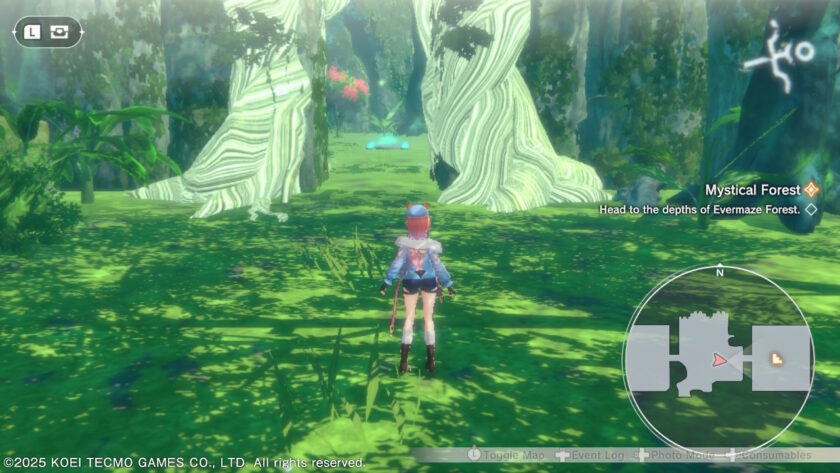
Slade has a book that details alchemy and the red mist event, but to get the text to appear in the book, they have to put the book on pedestals found throughout the dimensional paths. Within these shifting realms, the pair also meet fluttering friends: tiny fairies who quickly become a part of the gameplay.
As Rias and Slade set about rebuilding Hallfein, which is now overseen by Rias’s sister, Camilla, they’re joined by a colourful cast of familiar faces from earlier Atelier titles. These returning characters, known as Wanderers, have found their way into Rias’s world through some rather convenient twists of fate. A handful become playable party members, like Willbel, while some settle in at Star Landing, the heart of Hallfein. From there, they offer side quests, support, and a touch of nostalgia for long-time fans of the series. It was a bit jarring at first to see one of my favourites, Ayesha, appear. After that, I looked forward to seeing more old friends’ faces.
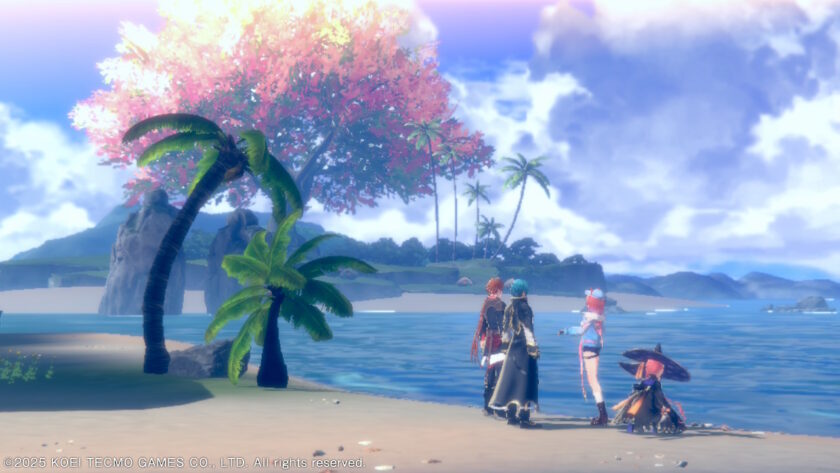
With the fairies by their side, and joined by familiar faces from earlier Atelier titles, Rias and Slade begin to piece together the mystery of Hallfein’s destruction. As they delve deeper into the truth, they also take steps to rebuild the town they once called home.
Battles in Atelier Resleriana
After experimenting with action-heavy combat in Atelier Yumia and mixing turn-based and action battles in the Ryza trilogy, Gust returns to classic turn-based roots in Atelier Resleriana.
Though battles unfold in a familiar rhythm, there are also a couple of fresh twists. Hold the A button in time, and you can partially block incoming attacks. And as the party grows, so too does the depth of the combat.
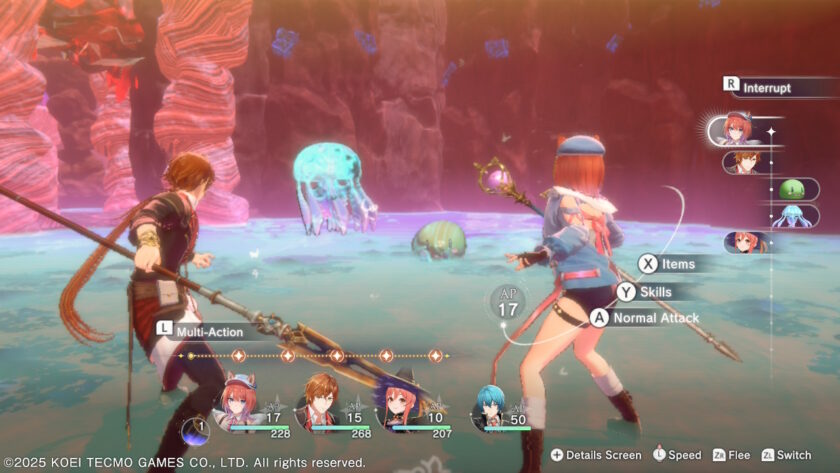
As is customary, in each turn, you’ll choose between standard attacks, the use of items you’ve made with alchemy, or TP-based skills. Every action carries one of seven elemental or physical traits, and enemies respond differently depending on their strengths and weaknesses. Turn order is clearly displayed on the right-hand side of the screen, along with upcoming buffs and debuffs. It’s fun to manage these, trying to make sure the buffs land on your party members and the debuffs on your enemy.
Every attack fills a Unity gauge at the bottom of the screen, and it’s up to you when you want to unleash multi-character combos. At its simplest, this means two or three party members attacking at once by means you choose for them. And if you’ve done it right, some combinations can also trigger bonus effects, dealing a lot of damage.
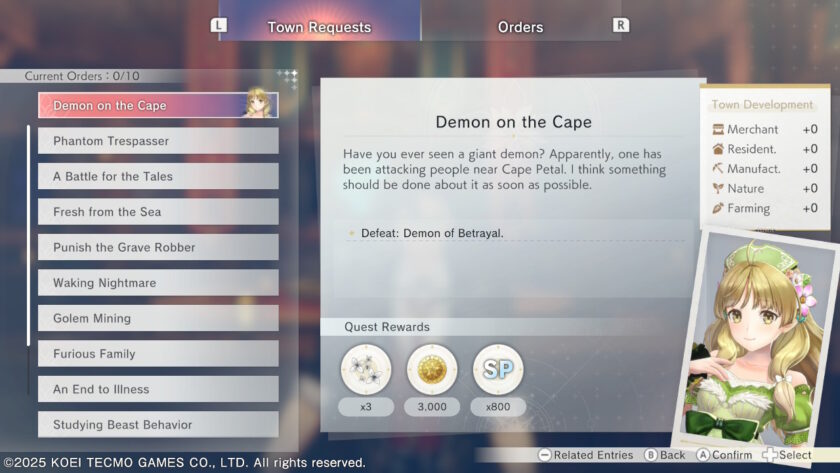
There’s plenty of room to experiment, especially when positioning characters in the front or back line. With a bit of planning, even tougher overworld encounters can be wrapped up in a single, satisfying turn. And when you feel stressed trying to take a very strong boss, you can also change the game’s difficulty mid-game, ranging from easy and normal to hard.
Alchemy in Atelier Resleriana
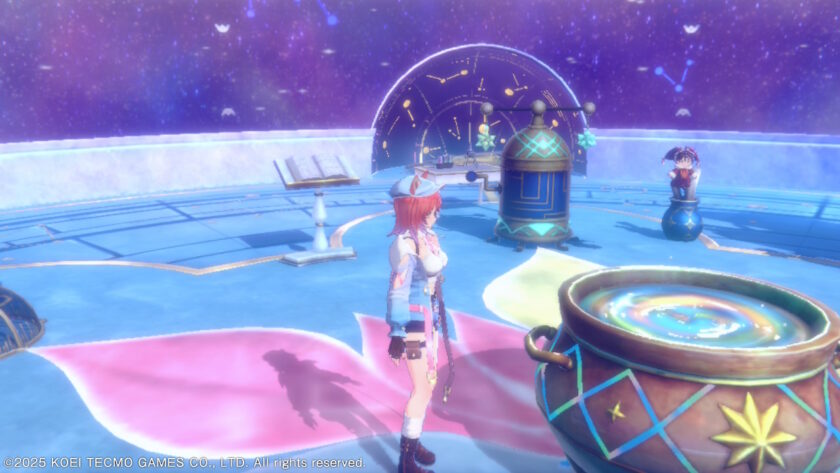
In the time period of Rias, alchemy is pretty much a forgotten art. So when Rias and Slade stumble on a fully fledged Atelier, it’s surprising that to Slade, the cauldron looks filled up with a nondescript liquid, while Rias sees the inkling of the mana that’s in there. Guess we know who the alchemist is of the two.
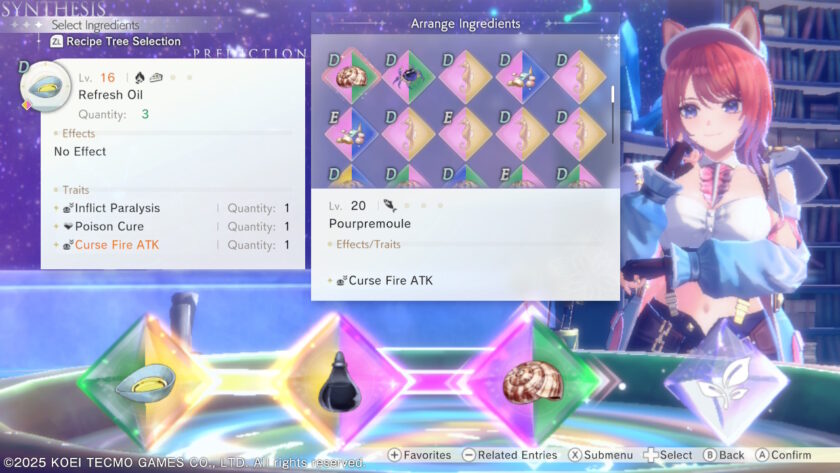
Gust has a habit of overhauling the alchemy system entirely with each series. In Atelier Resleriana, it revolves around matching ingredients based on colours. Every item has two attribute colours, left and right, and ingredients bring their own traits to the mix, such as boosting attack, enhancing defence, or adding elemental effects like lightning damage. Of course, the level of the item influences the level of the item you make as well.
When you craft an item, you select the required materials, and by linking colours (a bit like in dominoes), they can raise the item’s level and imbue useful traits. After that, you are free to add more items that can give extra traits, change the number of items produced or the number of uses in battle. The three most recent traits will carry over, and older ones are overwritten, so it’s not like you can choose which ones to keep. This calls for a bit of strategy, because if you’re keen to preserve a powerful trait, you can skip colour linking or try pairing similar traits to create stronger combinations.
Like in Atelier Ryza, a lot of base recipes also hide new recipes, unfolding like a tree of possibilities. With the right materials, you can evolve creations into something new. For example, in the tutorial, you can add a specific ice ingredient to a bomb recipe and obtain the recipe for an ice bomb.
The tutorial for Atelier Resleriana is great, much like we come to expect from the Atelier series. New mechanics are introduced gradually to alchemy, to battles and to the overall gameplay, so it’s not too overwhelming. I must say that I still liked Atelier Ryza’s alchemy system more, but that might just be a matter of personal preference.
Eventually, you’ll unlock the ability to clone items and enhance them further, with help from fairies and party members. These shortcuts cost in-game currency in the form of cole, but so far, I haven’t been short of that, thanks to two new gameplay features.
Running Mistletoe Miscellaneous and Restoring Hallfein
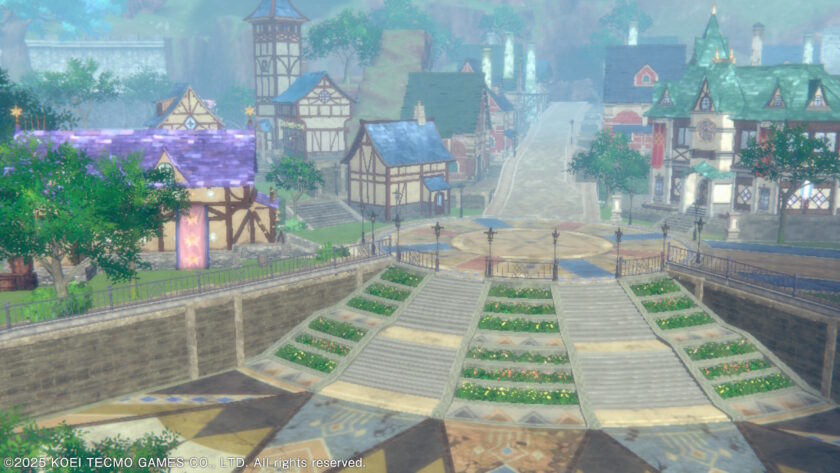
Cole is what makes the world of Rias go around…isn’t it always the case? You need Cole to restore Hallfein to its former charm, and as Rias’s sister, Camilla, is in charge of the improvements across the town’s five districts, it’s a bit of a personal goal too. Each area can be upgraded individually by investing Cole in them. Pretty soon, the town turns into a veritable shopping fest, with shops and merchants popping up that have new supplies and rare alchemy recipe books.
To fund these upgrades, Rias takes over her late grandfather’s shop, a cosy little storefront called Mistletoe Miscellaneous. She wants it to turn into a hub for visiting people once more, like it was in the days of her youth. She can sell up to nine items per cycle; these items are displayed on shelves, and matching colours (like in alchemy) bring added benefits.
Of course, Rias and Slade are busy investigating the Dimensional Paths and the other areas in Lanterna. So the fairies are her little helpers: they can choose which items you will sell (but beware, they might sell an item you went to a lot of trouble for to make), but you can also intervene in this. They also take care of the actual selling and running the shop, where their levels in Customer Service, Cleaning and Inventory influence the sales.
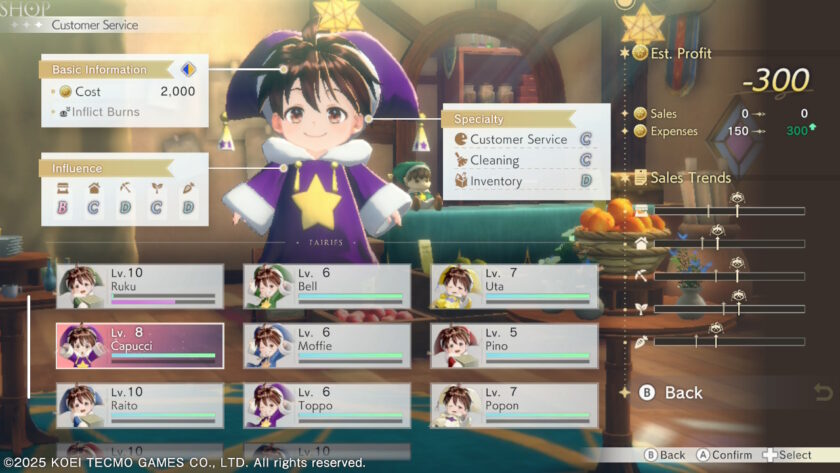
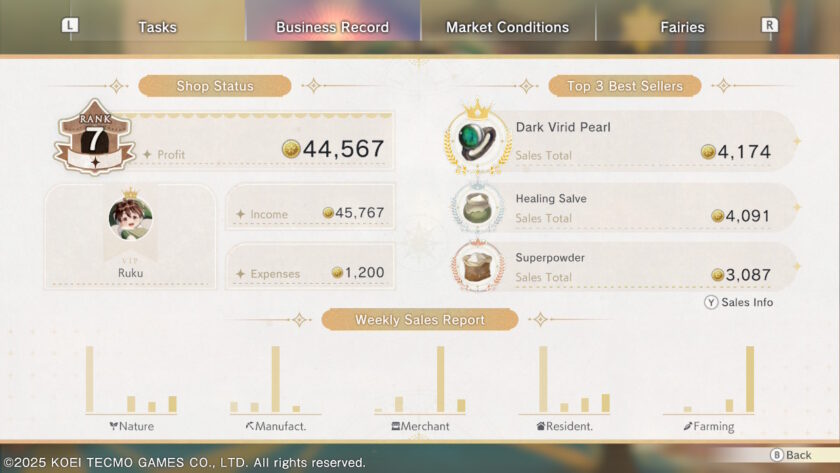
I would have liked the investments and the sales in the shop to be more hands-on on but maybe we would be talking about an entirely different game in that case! After all, this isn’t the more management simulation-oriented Atelier Nelke. As it is, I like the stats that you are presented with to show your efforts in building the shop and restoring the town. Seeing the town grow and visually change is well worth it, as it gets busier and busier.
Atelier games are always good when it comes to telling the story and the characters interacting with each other. Atelier Resleriana can also count this as one of the highlights of the game. Each of the NPCs has special quirks and background stories, and it’s fun to uncover those.
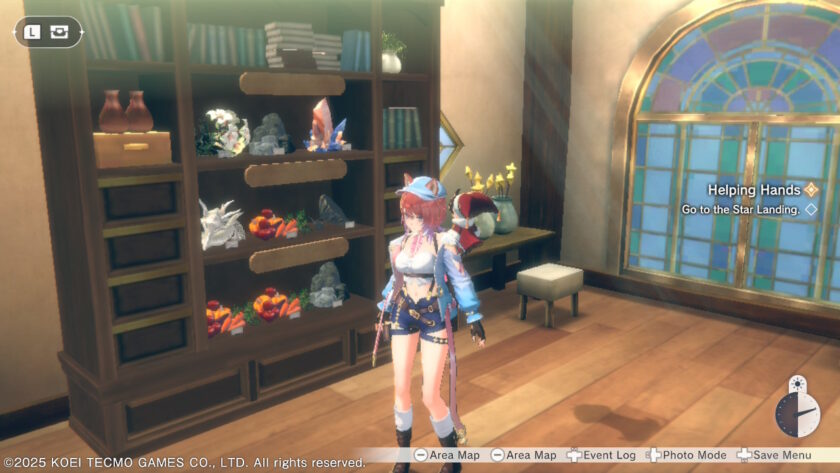
I have never played the mobile game that Atelier Resleriana stems from, but Resna makes an appearance and becomes Rias’ tutor. Other faces I did know, like Ryza and Ayesha. These wanderers from other worlds make a short appearance and can help in the restoration of Hallfein. It’s fun to meet them in this game, but I don’t think it’s necessary to enjoy the game.
Soundtrack, Visuals and Other Things
As we have come to expect, the soundtrack of Atelier Resleriana is wonderful, and one that I hope will make its way to the streaming services. The game runs well in handheld mode on my Switch 2.
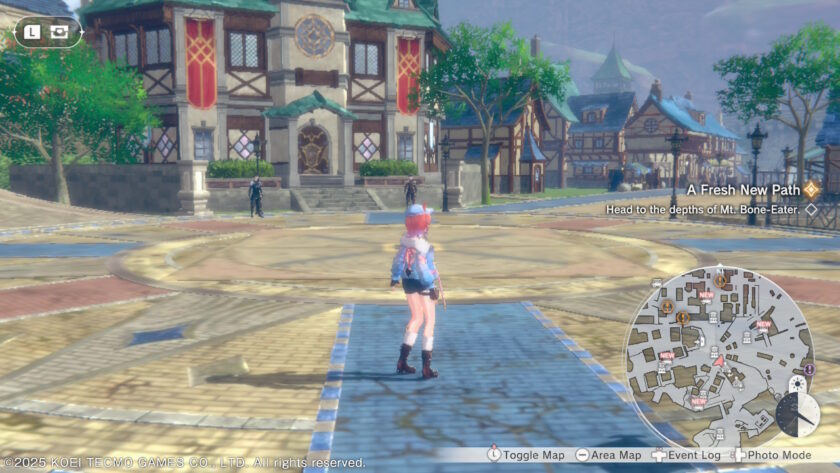
The visual style looks different from the more recent titles. Atelier Resleriana more resembled the older games like Atelier Sophie 2, with its storybook aesthetics. Character designs are vibrant but gentle, with expressive faces and outfits that blend fantasy flair with everyday cosiness. Atelier Yumia had a more mature high fidelity look, leaning more into the action-RPG direction it was taking.
Some quality of life improvements have been made, as you don’t have to hold the right tool to gather materials.
Conclusion for Atelier Resleriana: The Red Alchemist and the White Guardian
I have hesitated quite a while before giving my final verdict. I love that with Atelier Resleriana: The Red Alchemist and the White Guardian, Gust catered to us fans of the original series. As I understand it, this doesn’t mean that they won’t move along in the direction taken with Atelier Yumia; the two can exist very well together.
In the end, I decided on our highest rating. The turn-based fights, the new alchemy system and the depth of the characters and NPCs, plus the added Fairies and their hard work, make this an excellent cozy addition to the Atelier series.
Final Verdict: Two Thumbs Up
Do you like our content?
Subscribe to our daily news and never miss a review!