

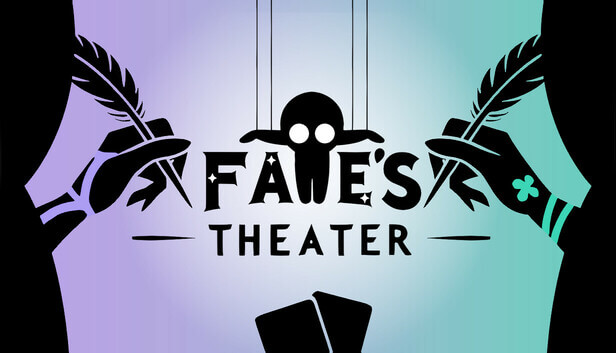
Game: Fate’s Theater
Genre: Casual, Indie, Simulation, Strategy
System: Steam (Windows)
Developer|Publisher: Totally Normal Creature
Controller Support: Yes
Steam Deck: Playable
Price: US $2.99 | UK £2.49 | EU € 2,99
Release Date: February 17th, 2026
Review code provided with many thanks to Keymailer.
Fate’s Theater – Fate is in Your Cards
Some card games are about numbers. Some are about brute-force tactics. Fate’s Theater is about stories, tiny, mischievous, often dark little stories that play out in two rhyming lines.
At first glance, it looks simple. Two players. A deck of fantasy-flavoured cards. A handful of tokens. But spend a little time with it, and you’ll discover something surprisingly thoughtful hiding beneath its shadowy stage curtains.
It’s part strategy game, part narrative toy, and it grows on you the more you lean into its rhythm.
Fortune vs Misfortune
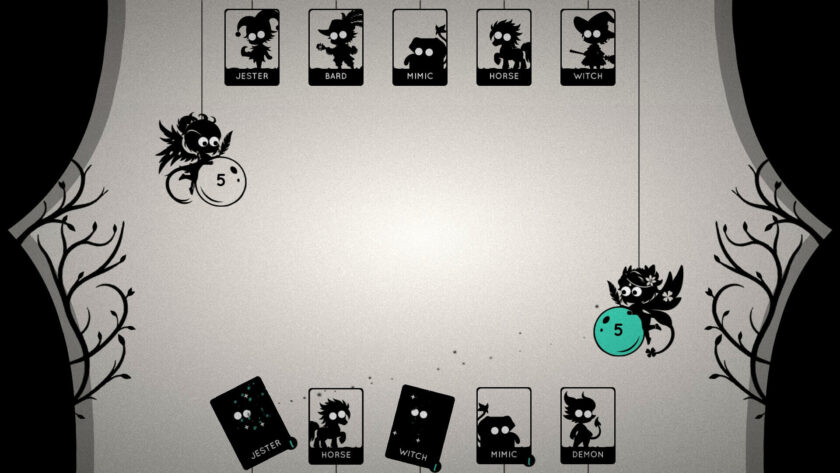
The setup sees one player take the role of the Fairy of Fortune. The other becomes the Fairy of Misfortune. Each begins with a deck of character cards, fantasy archetypes like clerics, pixies, strange creatures and wandering mortals.
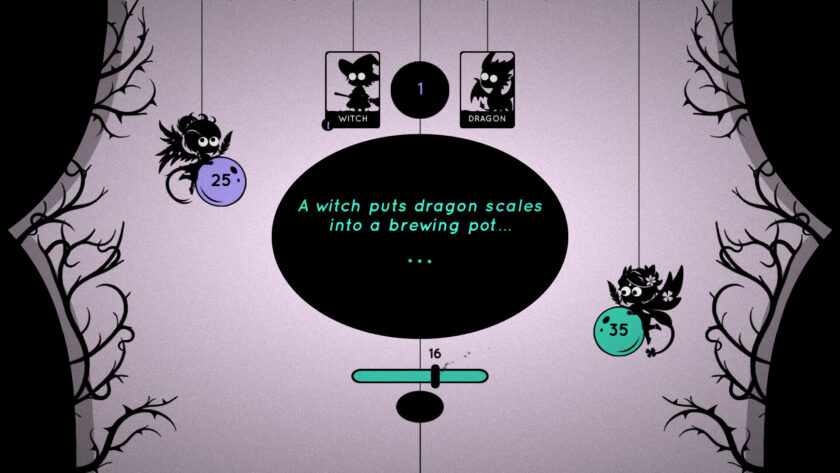
Each round, you draw and play a card against your opponent’s choice. When the two meet, the game generates a short, two-line rhyming tale describing their interaction. The outcome of that micro-story depends on who wins the round, Fortune or Misfortune.
The result? A branching couplet. Bright serendipity or gleefully grim doom.
It’s a clever hook. You’re not just trying to win cards. You’re deciding how the story ends.
And with over 400 hand-written micro-tales to uncover, there’s real incentive to experiment with combinations.
The Favour System
Where Fate’s Theater becomes more strategic is in its “Favour” system. This is how story outcomes are determined.
When cards clash, both players have a limited pool of tokens to play in order to determine fortune or misfortune. These are replenished slightly each round. You can dump a lot into a single round, or hold back and build up for a stronger play later.
Early on, I’ll admit I was slightly confused. My instinct was to throw all my favour into early clashes. But that quickly leaves you behind in future rounds. The game subtly teaches patience.
Sometimes sacrificing a weaker card without investing tokens allows you to stockpile resources for a decisive swing later. There’s a light mind-game element to it, predicting whether your opponent will go all in or play conservatively.
At the start of each round, one player can assign points of Fortune or Misfortune to specific cards, giving a sort of advanced handicap.
It captures that feeling of sitting across from someone at a real table, trying to read their next move.
Random Twists Keep Things Moving
Adding extra spice, the game occasionally introduces round modifiers. Perhaps certain characters can’t interact. Maybe one side gets bonus favour. Sometimes rules shift slightly, forcing both players to adapt.
These unpredictable elements prevent matches from feeling too mechanical. You can’t rely on a single strategy. You need to stay flexible.
That said, matches can run longer than expected. The game presents itself as a “coffee-break” experience, but when playing against the AI, I often found rounds stretching far beyond that. Comebacks are possible. I had matches where both sides were down to a few remaining cards before momentum shifted again.
It can feel like a tug-of-war that goes on just a bit too long.
An optional short-match mode with a set round limit might have helped tighten the experience for those wanting quicker sessions.
Still, if you’re playing on Steam Deck, which I did, the ability to suspend and resume makes longer matches far less of an issue.
Learning Curve and Accessibility
There is a tutorial, but it doesn’t explain everything as clearly as it could. Some mechanics only truly click after a few matches. The game is forgiving enough that learning through play feels natural rather than punishing.
Once it clicks, though, it’s very satisfying. You begin to develop your own rhythm. When to invest heavily. When to conserve. When to sacrifice a card strategically.
It’s not a brutally competitive strategy title. Instead, it sits comfortably in that thoughtful, gentle space where you’re engaged but not frustrated.
Even when luck isn’t in your favour, the unfolding stories soften the blow.
The Writing
What truly sets Fate’s Theater apart is its writing.
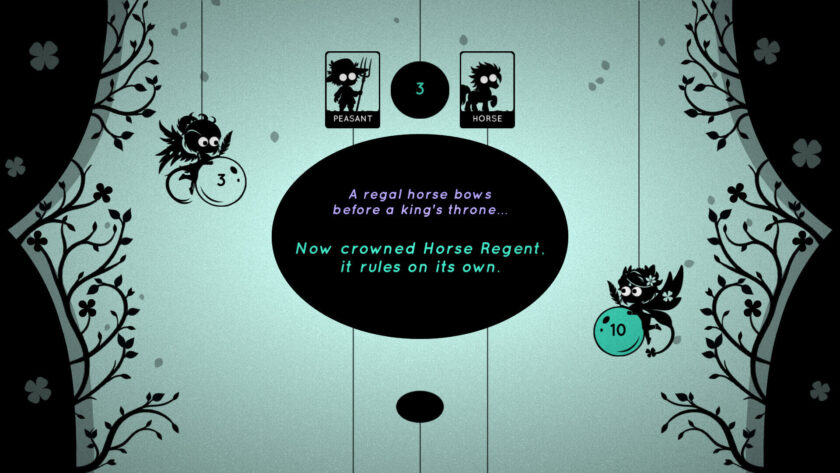
Every card interaction produces a tiny, rhyming couplet. Some are sweet. Some are morbid. Many lean into a playful dark-comedy tone. The contrast between cute presentation and occasionally grim outcomes gives the game personality.
You’ll find yourself curious to see what happens when a pixie meets a knight, for curiosity.
Collecting these revealed fates becomes a quiet goal in itself.
Presentation and Atmosphere
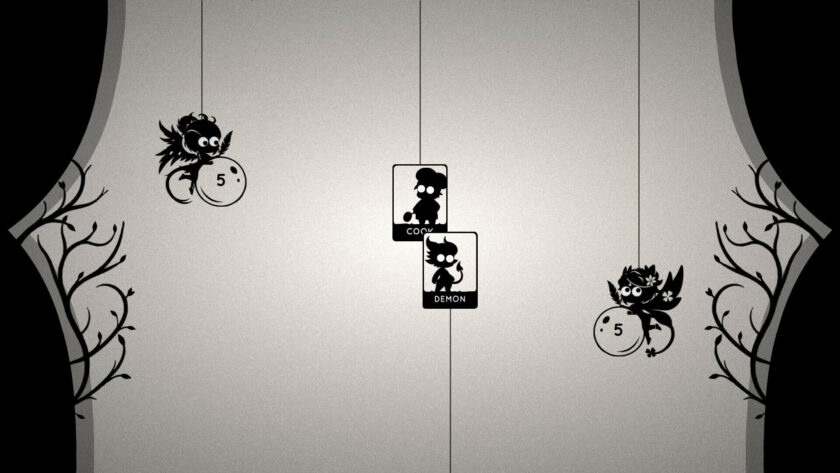
Visually, the game opts for shadow-puppet silhouettes on a theatrical stage. Characters appear as black cut-outs against moody backdrops. It’s minimal, but stylistic.
The dark fairy-tale tone is consistent throughout, slightly macabre but never grim. It feels accessible while still embracing its mischievous edge.
Music complements the experience nicely. Light fantasy themes hum in the background without distracting from the strategic thinking. It all feels deliberate and tidy.
Solo or Friendly Duels
You can play against AI or challenge another player. During my review, I stuck primarily to AI matches, which proved competent enough to keep things interesting.
Given the mind-game nature of the favour system, I can imagine online matches against a real opponent being where the game truly shines.
Reading a person is always more satisfying than reading a bot.
Conclusion: Memorable Theater
Fate’s Theater is a quiet surprise. It starts reserved, even slightly confusing, but grows richer the more you invest in it. Beneath its simple card clashes lies a clever balance of strategy, resource management, and storytelling.
It won’t satisfy those looking for deep competitive complexity. But for players who enjoy thoughtful duels, dark fairy-tale humour, and discovering strange little narrative outcomes, there’s something quite special here.
It’s gentle without being dull. Strategic without being stressful. And those tiny rhyming tales give it a personality.
For a modestly priced indie experience, it absolutely earns a recommendation.
Final Verdict: I Like it
Do you like our content?
Subscribe to our daily news and never miss a review!