

Code provided with thanks to The Tomorrow Committee
Letterally – A Roguelite Built for Word Nerds
There are plenty of roguelites out there that ask you to swing swords, fire bullets, dodge lasers, or survive endless hordes of monsters. Letterally looks at all of that and simply says: “What if instead you just made really good words?” I absolutely adore this idea.
This is one of those games where you immediately understand the concept within minutes, but then suddenly realise just how much depth is quietly sitting underneath it. The moment I started playing, it clicked with me almost instantly. As someone who has always had a soft spot for board games like Scrabble, this felt like somebody had taken that classic formula and reimagined it into a modern video game structure without losing what makes word games satisfying in the first place.
I played an early build of Letterally, and I came away extremely impressed. It already feels polished, addictive, and dangerously easy to lose track of time with.
Scrabble Meets Roguelite Design
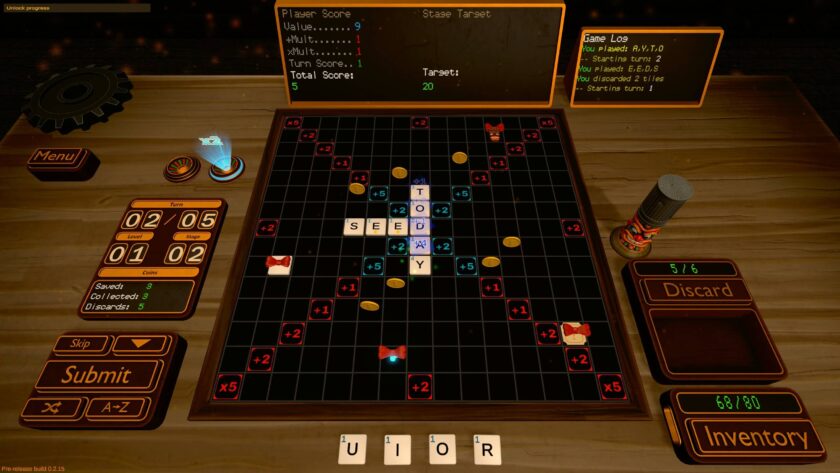
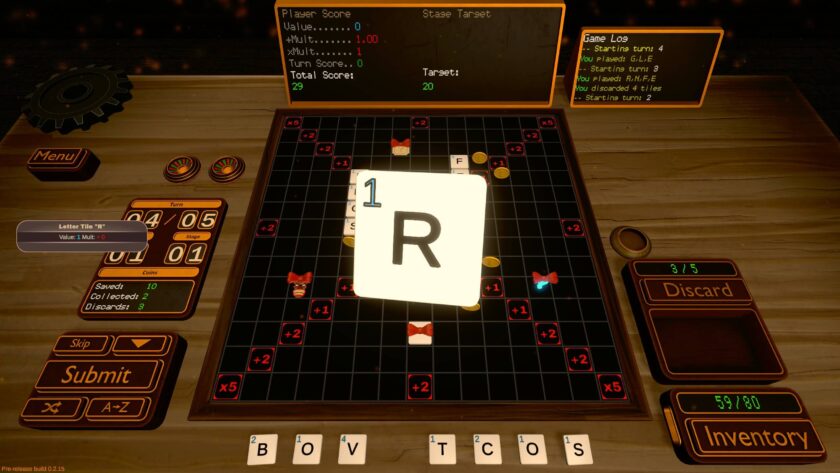
At its core, Letterally is fairly straightforward. You’re given a selection of letter tiles and must create words on a board in order to score points and clear stages. Certain spaces multiply your score, letters carry different values, and positioning matters quite a bit.
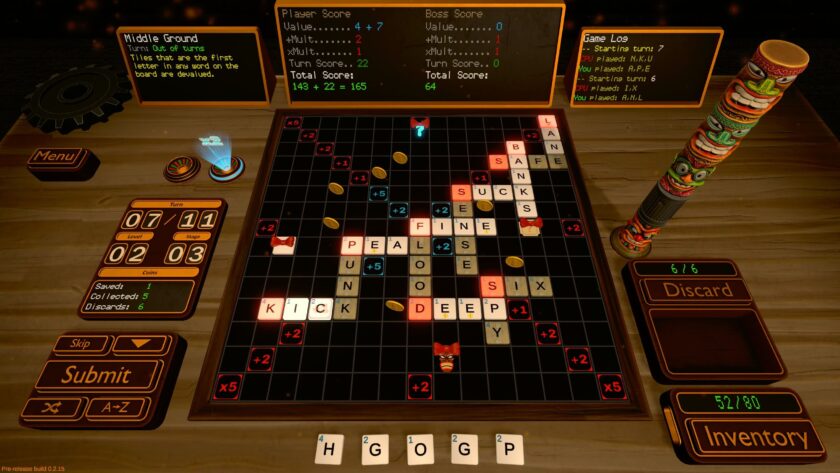
If you’ve ever played Scrabble before, you’ll immediately understand the basics here. What makes the game interesting is how it wraps that familiar structure inside a roguelite framework. Runs are split across multiple stages, with score targets to hit before eventually facing boss encounters. During normal stages, you’re largely trying to maximise points efficiently within a limited number of turns, but boss fights change things up significantly.
This time you’re competing with the boss instead of just score chasing alone. Each player takes it in turn to lay words down on the board. Its simple enough to start, but as you progress, the difficulty ramps up. Some bosses completely alter the rules you’ve gotten comfortable with. One bans certain letters entirely. Another makes vowels worthless. Others block sections of the board or punish specific placements. It constantly forces you to adapt rather than rely on the same strategy every run. That unpredictability gives the game a lot of replay value already.
Surprisingly Relaxing
One thing I really appreciated about Letterally is that, despite technically being a roguelite, it never felt stressful to me. That’s quite unusual for the genre.
This is very much a sit-down-with-a-coffee kind of game. You stare at your tiles, scratch your head for a minute, shuffle possibilities around mentally, then suddenly land on a really satisfying word placement that explodes your score. That little dopamine hit when a good word lands in exactly the right place is extremely satisfying. I also liked that the game lets you play at your own pace. There’s no frantic timer forcing decisions. You can genuinely sit there and think things through carefully, which makes it feel far more strategic and thoughtful than many modern roguelites. There’s a nice rhythm to it.
Roguelite Systems
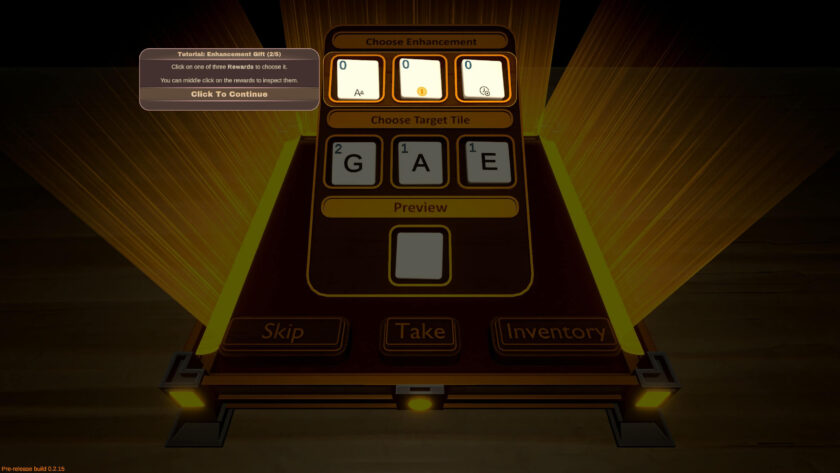
Now, of course, because this is a video game and not simply digital Scrabble, there are lots of extra mechanics layered on top. You can discard unwanted letters for fresh ones, though discard usage is limited during certain stages. Interestingly, if you avoid using discards entirely, you’re rewarded with bonus coins instead. Little risk-and-reward systems like that add a nice tactical edge.
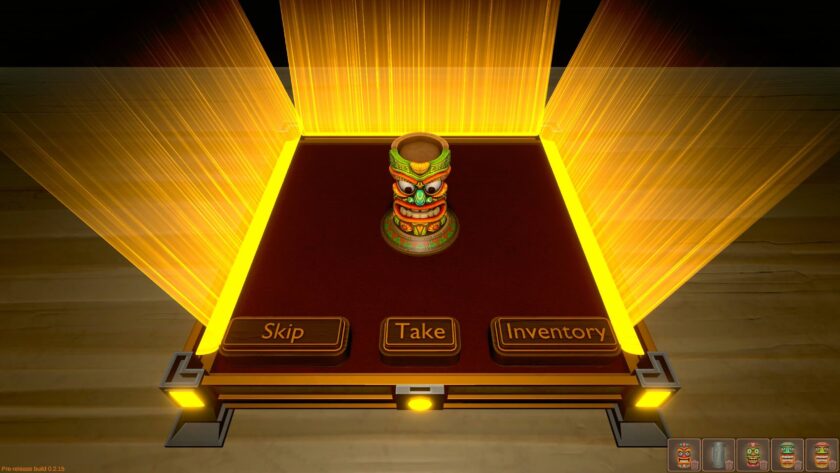
Between stages, you can spend currency on perks, tile upgrades, relic-style totems, consumables, and modifiers that completely change how your run develops. Some boosts reward short words, others focus on specific letters or score multipliers. You can even permanently modify individual tiles with buffs, which starts creating some really entertaining synergies later on.
I actually found myself getting attached to certain letter combinations or upgraded tiles because they became the centrepiece of my strategy. Suddenly, you’re not just trying to make words anymore, you’re trying to engineer absurd score combos out of seemingly useless letters.
Easy to Learn
Accessibility is another thing the game handles well. The controls are incredibly simple since most interactions are just dragging and placing tiles with the mouse. You can understand how to play within minutes.
But mastering it? That’s another matter entirely. As runs progress, score requirements become much tougher, bosses get nastier, and your vocabulary starts getting tested in ways that might make you question whether you actually know the English language at all.
Thankfully, there are multiple difficulty options available. If you simply want a more laid-back word-building experience, you can absolutely have that. But if you’re the sort of person who practically memorises dictionaries for fun, there’s plenty here to challenge you too.
The additional challenge modes also look promising. I particularly enjoyed the more direct Scrabble-style versus mode against the CPU. It strips away some of the extra roguelite mechanics and focuses more heavily on pure wordplay strategy.
Presentation and Atmosphere
Visually, Letterally keeps things fairly clean and readable. The game leans into a sort of cosy tabletop aesthetic with wooden textures, fantasy potion-shop vibes, and little decorative touches that make it feel warm without becoming distracting.
The soundtrack didn’t fully stick with me, though it suits the game’s relaxed nature well enough. It mostly fades into the background while you focus on planning words and chasing multipliers. What I did enjoy quite a lot were the sound effects. The satisfying clicks of placing tiles, the little score bursts, and the feedback from successful turns all feel very rewarding. Those small details matter a lot in games like this.
Final Thoughts
Letterally feels like one of the freshest roguelite ideas I’ve seen in quite a while. It takes something as classic and old-school as a word board game and somehow turns it into an addictive strategy experience that still feels relaxing to play.
That balance is surprisingly difficult to achieve. If you enjoy word games, Scrabble-style gameplay, or slower-paced strategy titles that let you properly think through your moves, this is absolutely one to keep an eye on. I had a fantastic time with this early build already, and I’m genuinely excited to see how the full release shapes up later this year.
It won’t convert people who completely hate word games, of course, but for the audience it’s targeting, this feels like it could become something really special. I’m already looking forward to jumping back in for another run. A free demo is available on Steam.
Do you like our content?
Support LadiesGamers as a member on Patreon!
 Or buy us a cup of coffee or tea on Ko-Fi!
