

Game: Nothing Beyond This Point
Genre: Action, Indie, RPG
System: Steam (Windows)
Developer|Publisher: Dieuwt
Controller Support: Yes
Steam Deck: Playable
Price: US $4.99 | UK £4.29 | EU € 4,99
Release Date: March 24th, 2026
Review code provided with many thanks to the Dieuwt.
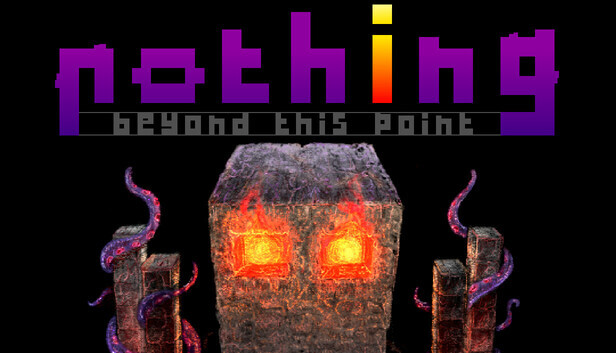
Nothing Beyond This Point – A Journey Into The Unknown
Nothing Beyond This Point is one of those indie games that doesn’t quite explain itself right away. You start the game in a vast, dark void with very little context and almost no guidance. At first, it’s confusing, even a little disorienting, but that sense of uncertainty seems to be part of the design.
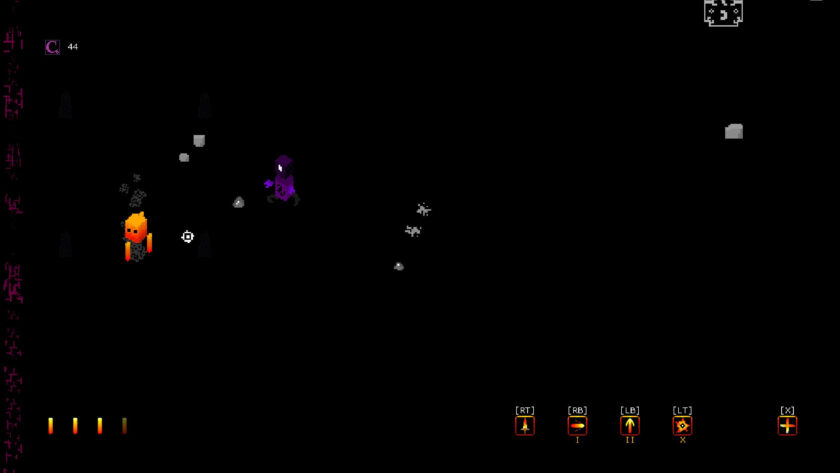
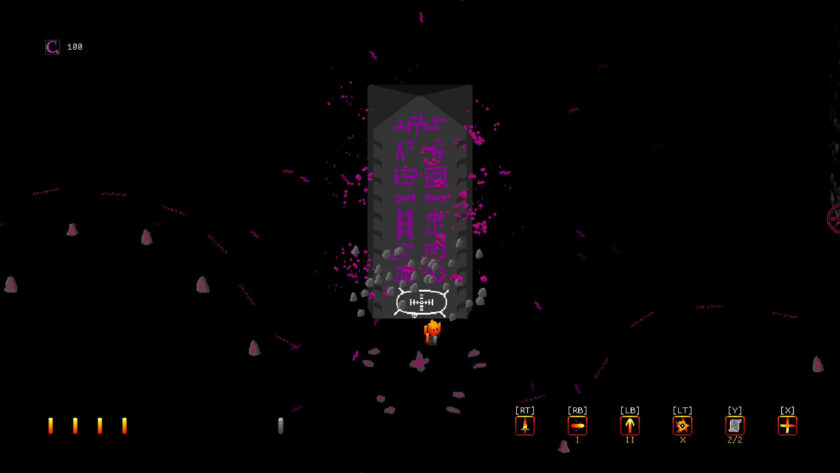
You control a small glowing pixel creature moving through this endless darkness. The world around you is mostly black, with only the occasional enemy or structure breaking up the emptiness. There’s no clear path forward when you begin. You simply move in a direction and see where it takes you.
Sometimes that leads somewhere new. Other times you’ll realise you’ve looped back to a place you’ve already visited. It’s a game built around curiosity, and it encourages players to keep exploring even when they’re not entirely sure what they’re looking for.
That sense of mystery became one of the most interesting aspects of the experience for me. The game never really spells out what’s happening in the void, and the atmosphere leaves a lot open to interpretation.
Combat With A Risky Twist
The most unusual feature of Nothing Beyond This Point is its combat system. Instead of a traditional health bar and weapon system, the game combines both into one mechanic. Your character is surrounded by glowing rods that rotate around them. These rods act as both your health and your ammunition.
You can use them offensively by launching them at enemies or using certain abilities. However, every rod you spend attacking also reduces your protection. If enemies hit you while you’re running low on rods, you’re in serious trouble.
It’s an interesting idea because it forces you to constantly balance aggression and survival. Attacking enemies quickly might clear the area, but it also leaves you vulnerable. Playing too cautiously can make fights drag on longer than necessary.
There are several abilities that help expand the combat system as you progress. You start with a small, safer close-range attack, but soon unlock options like long-range projectiles and area attacks. There’s also a charging ability that allows you to recover rods, which becomes essential during longer encounters. When everything clicks, the system can feel quite satisfying. But it can also lead to moments of frustration, especially when mistakes are heavily punished.
Exploration In A Featureless World
The void itself is intentionally minimalistic. Most areas are dark and empty, with enemies appearing suddenly from the darkness. The pixel art style is simple but effective, creating an atmosphere that feels mysterious rather than detailed.
The game eventually provides a map system, though it remains fairly vague. Navigation is still largely about trial and error. You’ll spend a lot of time moving through rooms, searching for pathways, and figuring out where progression might be hiding. Waypoints and beacons occasionally give hints about where to go next, but exploration still requires patience. The game rarely points you directly in the right direction.
Some players will enjoy this approach, especially those who like discovering things for themselves. Others may find it frustrating when progress feels unclear.
A Dark Atmosphere
The presentation of Nothing Beyond This Point fits its concept well.
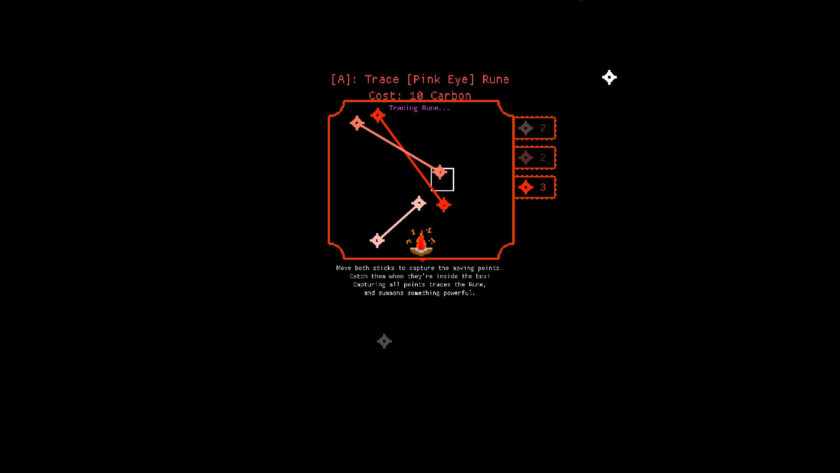
The world is quiet, dark, and often unsettling. Enemies appear as strange, shadowy creatures that feel just as mysterious as the environment itself. Combined with the haunting soundtrack, the game creates a strong sense of isolation. What I found interesting is that the tone isn’t necessarily negative or depressing. It doesn’t feel uplifting either. Instead, it sits somewhere in the middle, exploring the idea of the unknown rather than pushing a particular emotional message.
The lack of characters, towns, or typical RPG elements reinforces that feeling of solitude. You’re simply navigating the void and trying to survive whatever appears in front of you.
Where The Frustration Creeps In
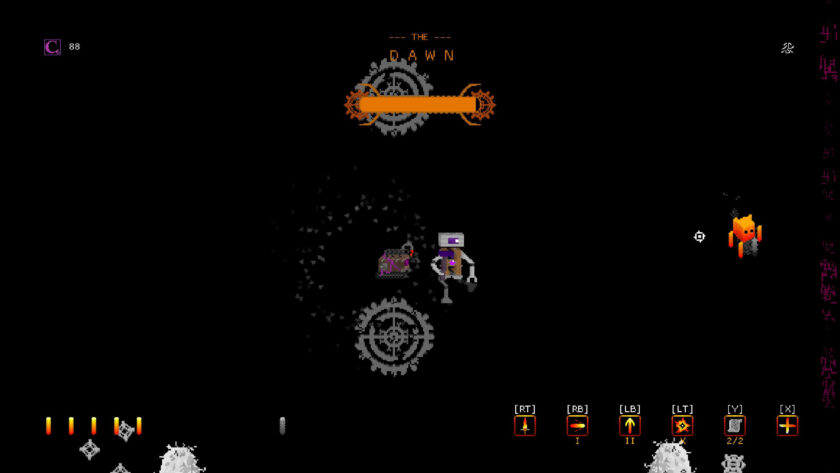
While the game’s ideas are interesting, a few elements didn’t completely work for me. The rod system is clever in theory, but it can be frustrating in practice. Running out of rods during a fight leaves you extremely vulnerable, and some encounters feel punishing if you make a single mistake. Boss fights were particularly challenging in my experience. Some of them felt a bit overwhelmed, with enemy behaviour that made battles harder than they perhaps needed to be.
Exploration can also become slightly tiring at times. While the mystery of the void is compelling, there were moments when I simply wasn’t sure where the game wanted me to go next. That said, these frustrations didn’t completely ruin the experience. They just made certain sections feel tougher than expected.
Conclusion: The Plus Side of the Void
Nothing Beyond This Point is a unique indie action RPG that leans heavily into mystery. Its unusual combat system, minimal guidance, and dark atmosphere create an experience that feels quite different from most games in the genre. The idea of using your health as both offence and defence is clever, even if it occasionally leads to frustrating moments.
Exploration through the void can be intriguing, but it also requires patience. Players who enjoy discovering things for themselves will likely appreciate the approach, while those who prefer clearer direction may struggle with it. For such a small and affordable game, though, it offers a surprisingly distinct experience.
It may not click with everyone, but for players looking for something unusual and willing to explore a strange world with very little guidance, Nothing Beyond This Point is definitely worth a look.
Final Verdict: I Like it
Do you like our content?
Subscribe to our daily news and never miss a review!