

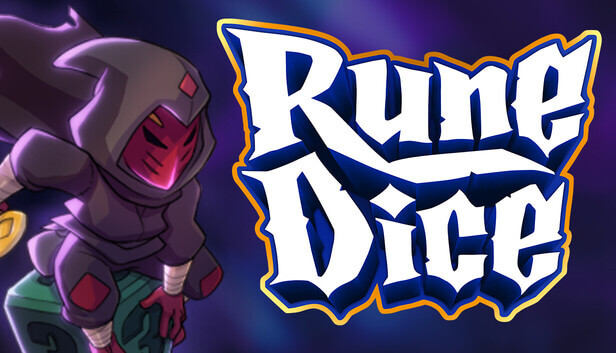
Game: Rune Dice
Genre: Strategy, Indie, RPG.
System: Steam (Windows) (also on Nintendo Switch)
Developer|Publisher: Smart Raven Studio | Kwalee
Controller Support: Yes
Steam Deck: Playable
Price: US $12.99 | UK £11.79 | EU € 12,99
Release Date: May 19th, 2026
Review code provided with many thanks to Press Engine.
Rune Dice – Dice and Dungeons
Certain roguelites immediately grab you within the first ten minutes. You know the type. You finish one run, tell yourself you’re done for the evening, and then suddenly it’s somehow midnight, and you’re still sitting there muttering, “Alright, one more go.” That was basically my experience with Rune Dice.
At first glance, it looks fairly simple. Pixel-art fantasy world, heroes, monsters, dice mechanics, branching paths, all fairly familiar territory for the roguelite crowd these days. We are absolutely drowning in these sorts of games lately. But Rune Dice manages to stand out because its core gameplay loop is just ridiculously satisfying to interact with.
Throwing Dice Has Never Felt This Good
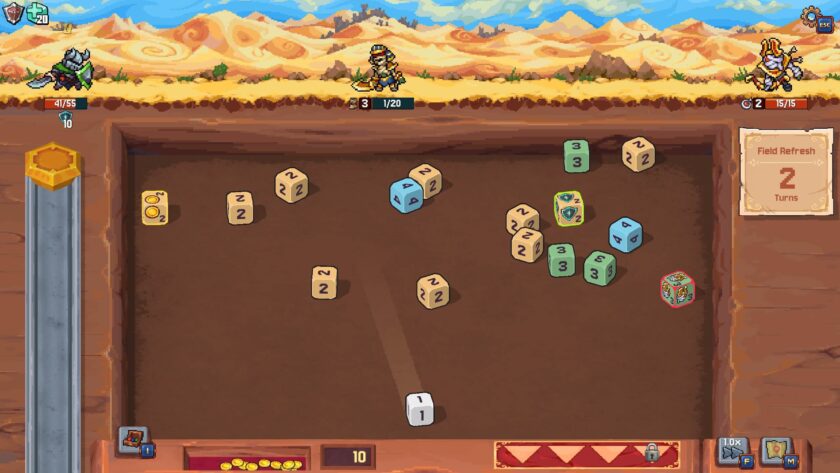
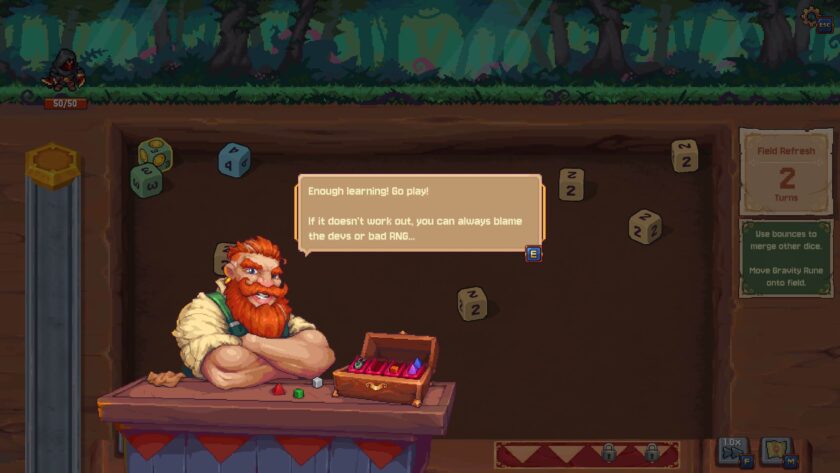
The main hook here is the dice-combining system, and it’s one of those mechanics that sounds a little odd when you explain it out loud but becomes instantly addictive once you actually play it.
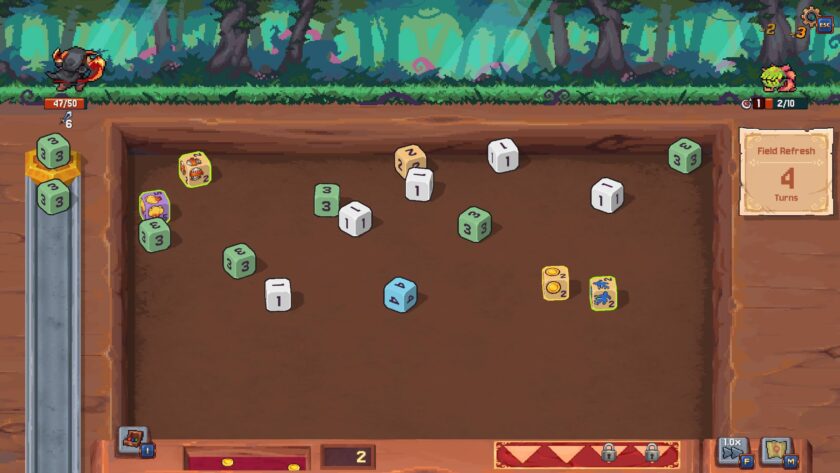
You’ve got a board full of numbered dice. You launch your own dice across the field, aiming to hit matching numbers. When matching dice collide, they combine into a higher number, which can then chain into other matching dice nearby. So two ones become a two, that two merges into another two to make a three, and so on. The really fun bit is watching those chain reactions unfold.
Sometimes you’ll line up a throw just right and suddenly half the board starts merging together like a magical domino effect. Your character then attacks enemies based on the dice combinations you created, while special dice can trigger healing, poison, shields, bonus coins, and other effects. It’s extremely easy to understand but surprisingly difficult to stop playing.
There’s also a slight physics angle to it all, which adds a bit of unpredictability. Occasionally, I did have moments where a dice felt like it should have merged with another nearby dice, but didn’t quite connect properly. It can feel a touch finicky now and then. Thankfully, those moments were rare enough that they never really spoiled the fun. Most of the time, the gameplay just flows beautifully.
Simple Mechanics, Big Satisfaction
One thing I really appreciated about Rune Dice is how approachable it feels compared to a lot of modern roguelites. Some games in this genre throw twenty different systems at you immediately and expect you to memorise spreadsheets before you can enjoy yourself. Rune Dice keeps things much more relaxed. The mechanics are straightforward, the runs are easy to understand, and you’re never overwhelmed with information.
That doesn’t mean the game lacks strategy, though. As you progress, you’ll unlock new dice, relics, runes, and hero classes that dramatically change how you approach battles. Some builds focus on poison damage, others lean into defence, lightning attacks, combo chains, or support abilities. There’s enough variety here to keep experimenting with different setups without the game becoming exhausting.
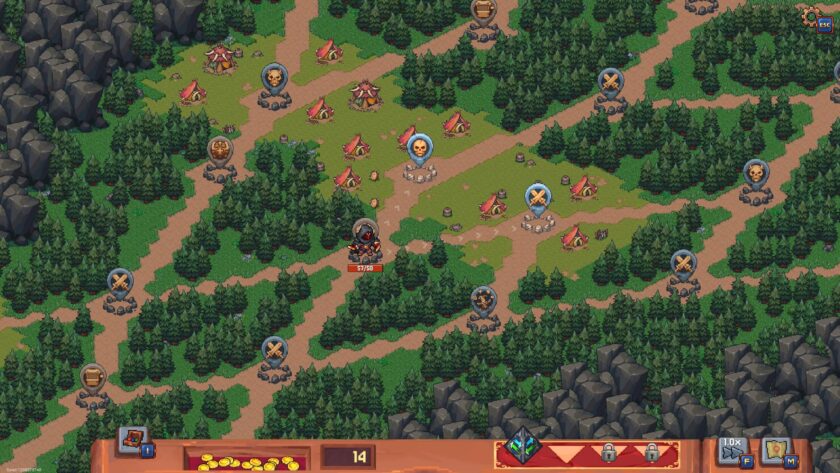
I also really liked the run structure itself. You move across branching paths, choosing between standard battles, harder encounters, vendors, minibosses, and various upgrade opportunities. It gives you enough decision-making to keep runs interesting while still remaining easy to follow.
And thankfully, the game respects your time too. You can pause a run and continue later, which makes it ideal for Steam Deck sessions or just playing in short bursts after work.
Difficulty That Welcomes You In
A lot of roguelites can feel brutally unforgiving right from the start. Rune Dice takes a much softer approach initially, which I think actually helps the game tremendously.
Early runs are fairly manageable, allowing you to learn the mechanics naturally without constantly getting flattened by impossible enemies. If you want more of a challenge, you absolutely can increase the difficulty later, but the default balance feels welcoming.
That’s important because the gameplay itself is already engaging enough without needing frustration piled on top. Even when I failed runs, I usually wanted to jump straight back in because there was always something new unlocking. New heroes, new relics, new gameplay modifiers, the game constantly feeds you fresh rewards and reasons to continue experimenting. It nails that dangerous roguelite “loop” exceptionally well.
Presentation Does the Job Nicely
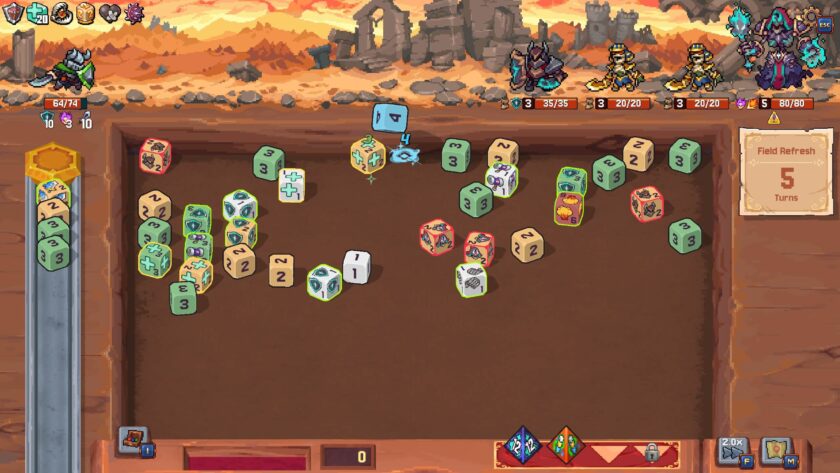
Visually, Rune Dice sticks with a fairly traditional pixel-art fantasy style. Forests, deserts, monsters, giant spiders, magical effects, it’s all pleasant enough to look at.
I wouldn’t say the visuals are doing anything groundbreaking, and the soundtrack probably won’t stick in my memory months from now either, but everything fits together comfortably. The important thing is that the gameplay itself remains clear and readable, especially during bigger combo chains. And those combo moments really are the stars of the show anyway. Watching your carefully lined-up dice trigger a massive sequence of merges while enemies get blasted apart is immensely satisfying every single time.
Conclusion: High Roller
Rune Dice is one of those wonderfully easy games to recommend. It doesn’t overcomplicate itself. It doesn’t bury the fun underneath endless systems. It simply takes one very good idea and executes it incredibly well. The dice-combining mechanic is addictive, the progression loop constantly rewards you, and the overall structure makes it dangerously easy to keep playing long after you planned to stop.
Sure, the presentation may not be especially flashy, and some players might find the gameplay a little too straightforward compared to deeper strategy roguelites. But honestly, I think that simplicity is part of the appeal here. I had an absolute blast with it.
Whether playing on a desktop or relaxing with it on the Steam Deck, Rune Dice became one of those games I kept wanting to return to for “just one more run.” And usually, that’s the biggest compliment I can give a roguelite.
A free demo is available on Steam and Nintendo eShop.
Final Verdict: Two Thumbs Up
Do you like our content?
Subscribe to our daily news and never miss a review!