



Game: As Long As You’re Here
Genre: Adventure, Puzzle, Point-and-click, Indie
System: Steam (Windows)
Developer|Publisher: Autoscopia Interactive
Controller Support: Yes
Steam Deck: Playable
Price: US $9.99 | UK £8.49 | EU € 9,75
Release Date: October 28th, 2025
Review code provided with many thanks to Press Engine.
There are times when you play a game that resonates deeply with you. A game that you really want to write about, but in doing so, you find it’s hard to find the right words. As Long As You’re Here is such a game. The game addresses the topic of Alzheimer’s disease, and I believe it does so in a unique way. After all, you don’t need flashing lights or dramatic cutscenes to feel the weight of memory loss. Sometimes, all it takes is a quiet room, a few misplaced objects, and the creeping sense that something isn’t quite right.
Life is Slowly Unravelling
You play as Annie, an elderly woman whose life is slowly unravelling due to Alzheimer’s. She has lost her husband, and as she is starting to have memory problems, the family has decided that Annie should move into the apartment that has freed up in the same building where her daughter lives.
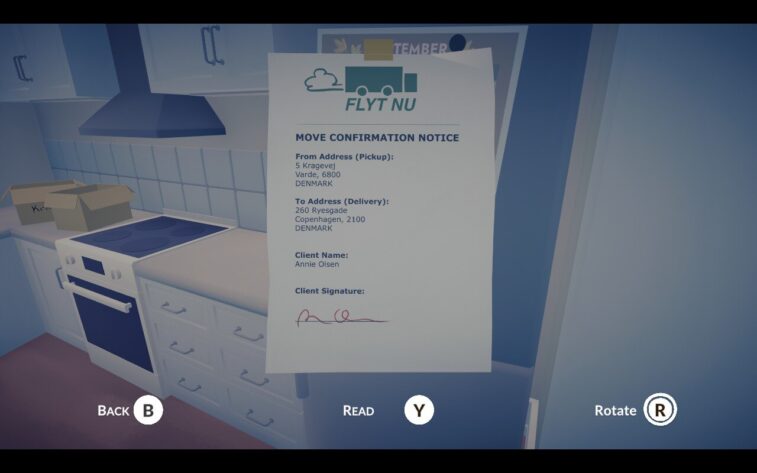
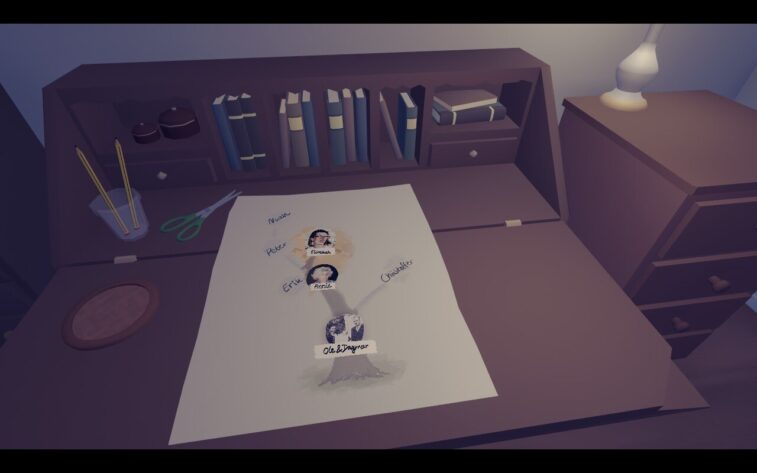
While her daughter tries to keep tabs on her mom, and her son is not doing enough for her (at least, from her daughter’s perspective), Annie is struggling to find her footing. Somehow, her memories are zooming in on her brother Christopher, and slowly, we learn why. The storyline is laid out as a drawing of a family tree, where Annie pastes photos of the real people in their right place.
There is hardly any text in the game. You only see the things the family says, and you get to choose from two possible answers when Annie responds. Do you want to let on that you’re uncertain of what they’re talking about, or just bluff your way through it? It’s remarkable how this developer was able to draw me into the game, despite its minimal environment and mostly point-and-click gameplay.
A Balancing Act of Remembering, Emotions, and Preserving Dignity
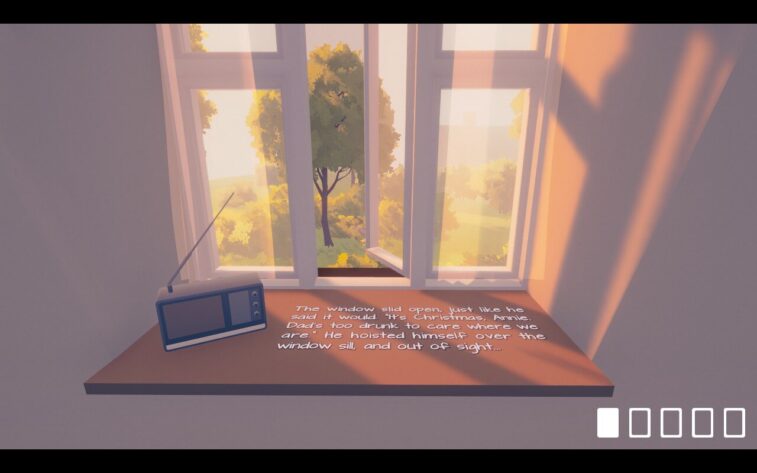
When I first started playing As Long As You’re Here, it felt like any video game, with unfamiliar surroundings, new gameplay to learn were and I had a good time exploring. But as each day turned into the next, I felt the monotony, and I realised that for Annie, every day was starting fresh, living in new surroundings.
I started noticing things weren’t quite right. Without words, I could feel Annie’s panic when the bathroom door was suddenly closed behind her, and water in the wash basin was almost overflowing, while I hadn’t turned on the tap earlier. Her puzzlement when the week-dispenser for her pills didn’t align with the right day of the week. And the dread when the stairway that wasn’t there before seemed to go down forever.
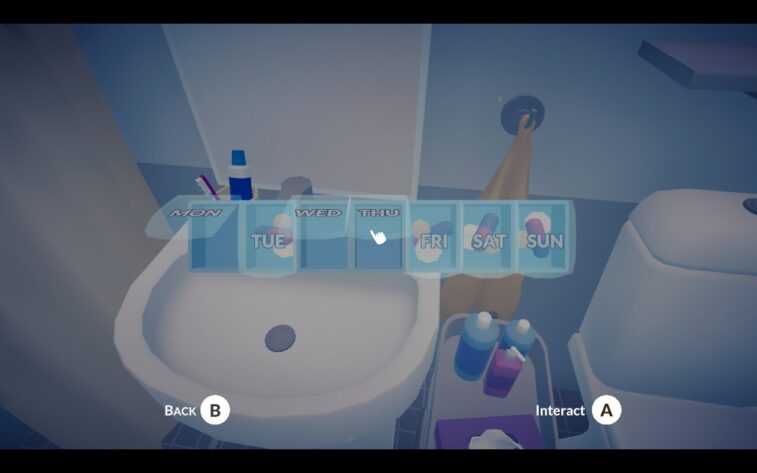
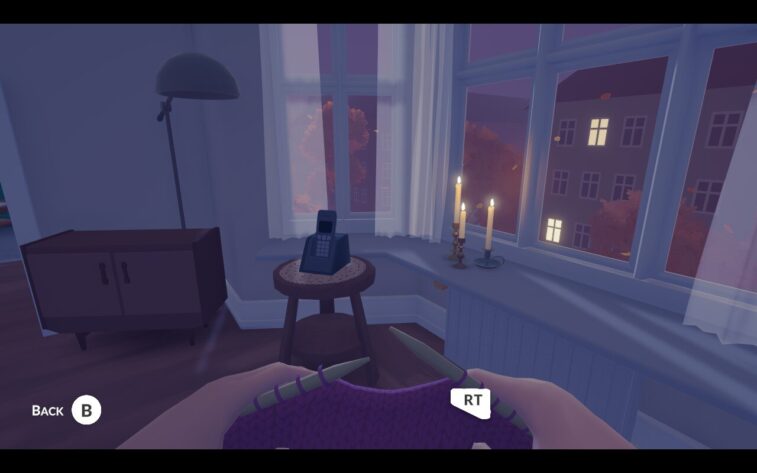
Soon things got worse, memories were bleeding into the present, the apartment changed constantly and things I was sure I already did, like dousing the candles, needed doing again. It got more difficult to keep the date and time right and to know what was real and what was not. It gave me an unnerving feeling, checking to see if I had closed the windows twice before turning in.
I was keenly aware that for Annie, it was a daily balancing act of remembering the past but also current appointments, managing her emotions and being susceptible to those of her family, and also of preserving her dignity.
Controls, Graphics and Sound
Although As Long As You’re Here isn’t Steam Deck certified, it played well on my Steam Deck. It lent itself well to the point-and-click gameplay and the free-moving camera. It is a first-person game, but fortunately, it didn’t trigger my motion sickness.
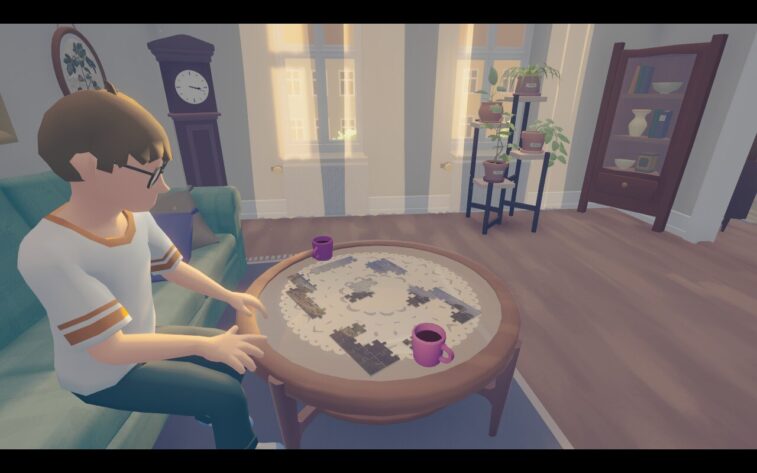
The graphics are clean, colourful in a wistful way, and the background sounds suit the story that Autoscopia Interactive is telling.
Conclusion for As Long As You Are Here
As Long As You’re Here does an excellent job of letting us see and feel what a person who has Alzheimer’s or another form of dementia is feeling. This one really struck home for me, as we are currently experiencing the same with my husband’s mother. When I wasn’t playing the game, it still stayed in my mind. I think it’s outstanding how creator Marlène Delrive managed this in what was initially an 8-week student project. She started working on this as a way of processing the grief and trying to understand her grandmother’s perspective in her final years, and you can experience it now, too.
Often, we talk about the sons and daughters and their struggle to raise their own kids, and meanwhile, take care of their elderly parents. As Long As You’re Here goes into that angle as well, and I can sympathise with Annie’s daughter. But the main focus is Annie, not explaining her condition directly in the game, but letting you feel it yourself.
Final Verdict: Two Thumbs Up
Do you like our content?
Subscribe to our daily news and never miss a review!
One comment