



Welcome to another edition of Paula’s Game Ramblings. If you like these random thoughts, you can find the other ramblings here.
Last month, I went for a walk down memory lane when I wrote about The Evolution of the Legend of Zelda games. Keeping to the same theme, this rambling is about the evolution of the very popular Dragon Quest series of games. Like the Legend of Zelda games, which I’ve played all of, Dragon Quest is another one of my favourite game series.
Dragon Quest
Since its debut in 1986, Dragon Quest has become one of the most influential and beloved RPG series in gaming history. Known for its charming characters, turn-based combat, and whimsical storytelling, Dragon Quest laid the foundation for modern Japanese role-playing games (JRPGs).
The Birth of a Legend: Dragon Quest (1986)
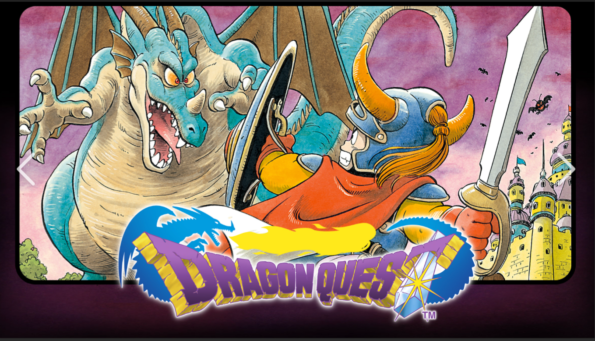
The story of Dragon Quest begins in the mid-1980s with game designer Yuji Horii, character designer Akira Toriyama (known for Dragon Ball), and composer Koichi Sugiyama. Horii wanted to create an accessible RPG with a more approachable, story-driven experience. The result was the original Dragon Quest (known as Dragon Warrior in North America), released on the Nintendo Famicom (NES) in 1986.
Set in the fantasy kingdom of Alefgard, players controlled a silent protagonist tasked with rescuing Princess Gwaelin and defeating the evil Dragonlord. The game introduced the now-iconic turn-based combat system, a world map filled with secrets and dungeons teeming with monsters and establishing a template that many RPGs would follow.
Dragon Quest II and Dragon Quest III
Following the success of the original game, Dragon Quest II: Luminaries of the Legendary Line was released in 1987. This sequel expanded on its predecessor with a larger world, a party system, and ship-based exploration. It was a more ambitious project featuring multiple towns and dungeons and the introduction of multi-enemy battles. The addition of multiple party members allowed for a greater variety of combat strategies, setting the stage for future JRPGs.
But it was Dragon Quest III: The Seeds of Salvation (1988) that solidified the series’ status as a cultural phenomenon in Japan. Dragon Quest III: The Seeds of Salvation has always been my favourite game of the series. Dragon Quest III introduced a job system, giving us the freedom to customise our party members’ classes. This instalment also featured a day-night cycle, with certain events and NPCs changing based on the time of day. The game’s non-linear approach to exploration, coupled with a memorable twist in the story and lots of humour, made it a beloved classic.
The 16-Bit Leap: Dragon Quest IV, V, and VI
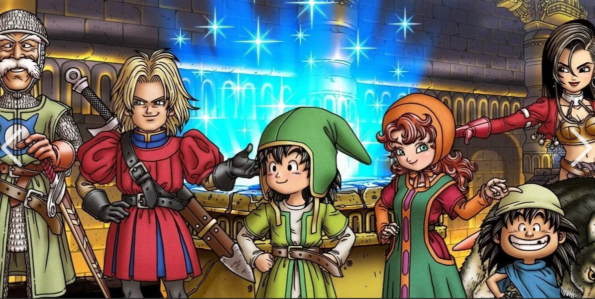
With the arrival of the NES version of Dragon Quest IV: Chapters of the Chosen in October 1992, Dragon Quest transitioned to 16-bit graphics. This instalment was unique in that it divided the game into chapters, each focusing on different characters with their story arcs. These chapters eventually converged, allowing players to see the journey from multiple perspectives before uniting the heroes for the final battle.
In 1992, along came Dragon Quest V: Hand of the Heavenly Bride, which was a ground-breaking entry that introduced monster recruitment, allowing players to recruit defeated enemies into their party. It also featured a multi-generational story, where players followed the hero through childhood, adulthood, and parenthood. The game’s emotional depth and innovative mechanics made it a fan favourite despite initially being overshadowed by the burgeoning Final Fantasy series.
Dragon Quest VI: Realms of Revelation, released in 1995, continued to refine the series’ formula. It introduced a dual-world mechanic in which players explored both a dream world and a real world. It also expanded the job system introduced in Dragon Quest III, giving players even more control over their party’s development with its complex narrative and refined gameplay.
The Jump to 3D: Dragon Quest VII and VIII

As gaming technology advanced, the Dragon Quest series made the leap to 3D with Dragon Quest VII: Fragments of the Forgotten Past (2000) on the PlayStation. This entry featured a time-travelling narrative where players restored lost continents by solving ancient mysteries. The game was known for its expansive story and lengthy playtime, often exceeding 100 hours.
The transition to fully realised 3D graphics came with Dragon Quest VIII: Journey of the Cursed King (2004). This game marked a significant shift with its cel-shaded art style, open-world exploration, and voice acting in this release. It introduced the world to a new generation of players, and it received critical acclaim for its lush visuals, memorable characters, and classic gameplay.
The DS and 3DS Era: Dragon Quest IX and the Remakes
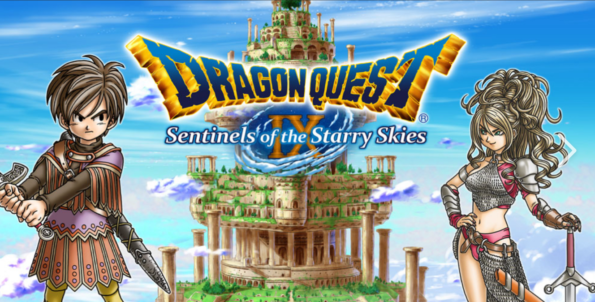
With the release of the Nintendo DS, Dragon Quest embraced handheld gaming. Dragon Quest IX: Sentinels of the Starry Skies (2009) took a different approach, focusing on multiplayer co-op gameplay and customisation. It allowed players to create their heroes, leading to a unique, personal experience. The game was a massive commercial success, particularly in Japan, where it encouraged local multiplayer gatherings.
The Nintendo DS and 3DS also hosted several remakes, including updated versions of Dragon Quest IV, V, and VI, making these classic games accessible to a new audience. These remakes featured updated graphics, additional content, and quality-of-life improvements, solidifying the series’ presence on portable consoles.
Return to Form: Dragon Quest XI and Beyond
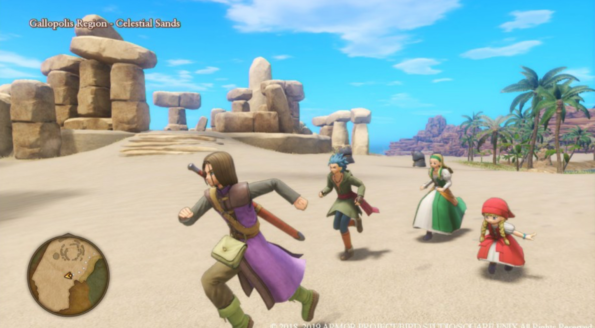
The release of Dragon Quest XI: Echoes of an Elusive Age in 2017 marked a return to the series’ roots while incorporating modern advancements. This game was a love letter to fans, featuring turn-based combat, a rich story, and beautiful, expansive environments. Dragon Quest XI was praised for its blend of nostalgia and innovation and received widespread acclaim for its storytelling and depth.
In 2019, Dragon Quest XI S: Echoes of an Elusive Age—Definitive Edition was released on the Nintendo Switch. It added new content like additional story arcs, a 2D mode reminiscent of older entries, and orchestral music. This version became a definitive experience for fans and newcomers alike, ensuring Dragon Quest’s relevance in the modern gaming landscape.
The Future of Dragon Quest

The Dragon Quest series shows no signs of slowing down, with the recent release of Dragon Quest III HD-2D Remake and the announcement of Dragon Quest XII: The Flames of Fate, which promises a darker tone and significant gameplay changes. Meanwhile, the series continues to expand through spin-offs like Dragon Quest Builders 1 and 2 and Dragon Quest Treasure and mobile titles that bring the series’ charm to different platforms.
Today, Dragon Quest remains a symbol of the golden age of JRPGs and a beloved franchise worldwide. Whether you’re a seasoned fan or a newcomer to the series, Dragon Quest offers a timeless adventure filled with charm, plenty of humour, and unforgettable moments. As the series looks toward the future, it stands as a testament to the enduring power of classic RPG storytelling.
Do you like our content? Support LadiesGamers on Patreon!
Check out our Tiers and Benefits and join us.