

Game: Shadow of the Ninja Reborn
Genre: Action, Arcade
System: Nintendo Switch (also on Steam (Windows), PS4 & 5 and Xbox)
Developer|Publisher: Tengo Project | ININ games
Age Rating: EU 16+ | US Teen
Price: US $19.99 | UK £17.99 | EU € 19,99
Release Date: August 29th, 2024
A review code was provided with many thanks to PR Hound.
Shadow of the Ninja Reborn: A Retro Remake with the Challenge Intact
In the ever-evolving world of video games, where graphics and gameplay mechanics are constantly pushing the boundaries of what’s possible, there remains a niche audience that longs for the simpler yet challenging days of retro gaming. For these players, the remake of Shadow of the Ninja, originally released for the NES in 1990, is a much-anticipated trip down memory lane.
Shadow of the Ninja Reborn is not just a remake; it’s a testament to the enduring appeal of classic 2D action-platformers, bringing the same level of challenge and excitement that players of the original would remember. But is this remake merely a nostalgic cash grab, or does it hold up as a genuinely enjoyable experience in its own right? After spending some time with the game, I found that Shadow of the Ninja Reborn manages to strike a balance between maintaining the core essence of the original while attempting to modernize certain aspects, though not always successfully.
A Retro Plot for Retro Gamers
The plot of Shadow of the Ninja Reborn is as straightforward as they come, very much in line with the games of its time. Set in a dystopian future of 2029, America has fallen under the tyrannical rule of Emperor Garuda. In a last-ditch effort to free the nation from this oppressive regime, two ninjas, Hayate and Kaede, are dispatched to infiltrate Garuda’s fortress, defeat his armies, and bring an end to his reign of terror.
This plot, while simple, serves its purpose of setting the stage for the action, with little time wasted on exposition or character development. And honestly, for a game like this, that’s perfectly fine. The focus here is on gameplay, not narrative depth. It’s an approach that will resonate with fans of classic gaming, where the story often takes a backseat to the action. The futuristic setting combined with the timeless appeal of ninjas makes for a compelling, if not entirely original, backdrop.
Graphical Overhaul
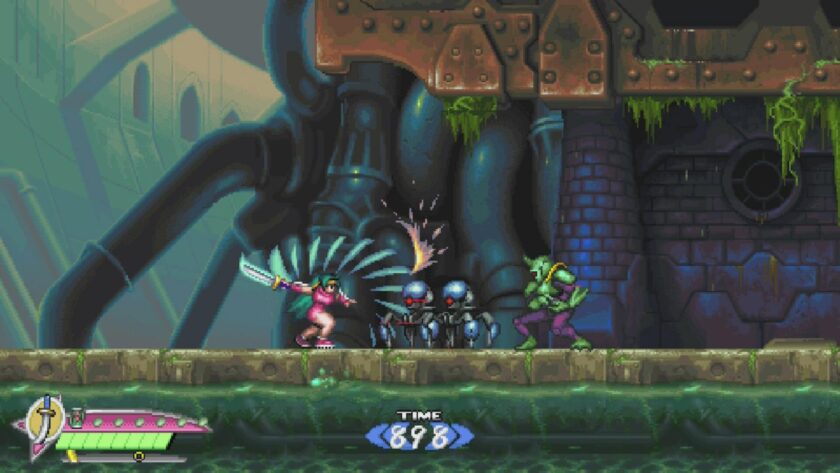
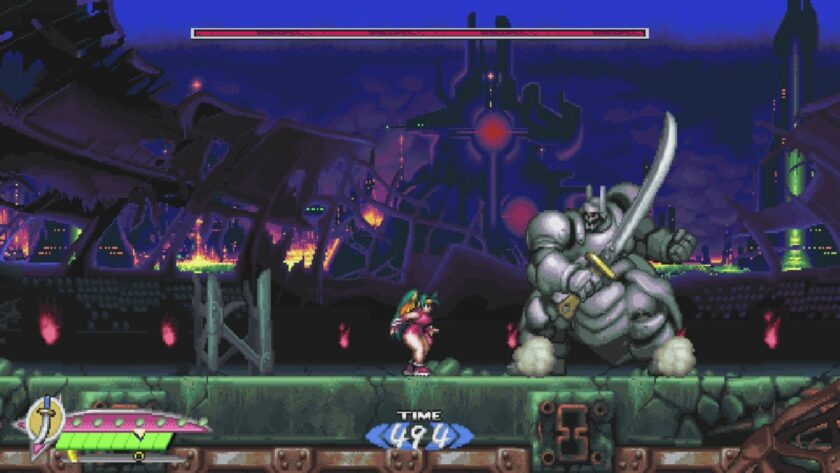
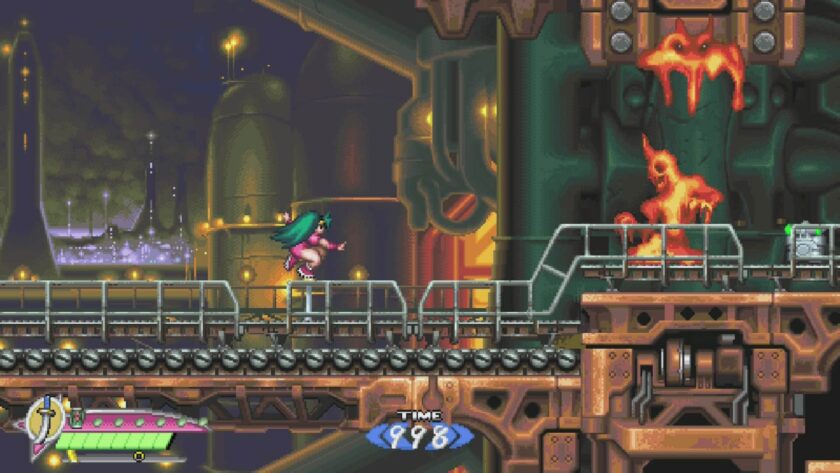
One of the most striking aspects of Shadow of the Ninja Reborn is its presentation. The developers have opted to give the game a complete graphical overhaul rather than sticking with the original 8-bit aesthetics. The result is a game that looks stunning, with beautifully detailed pixel art that brings the characters and environments to life in a way that the original hardware could only dream of. The smooth animations, vibrant colours, and meticulously crafted sprites make each level a visual treat.
The levels themselves, designed to evoke a grim, dystopian future, are full of detail and atmosphere, further enhanced by a gritty, nostalgia-tinged soundtrack that complements the action perfectly. The music, while new, feels like it belongs in the era the game seeks to emulate, providing a familiar yet fresh auditory experience. Playing on the Nintendo Switch, I found the game ran smoothly in both TV and handheld modes, with no noticeable performance issues, which is always a plus.
The Way of the Ninja: Gameplay Overview
Shadow of the Ninja Reborn stays true to the gameplay design of the original, which is both a blessing and a curse. The game is divided into six stages, each a mix of platforming and combat, culminating in a boss battle that tests your skills.
You can choose to play as either Hayate or Kaede, both of whom have distinct appearances but play almost identically. The game supports both solo play and local co-op, allowing you to team up with a friend to take on the challenge together, a feature that will no doubt appeal to those who remember playing the original with a sibling or friend. The gameplay is straightforward but challenging. The platforming requires precision, and the combat demands quick reflexes and a good understanding of enemy patterns. It’s the kind of game that doesn’t hold your hand, expecting you to learn through trial and error, just as you would have in the NES days.
Always Read the Manual
One of the first things you’ll notice when you start playing Shadow of the Ninja Reborn is that the game doesn’t provide much in the way of tutorials or guidance. This is very much in keeping with the retro feel, but it can be jarring for players who are used to modern games that walk you through the basics. To learn the controls, you’re encouraged to dive into the game’s digital manual, which is accessible from the options menu. This manual is well-organized and easy to understand, complete with helpful pictures, but it’s still a bit of a throwback to an era when you were expected to read the manual that came with the game.
In this respect, Shadow of the Ninja Reborn is unapologetically old-school. This lack of guidance can be frustrating, especially when you realize that some of the game’s mechanics, like the ninja glide, which allows you to cover longer distances, are essential for progressing through the levels. It wasn’t long into the first level before I found myself struggling with a jump, only to discover through the manual that I could perform this glide by pressing down and a face button simultaneously. It’s a move that would feel more natural if it were mapped to a single button, highlighting one of the game’s more significant issues: control design.
Ninja Moves: Combat and Controls
The controls in Shadow of the Ninja Reborn are a mixed bag. Combat, for the most part, is straightforward. You have two primary weapons: a katana for close-range attacks and a kusarigama, which is essentially a chained sickle that can be used for longer-range attacks. Both weapons feel satisfying to use, with responsive controls that allow for quick, precise strikes. However, the game’s attempt to stay true to its retro roots leads to some clunky mechanics that could have benefited from modernization. Jumping, for instance, feels stiff and awkward.
Despite playing as ninjas, who are supposed to be agile and graceful, your characters leap in a way that feels more sluggish than they should. As mentioned earlier, the glide move, which is crucial for making longer jumps, is performed by pressing down and a face button. This combination feels unintuitive and cumbersome, making it difficult to execute the move reliably, especially in the heat of battle.
Finding Crates and Using Items
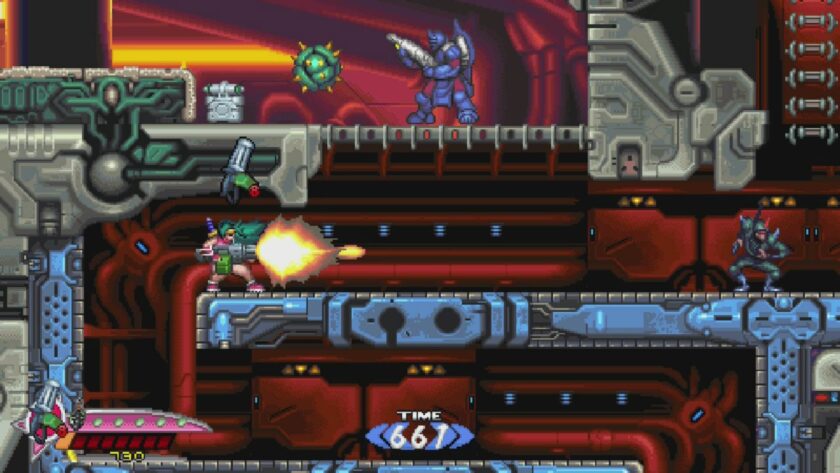
Throughout the levels, you’ll find metal crates containing various items, including weapons with limited uses, like long swords and throwing knives. These are typical ninja weapons, but you’ll also come across more unconventional items, such as Gatling guns and cannons. It’s amusing to see a ninja swap from traditional weapons to something as modern as a Gatling gun, and these moments add a bit of humour to the otherwise serious tone of the game.
You can also find temporary power-ups and health items, which are essential for survival. All these items can be banked and activated when needed, but this is where one of the game’s design choices falls flat. To use an item, you have to hold down a button and manually select the item in real time. This can be incredibly frustrating during intense sections of the game or during boss fights, where pausing the action to select an item would have been a much more player-friendly option. The decision to stick with this real-time item management feels like an unnecessary attempt to retain the old-school difficulty at the expense of player comfort.
It’s Hard: The Challenge of Shadow of the Ninja Reborn
The biggest hurdle for most players will undoubtedly be the game’s difficulty. Shadow of the Ninja Reborn is challenging, even on its default “normal” difficulty setting. Enemy placement is often devious, with foes positioned in such a way that you need to be a master of precision to avoid taking damage. The platforming sections are equally demanding, often requiring you to dodge projectiles while making precise jumps.
For me, playing through the game was an exercise in patience. I frequently found myself restarting levels and boss fights multiple times as I gradually learned enemy patterns and improved my skills. This kind of challenge will be very appealing to retro gamers who enjoy mastering difficult games. Still, it may turn off more casual players who aren’t looking for that level of difficulty. Fortunately, the game does include some modern concessions, such as checkpoints within each level and unlimited continues.
Additionally, if you die multiple times in a row, the game will provide you with extra items to help you progress, which is a nice touch. However, even with these aids, the game can feel like a grind, particularly for those who are not accustomed to this level of challenge.
Conclusion: Retro Reborn
In the end, Shadow of the Ninja Reborn is a game that knows exactly what it wants to be. It’s a love letter to the challenging, no-nonsense games of the NES era, complete with all the frustrations and triumphs that come with that territory. The beautiful new graphics and satisfying ninja action make it a pleasure to look at and play, at least for those who have the patience to see it through. However, it’s not without its flaws.
The controls could have been modernized, particularly when it comes to the more complex ninja moves, and the decision to force players to manage items in real-time during combat feels like an unnecessary nod to retro difficulty.
A younger version of myself, with more time and patience, would have adored this game and relished the challenge of mastering its every nuance. But as I’ve grown older, I find myself with less tolerance for games that demand such a high level of dedication. That said, I still appreciate what the developers have achieved here, and I believe that retro purists will love this game for its authenticity and challenge. Casual players, however, might want to think twice before diving in.
Final Verdict: I Like It

Do you like our content? Support LadiesGamers on Patreon!
Check out our Tiers and Benefits and join us.